
ChainThink
Stay ahead, master crypto insights
CertiK Releases 2025 Cryptocurrency Fraud Report (ATM)
CertiK Releases 2025 Cryptocurrency Fraud Report (ATM)

2026-04-10 10:08
On March 12, the world’s largest Web3 security firm, CertiK, released the Skynet Cryptocurrency ATM Fraud Report. The report reveals that losses from such fraud reached $330 million in 2025, marking a year-on-year increase of approximately 33%, making it one of the fastest-growing financial crimes in the United States.
The report highlights that as the global number of cryptocurrency ATM devices continues to rise, and criminal organizations increasingly leverage social engineering and AI technologies to refine their tactics, this form of crime has evolved from isolated incidents into a highly organized, transnational fraud industry.
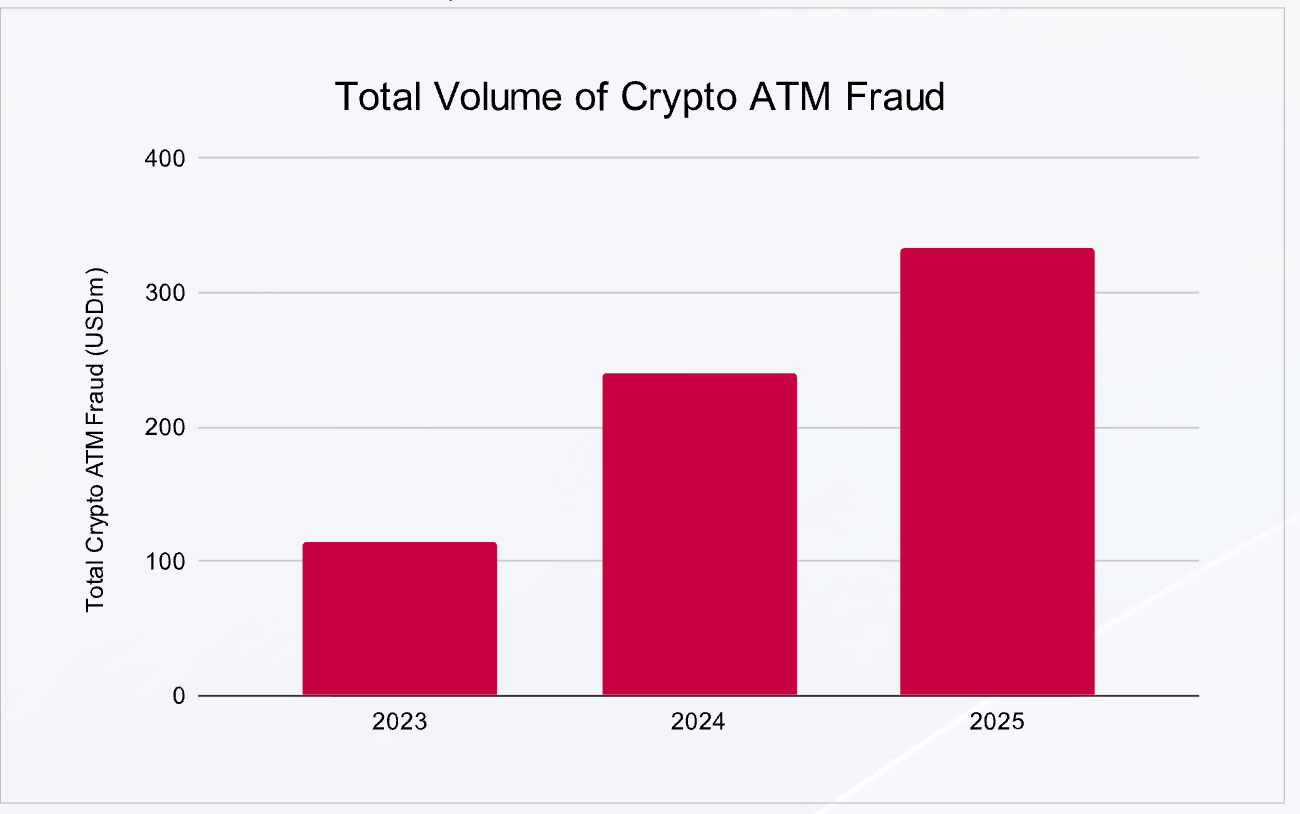
Total Losses from Cryptocurrency ATM Fraud
Cryptocurrency ATMs Become a “Fast Lane” for Fraudulent Fund Transfers
Cryptocurrency ATM fraud involves scammers using phone calls, text messages, or online social platforms to lure victims into withdrawing cash and depositing it into a cryptocurrency ATM, which is then converted into digital assets and routed to wallets controlled by the perpetrators.
There are currently around 45,000 cryptocurrency ATMs worldwide, with 78% located in the United States. Users can typically complete cash-to-crypto exchanges and transfers within five minutes—a feature that makes these machines an ideal channel for fraudsters to move illicit funds swiftly.
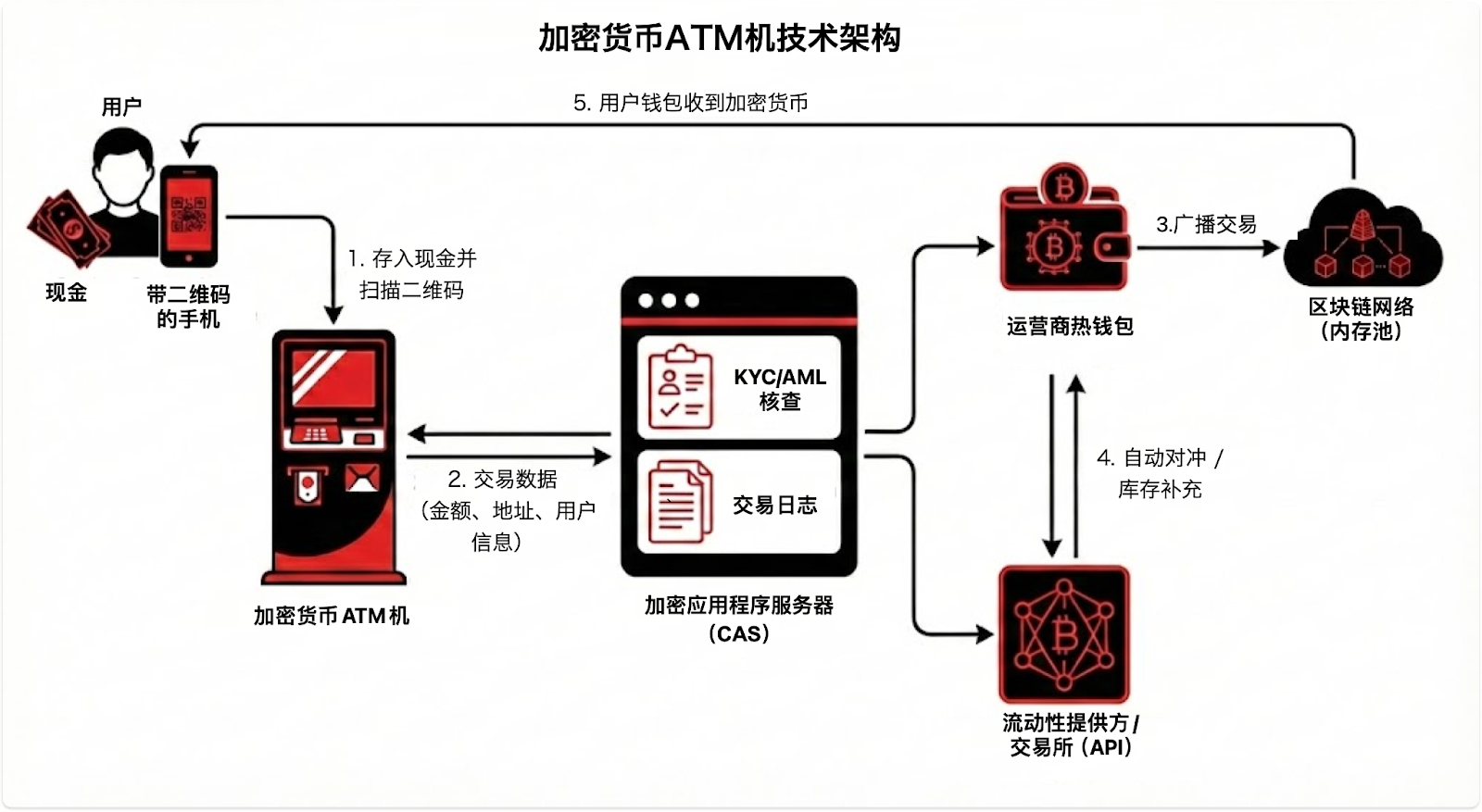
Differing from traditional cryptocurrency attacks that rely on account breaches or hacking, this crime exploits social engineering to manipulate victims into initiating transactions voluntarily. Once a transaction is confirmed on-chain, recovery becomes nearly impossible.
From a technical architecture perspective, cryptocurrency ATMs function merely as front-end terminals connecting to backend cryptocurrency application servers (CAS). All transactions are executed through operators’ hybrid hot wallets. On-chain records only show transfers from the operator’s wallet to the target address, without revealing the depositor’s identity—creating a "traceability gap" that poses significant challenges for law enforcement investigations and evidence collection.
Older Adults Account for 86% of Total Losses, Highlighting Ineffective Protection Measures
The most alarming finding in the report is the extreme vulnerability of older adults in these fraud schemes. Data shows that 86% of all cryptocurrency ATM fraud losses in the U.S. in 2025 originated from individuals aged 60 and above. In a lawsuit filed by the Attorney General of Washington D.C. against Athena Bitcoin, a major U.S. ATM operator, it was revealed that 93% of deposits processed at local ATMs were linked to fraudulent activities. The median victim age was 71, and the median loss per transaction reached $8,000.
The report outlines the dominant fraud patterns, whose core objective is to induce strong emotional distress in victims, impairing rational judgment; isolate victims from potential helpers; and guide them step-by-step through the entire cash-to-crypto conversion process in real time.
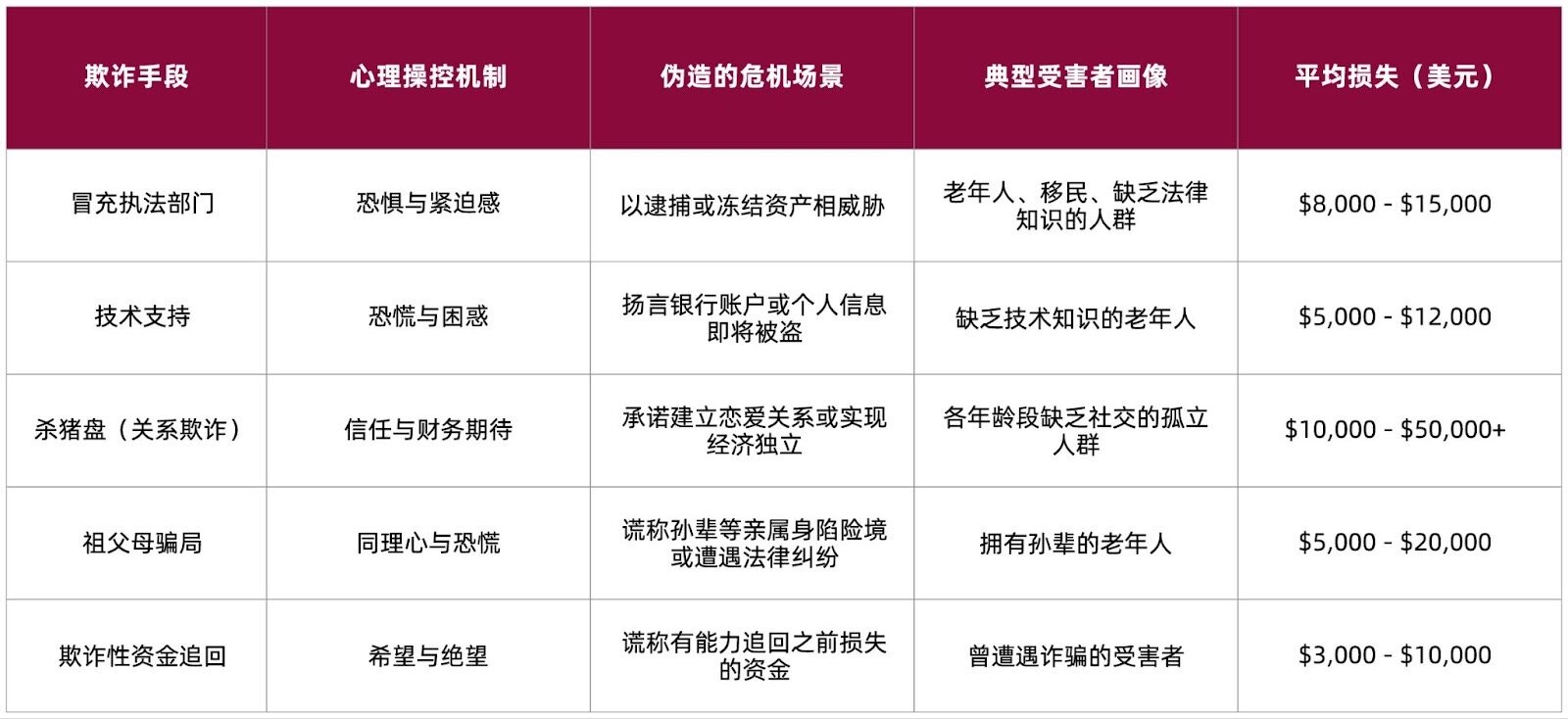
Categorization of Cryptocurrency ATM Fraud Tactics
"When victims are engaged in real-time calls with scammers, on-screen warnings on the ATM interface are rendered ineffective," the report notes. Current protective measures at the ATM level are essentially non-functional. Scammers maintain continuous real-time contact throughout the withdrawal and operation process, not only guiding victims to bypass on-screen alerts but also pre-coordinating standardized narratives—such as claiming funds are for home renovations or family emergencies—to help victims deflect scrutiny from bank staff, effectively cutting off external intervention.
AI Technology Is Reshaping Fraud Patterns
The report further indicates that AI technology is accelerating the evolution of fraud tactics, with AI-driven scams generating profits about 4.5 times higher than traditional methods in 2025. Criminal organizations are now deploying AI voice cloning, deepfake videos, and automated scripts to conduct more targeted social engineering attacks.
At the same time, to circumvent increasingly stringent transaction limits introduced by regulators globally, fraud networks have adopted a "fragmentation strategy"—inducing numerous victims to perform small-value transactions across different ATMs, thereby maintaining overall illicit gains while evading regulatory detection.
Industrialized Operations of Transnational Crime Networks
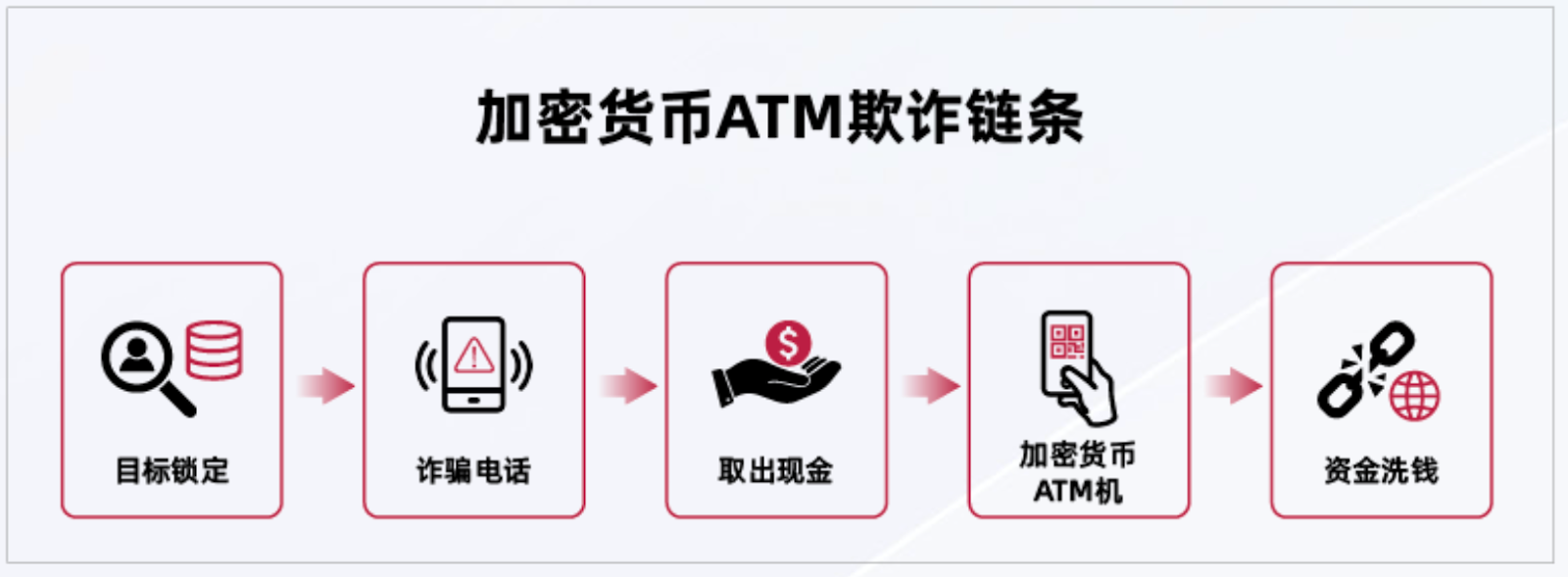
The report reveals that cryptocurrency ATM fraud has transformed from sporadic cases into a highly structured, transnational criminal enterprise. These networks operate under industrialized models with detailed role specialization, including data harvesting, social engineering, fund transfer, and money laundering.
The efficiency of money laundering has further amplified the damage caused by such crimes. In 2025, Southeast Asian money laundering networks processed approximately $16.1 billion in illicit cryptocurrency flows—accounting for 20% of the globally traceable illegal crypto ecosystem. These networks coordinate via Telegram and can settle large transactions within two minutes. After victims deposit cash, funds are rapidly anonymized through multiple layers of obfuscation—including mixers, cross-chain bridges, and decentralized exchanges—often exiting the regulated traceability framework before victims even end their scam calls.
The Transaction Entry Point Becomes a Critical Control Node
In response to the current threat landscape, the report concludes with systemic prevention recommendations, identifying the CAS-layer transaction entry point as the sole effective intervention node in the cryptocurrency ATM fraud chain—real-time screening and risk verification of target wallet addresses must be conducted prior to any transaction being committed on-chain.
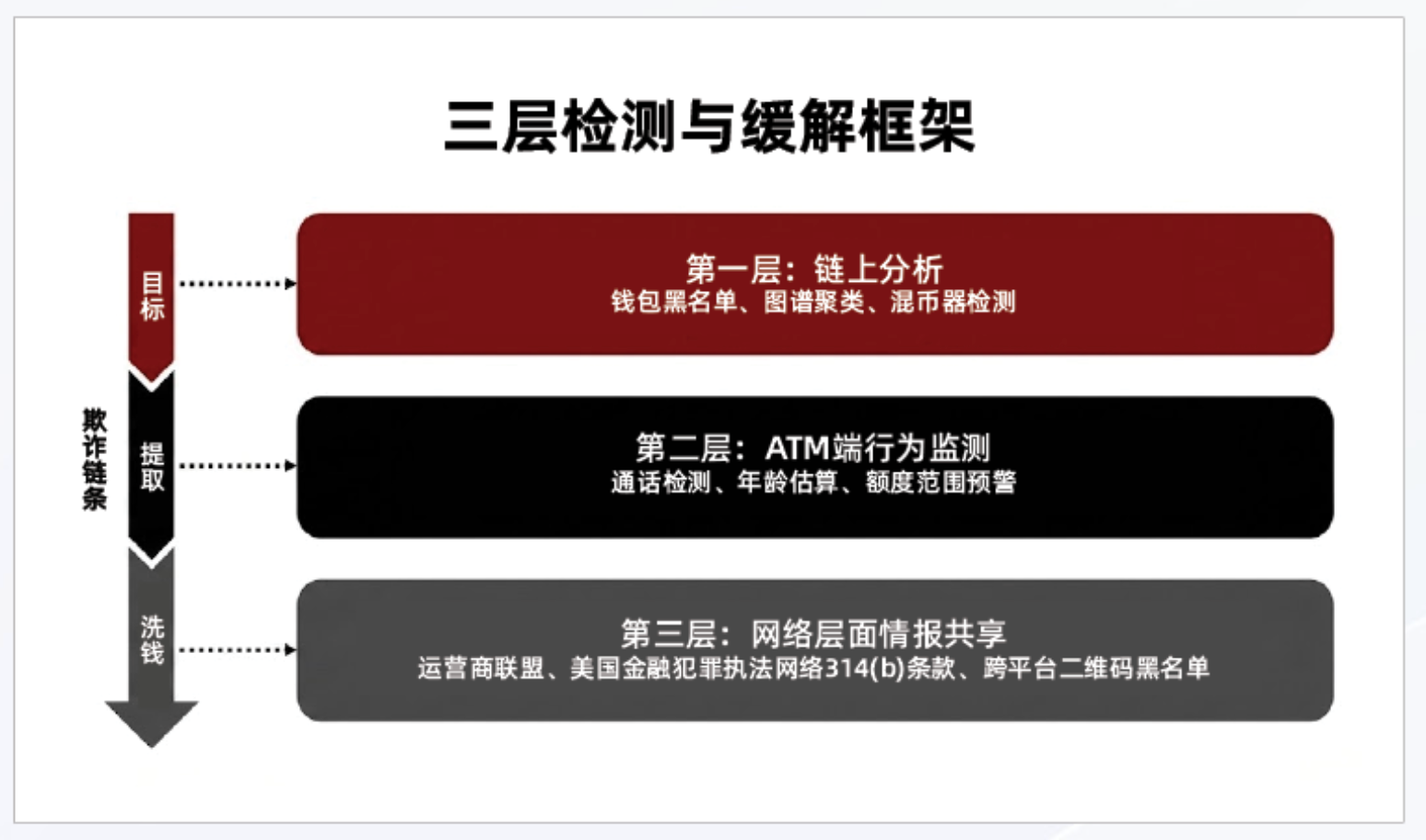
Additionally, the report provides specific actions for consumers, operators, and law enforcement: consumers should remain vigilant against unsolicited calls requesting payments via cryptocurrency ATMs; operators must implement tiered KYC protocols, enable industry-wide intelligence sharing, and conduct pre-transaction risk validation; and law enforcement agencies should strengthen blockchain analytics capabilities, advocate for unified legislation, and enhance cross-border cooperation.
"The $330 million in losses reported for 2025 represents merely the tip of the iceberg," the report warns in its conclusion. As emerging tactics—including AI-powered deepfakes, automated cross-chain laundering, and micro-transaction fragmentation—become widespread, the threat of cryptocurrency ATM fraud will continue to escalate. Only through coordinated efforts across technology, regulation, and enforcement can we close the shrinking window of opportunity to disrupt the criminal supply chain and protect the financial security of consumers, particularly vulnerable elderly populations.
Report Link: https://indd.adobe.com/view/bfb98f74-c308-4f0d-b9eb-c3bdb86e2785
Disclaimer: Contains third-party opinions, does not constitute financial advice


AI Practical Guide
This column focuses on the real progress of Agents: technological evolution, application implementat

Crypto Weekly
Tracking on-chain movements of the smart money and institutions

Frontier Insights
Spotlight on Frontier, trending projects, and breaking events

Blowup Alert
As the 2026 crypto bear market deepens, exit scams and project blowups are becoming increasingly fre

Regulatory Watch
American Crypto Act – timely interpretations of policies worldwide

Popular Airdrop Tutorial
Selected potential airdrop opportunities to gain big with small investments

FusnChain
FusnChain