Sell U.S. Treasuries, Buy Japanese Bonds: Wall Street Prepares for "Repatriation of Japanese Capital"
Sell U.S. Treasuries, Buy Japanese Bonds: Wall Street Prepares for "Repatriation of Japanese Capital"


The Japanese government bond market is undergoing unprecedented volatility unseen in decades, prompting global asset managers to re-evaluate a long-overlooked risk: could Japanese investors, who hold approximately $1 trillion in U.S. Treasuries, begin repatriating their capital?
According to a recent report by the Financial Times, multiple investment institutions have already begun preparing for a large-scale return of Japanese capital to domestic markets, betting that Japanese investors will gradually sell U.S. Treasuries and shift toward Japan Government Bonds (JGBs), whose yields continue to rise.
JGB Yields Surge to Multi-Decade Highs
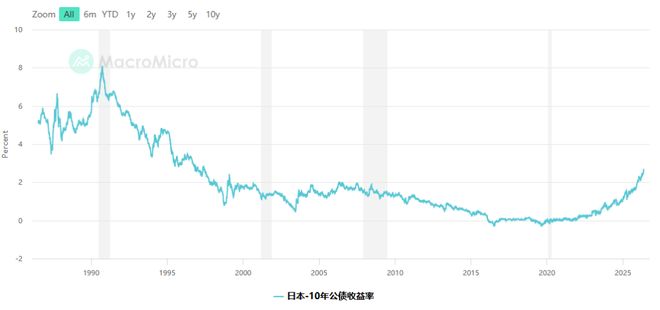
On Friday, the yield on Japan’s 10-year benchmark government bond rose to 2.73% during trading—the highest level since May 1997.
The 30-year JGB yield has for the first time breached 4%—a threshold never reached since the maturity was first issued in 1999. Yields on both the 5-year and 20-year JGBs also hit new record highs earlier this week.
Japanese Finance Minister Satsuki Katayama told reporters on Friday that government bond yields across major global markets are rising, “and these dynamics are mutually reinforcing, creating a compounding effect.”
Analysts expect JGB yields to continue climbing. The Bank of Japan raised its policy rate to 0.75% last December—the highest level in thirty years—and the market widely expects another 25 basis point hike to 1% in June.
The $1 Trillion "Return to Japan" Logic
To understand this bet, one must first grasp why Japanese investors have accumulated such vast foreign assets over decades.
For years, Japan maintained ultra-low interest rates, rendering domestic bonds nearly unprofitable. To seek returns, institutional investors—including insurance companies, pension funds, and banks—ventured overseas, purchasing U.S. Treasuries, European sovereign debt, and various global assets.
Currently, Japanese investors hold about $1 trillion in U.S. Treasuries—making them the largest foreign holder of U.S. debt, far exceeding other nations.
Now, as JGB yields surge, this logic is reversing. Mark Dowding, Chief Investment Officer at BlueBay Asset Management, directly highlighted this shift. BlueBay launched its first Japanese bond fund just this March.
Dowding stated: “New capital will no longer be allocated overseas. It won’t flow into U.S. corporate bonds or U.S. Treasuries—it will return to domestic Japanese allocation.”
Funds Begin Gradual Repatriation
Market data already shows signs of capital returning, albeit on a modest scale.
According to EPFR, investor net inflows into Japanese sovereign bond funds reached approximately $700 million in March—record high for the category in a single month. Net inflows in April were $8.6 million, reverting to recent normal levels.
Matthew Smith, portfolio manager at Ruffer, offered a more direct assessment: “Pressure is building—long-end domestic yields keep rising, and institutional signals are clear: ‘Bring the money back to Japan.’ We believe the yen will appreciate slowly at first, then accelerate suddenly.”
Smith also noted that Ruffer currently holds a core long position in the yen, using it as a primary hedge. “When market turbulence occurs—especially centered around U.S. credit markets—Japanese investors will bring capital home, triggering a sharp yen rally.”
Repatriation Not Yet Broad-Based, JGB Market Faces Underlying Risks
Nevertheless, analysts caution that Japanese institutional investors are still, in fact, net buyers of foreign bonds.
Abbas Keshvani, Asia Macro Strategist at RBC Capital Markets, pointed out that despite JGB yields now offering “superficially better compensation,” Japanese investors have still net purchased about $50 billion in foreign bonds over the past 12 months.
This stems from uncertainty within the JGB market itself. Prime Minister Sanae Kōchi, who won the February election, campaigned on promises to expand government spending and provide inflation relief. Analysts increasingly warn that the government may be forced to issue supplementary budgets later this year—further depressing JGB prices and pushing yields higher.
Keshvani said: “Both supply and demand dynamics point toward continued yield increases. As an investor, if you know yields will keep rising, it's hard to justify buying now.”
Previously, the Bank of Japan was the market’s most important buyer through quantitative easing and Yield Curve Control policies. As the central bank gradually exits, the market is reverting to traditional supply-demand mechanics, leading to significantly heightened JGB price volatility.
Implications for the U.S. Treasury Market
The potential scale of Japanese capital repatriation has compelled the U.S. Treasury market to take this risk seriously.
Japan is the largest foreign holder of U.S. Treasuries, with holdings valued at roughly $1 trillion. Should Japanese institutional investors begin systematically reducing positions, the impact on U.S. Treasury supply-demand dynamics would be substantial.
Currently, Wall Street’s bets represent forward-looking positioning rather than reactions to actual events. But as JGB yields continue to climb—analysts view a 3% yield for the 10-year JGB by late this year as a realistic target—the logic behind this bet will become increasingly compelling.
Original: DeepFlow TechFlow
Disclaimer: Contains third-party opinions, does not constitute financial advice
SpaceXAI to Tidy Up Subscription Chaos, Grok and Cursor to Unify Plans Within Weeks
16 days ago
JPMorgan: Oracle's Backlog Orders Up by $26 Billion, Funding Trail Raises Questions
16 days ago
The Nasdaq-100 Index futures decline widens to 1.5%
16 days agoJefferies: Expecting Fed rate hike this week, Wunsch's comments to be pivotal
16 days agoData: Bitcoin's current holding volume has decreased by 13.5% compared to September 3rd, suggesting the market may have already begun deleveraging ahead of time
16 days ago
The UK's Financial Conduct Authority is exploring regulatory exemptions for tokenized gold
16 days agoKOSPI Index drops over 3%, SK Hynix down 6.34%
16 days ago

