
ChainThink
Stay ahead, master crypto insights
A close cryptocurrency giant of China is about to list in the US, will it continue after the frenzy?
A close cryptocurrency giant of China is about to list in the US, will it continue after the frenzy?

2025-06-05 17:48
The U.S. IPO market witnessed a feast on June 5, as Circle, the issuer of the world's second-largest stablecoin USDC, is about to list on the New York Stock Exchange with the stock code "CRCL." In the days leading up to the listing, Circle demonstrated significant market appeal, with its initial public offering (IPO) oversubscribed more than 25 times. Moreover, BlackRock and Cathie Wood rushed to invest, once again pushing the crypto market into the global spotlight. Will the bullish momentum continue after this surge?
Circle's Spectacular Pre-IPO Scene
This IPO saw Circle initially issuing 24 million shares, raising $624 million, with an initial valuation target of $6.7 billion (latest adjusted valuation at $7.2 billion). The company has now increased the IPO size for the third time to 34 million shares, setting the IPO price at $31, surpassing the previous price range and market expectations. This is the most anticipated IPO in the crypto market since Coinbase ($COIN) in 2021.
According to the prospectus, "Cathie Wood" (Kathryn Wood) of Ark Capital intends to subscribe to up to $150 million in shares, while BlackRock CEO Larry Fink will invest another $60 million, accounting for approximately 35% of the fundraising. Wood and Fink can be considered KOLs in traditional finance, and they are likely to promote the "stablecoin narrative" through media exposure, influencing both institutional and retail investors.
Circle's stock is one of the few ways to bet on the growth of stablecoins and blockchain technology. Insider participants in the conventional IPO cannot sell their holdings within the first 180 days. If this subscription indeed exceeds expectations, CRCL may perform well after the listing. Crypto users can view this as the launch of a "low liquidity + high fully valued" token, backed by traditional finance big names (Wood, Fink).
Circle's Ties with China
Although Circle is a fintech company headquartered in the United States, it has deep ties with China. Just before Circle's listing, the stock price of China Everbright Holdings, a Hong Kong-listed company, suddenly surged, rising 44% in five days, drawing market attention. This was no coincidence — Everbright had invested in Circle alongside IDG Capital as early as 2016, becoming a major shareholder.
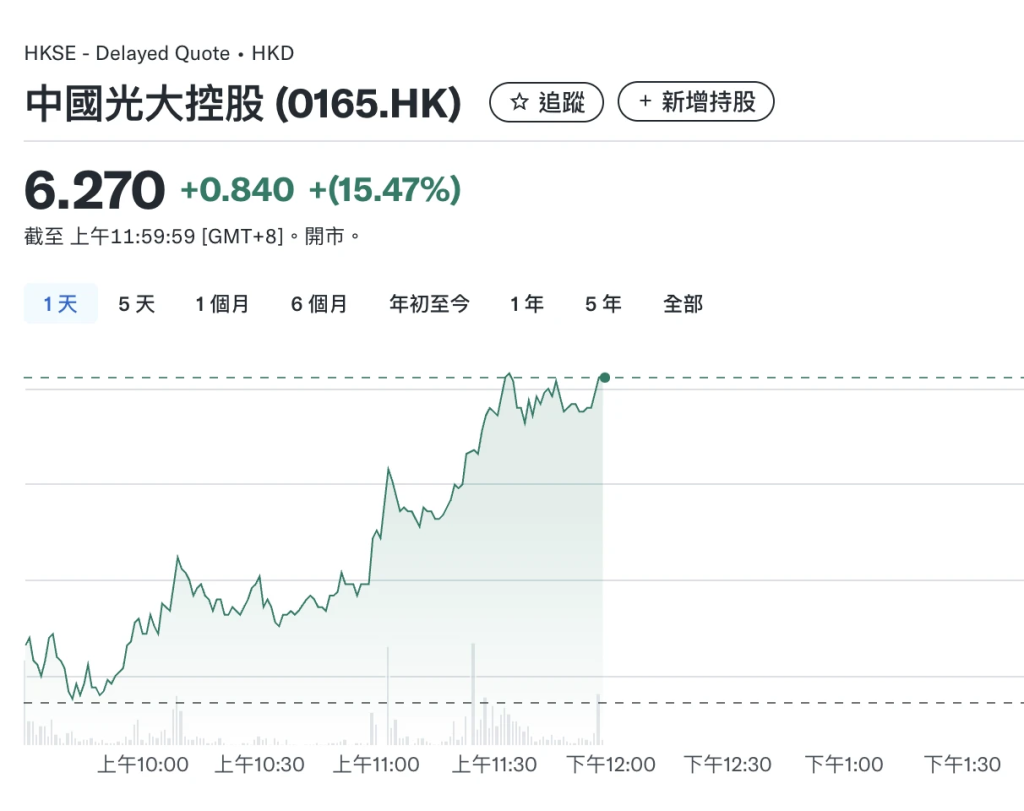
This "Chinese connection" is deeper than people might think:
In 2015, IDG Capital led Circle's Series C funding round, and continued to lead the Series D round the following year, with Chinese companies such as Baidu, Everbright, Yixinfu, Wanxiang, and CICC Jiazi collectively investing.
Chinese investors once held nearly 20% of Circle's shares, and IDG Capital founder Xu Xiaoge explicitly stated that investing in Circle aimed to bring back "technologies that the U.S. can do but China cannot."
Even establishing a Chinese subsidiary called "Shike Technology," managed by IDG executives Li Tong, and with Xiao Feng from Wanxiang Group serving as a director, aiming to tap into the cross-border payment market.
Due to China's strict regulations on payment services and crypto assets, Shike Technology eventually shut down in 2020. Although Chinese capital failed to open up the domestic market, it laid an important foundation for the global stablecoin trend.
Circle vs. Tether, the Leading Stablecoin Giant
According to the IPO filing, Circle generated $1.7 billion in revenue in 2024, of which 99.1% came from stablecoin business. Beneath the surface, the fragility of profitability was exposed: net profit was only $155 million, with a profit margin below 10%; commissions paid to partners reached $1 billion, with Coinbase alone taking $908 million (50% of remaining earnings); administrative compliance expenses were $137 million, and human resource costs for 900 employees amounted to $263 million.
The comparison with competitor Tether is even harsher: in the same year, Tether achieved a net profit of $13 billion, 84 times that of Circle. This huge difference stems from fundamental differences in business models:
Circle follows a "compliant heavy asset" approach: a reserve structure consisting of bank cash deposits and short-term U.S. Treasury bonds, relying on the high-interest rate environment set by the Federal Reserve. A 1% drop in interest rates would cost it $207 million in profits.
Tether adopts a "lightweight hedge fund" model: over 80% of its reserves are allocated to short-term U.S. Treasury bonds, with a team of only 150 people managing billions in assets, generating $93 million in profit per person. Tether CEO Paolo Ardoino clearly stated, "There is no need to go public to enhance market position." This reflects confidence in its cash flow and a choice to avoid compliance costs.
The biggest advantage of Circle is its compliance and transparency. Tether has long faced various doubts, such as whether its reserve funds are sufficient and whether its finances are transparent. If Tether were to apply for an IPO, its controversial historical records would face comprehensive scrutiny, which could significantly impact its valuation or listing approval. Since its inception, Circle has emphasized compliant operations and actively communicated with regulatory authorities, which is also a key reason for its successful IPO process.
Impact of Circle's Listing
Circle's listing holds significant meaning, far beyond a regular IPO, as it represents a crucial experiment in the integration of cryptocurrency and traditional financial systems:
Regulatory Benchmark Value: As the first compliantly listed stablecoin company, its audit transparency and reserve management will set new industry standards.
Channel for Institutional Participation: BlackRock has signed a four-year agreement to manage 90% of its reserve assets and commit to prioritizing USDC, allowing traditional asset management giants to enter through this channel.
RWA (Real World Asset) Tokenization Accelerator: Stablecoins, as a bridge between fiat and the crypto ecosystem, are driving trillions of real-world assets onto the blockchain.
Circle's listing in the U.S. has sparked market enthusiasm, but whether it can maintain strong performance after the frenzy remains to be seen. In the future, it will need to face challenges such as regulatory policy changes, intensified competition, and risks associated with stablecoin pegging. While we pay attention to the investment opportunities it brings, we must remain rational and fully recognize the potential risks involved.
Author: Aaron, ChainThink
Editor: Charlie, ChainThink
Disclaimer: Contains third-party opinions, does not constitute financial advice


AI Practical Guide
This column focuses on the real progress of Agents: technological evolution, application implementat

Crypto Weekly
Tracking on-chain movements of the smart money and institutions

Frontier Insights
Spotlight on Frontier, trending projects, and breaking events

Blowup Alert
As the 2026 crypto bear market deepens, exit scams and project blowups are becoming increasingly fre

Regulatory Watch
American Crypto Act – timely interpretations of policies worldwide

Popular Airdrop Tutorial
Selected potential airdrop opportunities to gain big with small investments

FusnChain
FusnChain