AI New Stars, $5,000/Hour Companionship Chatbots, Silicon Valley 2026 vs. Night City 2077
AI New Stars, $5,000/Hour Companionship Chatbots, Silicon Valley 2026 vs. Night City 2077


By|Sleepy
Silicon Valley is starting to crumble—just not in the way you’d expect.
Not like small-town girls calling middle-aged men “big brother,” nor with a 20-dollar WeChat red packet and a “you’re so amazing” message. The Valley’s version is more dignified—and astronomically more expensive.
Here, “old men” are tech nouveaux riches in their twenties and thirties, holding Nvidia stock options or OpenAI equity, living in high-rise apartments in SoMa. Young in age, but already carrying the aura of elders. With money in hand, they’re bursting with ideas—but no one listens. When they finally find someone willing to hear them, they realize: listening can be monetized. In a small town, it costs twenty bucks; in Silicon Valley, it runs between $3,000 and $6,000 per hour.
San Francisco in June 2026 wears two faces.
The daytime face is unmistakable. OpenAI and Anthropic have both filed confidential IPO documents with the U.S. Securities and Exchange Commission. The two AI titans are preparing for public markets nearly simultaneously. Earlier, OpenAI enabled over 600 employees to cash out approximately $6.6 billion through secondary markets. Huang Renxun himself confirmed that NVIDIA has already produced numerous billionaires.
This is the daylight story—the wealth-generation narrative written into fundraising news and financial headlines.
The nighttime face remains hidden from view. In the same city, a cohort of young women who claim expertise in AI, GPUs, longevity science, and cryptocurrency are offering premium companionship services at $3,000 to $6,000 per hour. Their clients? A significant portion are precisely the same individuals featured in those very daytime financing stories.
AI draws capital in, capital reshapes the city, the city transforms its inhabitants, and human loneliness and dignity now carry a price tag.
The Money First Reshaped the City's Shape
Three years ago, everyone believed San Francisco was finished.
The pandemic emptied downtown office buildings. Remote work sent developers to Austin, Miami—even Bali. At Twitter’s Mid-Market headquarters, tents lined up like rows of graves. Rental ads on vacant storefronts faded without anyone bothering to take them down.
During those years, if you told someone you still lived in San Francisco, they looked at you with pity. A city built on “innovation” had, for the first time, been labeled “decaying.”
Then AI arrived—with money.
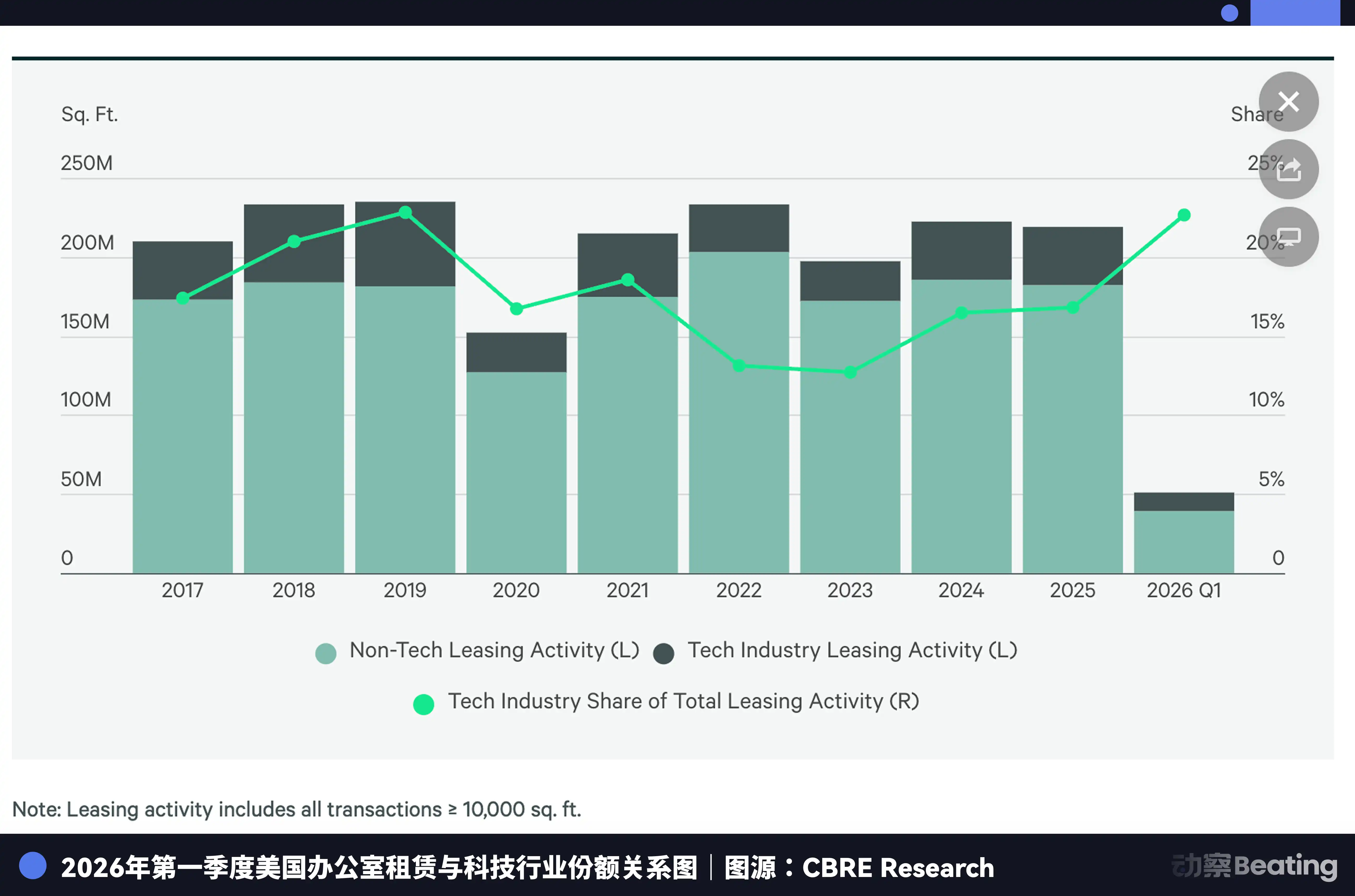
CBRE’s report from May 2026 states that AI companies are driving a strong rebound in office leasing across the San Francisco Bay Area. Anthropic leased vast office spaces in SoMa. OpenAI moved into a new landmark in Mission Bay. Smaller AI firms have filled South Beach and the Design District. Three years ago, half these buildings stood empty. Now, securing an office space on this street requires queuing.
Once offices filled up, residential prices followed suit.
By June 2026, the median rent for a one-bedroom apartment in San Francisco had risen to $4,000—up 20% from a year prior. SoMa saw a 36% increase, Mission Bay 22%, South Beach 21%. These numbers radiate outward in concentric waves, mirroring the footprint of AI company campuses.
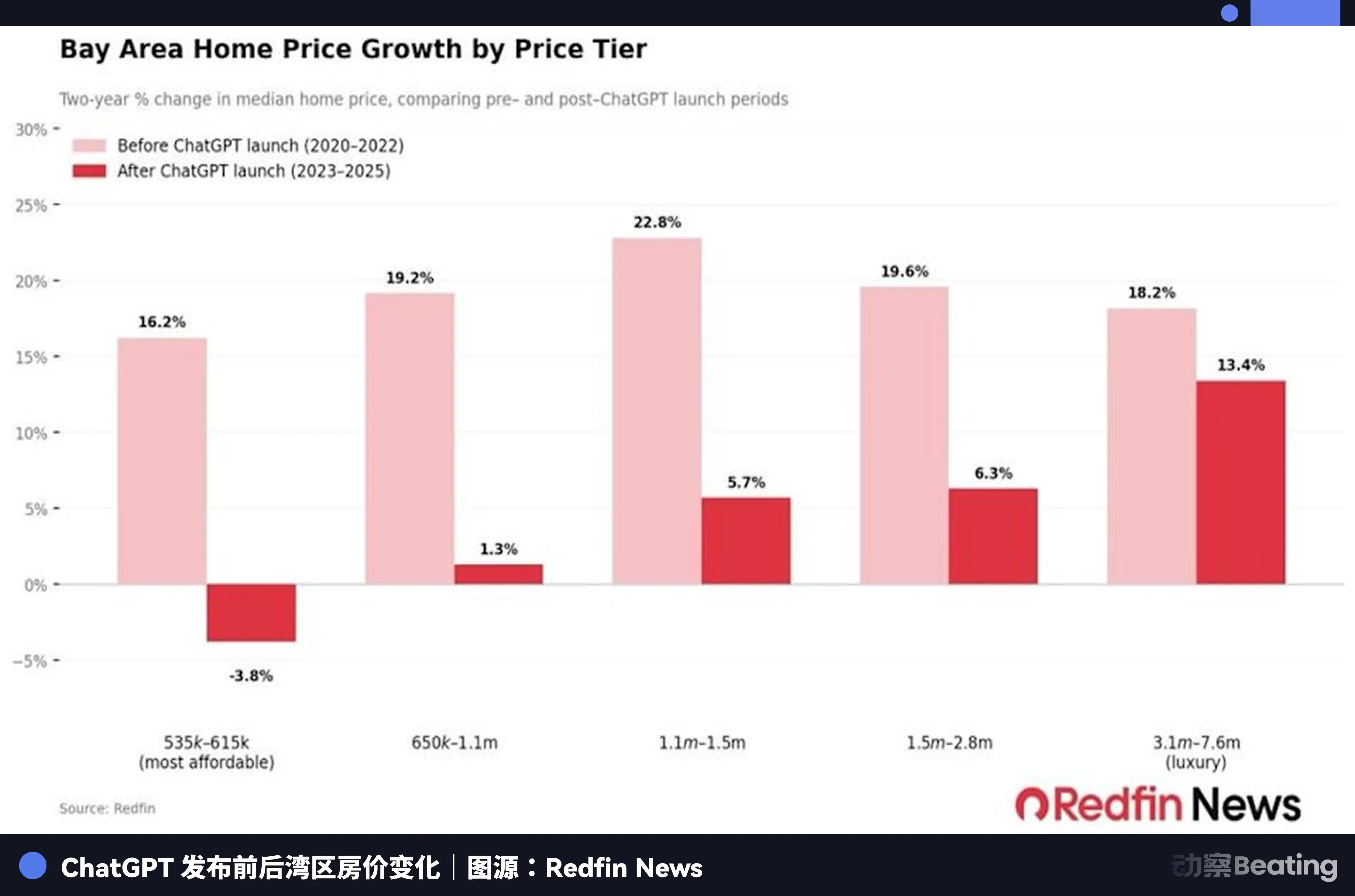
A listing for a $2.995 million Edwardian-era home even included a note: “Seller accepts Anthropic or OpenAI stock as payment.”
How a city comes back to life can sometimes be this specific. In the past, buying property meant cash, loans, family help. Now, you can pay with stock issued by an AI company that hasn’t gone public yet.
Luxury homes grow pricier, while ordinary people can no longer afford housing. Same city, same boom—but which world you inhabit depends entirely on whether you’re part of the AI food chain.
San Francisco and Oakland are separated only by the Bay Bridge, yet their rental markets feel like two different worlds. By the end of 2025, one-bedroom rents in San Francisco were about 70% higher than in Oakland. Some stay in the city, coding for these companies, cleaning offices, serving coffee, delivering food. Others must move farther away just to afford a place to live.
San Francisco is indeed alive again. But this revival revolves around a tiny elite. Office space is leased for them, housing prices rise because of them, and the entire city increasingly feels engineered for this small group alone.
A Street Always Grows Next to the Gold Rush
Once the city’s shape is altered, the next transformation is in the lives of its people. This isn’t new. California’s own history has already played out this script.
In 1849, gold was discovered in California. Hundreds of thousands rushed to San Francisco. Later, we learned most diggers made little money. Levi Strauss thrived selling dry goods, fabric, and workwear. Wells Fargo profited from mining remittances. Sacramento’s hotels, taverns, and casinos boomed. The diggers went first; the merchants followed.
This makes intuitive sense. When a sudden influx of money hits a concentrated population, people need food, shelter, and entertainment after long days. Where there’s demand, supply follows. First come sellers of shovels and tents. Then banks and post offices. Finally, taverns, casinos, brothels. From mere survival to full indulgence—this sequence never changes.
The current AI wave follows the same pattern. Shovels arrive first—GPUs, cloud computing, data centers—visible to all. Then come venture capital, legal services, headhunters, wealth management.
When money reaches individuals, some help them buy homes, others teach them how to live longer, some accompany them through fitness routines, and others manage their philanthropy.
Then comes the “crumbling elder” phenomenon.
One wealth advisor noted that among the new AI-rich, many show no interest in luxury cars or watches—even lack basic spending instincts. They’re too young, too isolated, lacking social experience. Yet they share one trait: each carries a fully formed vision of the future—AGI, longevity, entropy reduction, the evolution of civilization—capable of speaking for hours without repetition. The problem? No one listens. Even friends tune out after three sentences.
Abundant money, scarce time, poor social skills, overflowing ideas with nowhere to go—these factors converge into a clear demand, so clear that someone has built a business around it.
Seduction Is Out; Understanding GPU Is In
Forbes recently published a report interviewing several such individuals. Their stories reveal what kind of city San Francisco is becoming.
Meida Marek originally wanted to enter finance.
She had just graduated, working as a junior analyst at a firm, running data, building models, writing research reports. The job wasn’t hard, and the path was clear. Then she ran the math: language models could write reports ten times faster—and for free. How long could her role last?
After calculating, she felt uncertain.
But she had other strengths. She’s intelligent, skilled at conversation, and genuinely knowledgeable about AI, cryptocurrency, biohacking, and longevity—not just surface-level learning. These topics happen to be exactly what Silicon Valley’s new elites love to discuss. So she pivoted. She now offers premium companionship services to AI technologists, charging $3,500 per hour. Her schedule fills up within months, and prices have nearly doubled.
A young person afraid of being replaced by AI ends up earning more money by serving the very wealthy created by AI. Poignant. Absurd.
She’s not the only one seeing this opportunity.
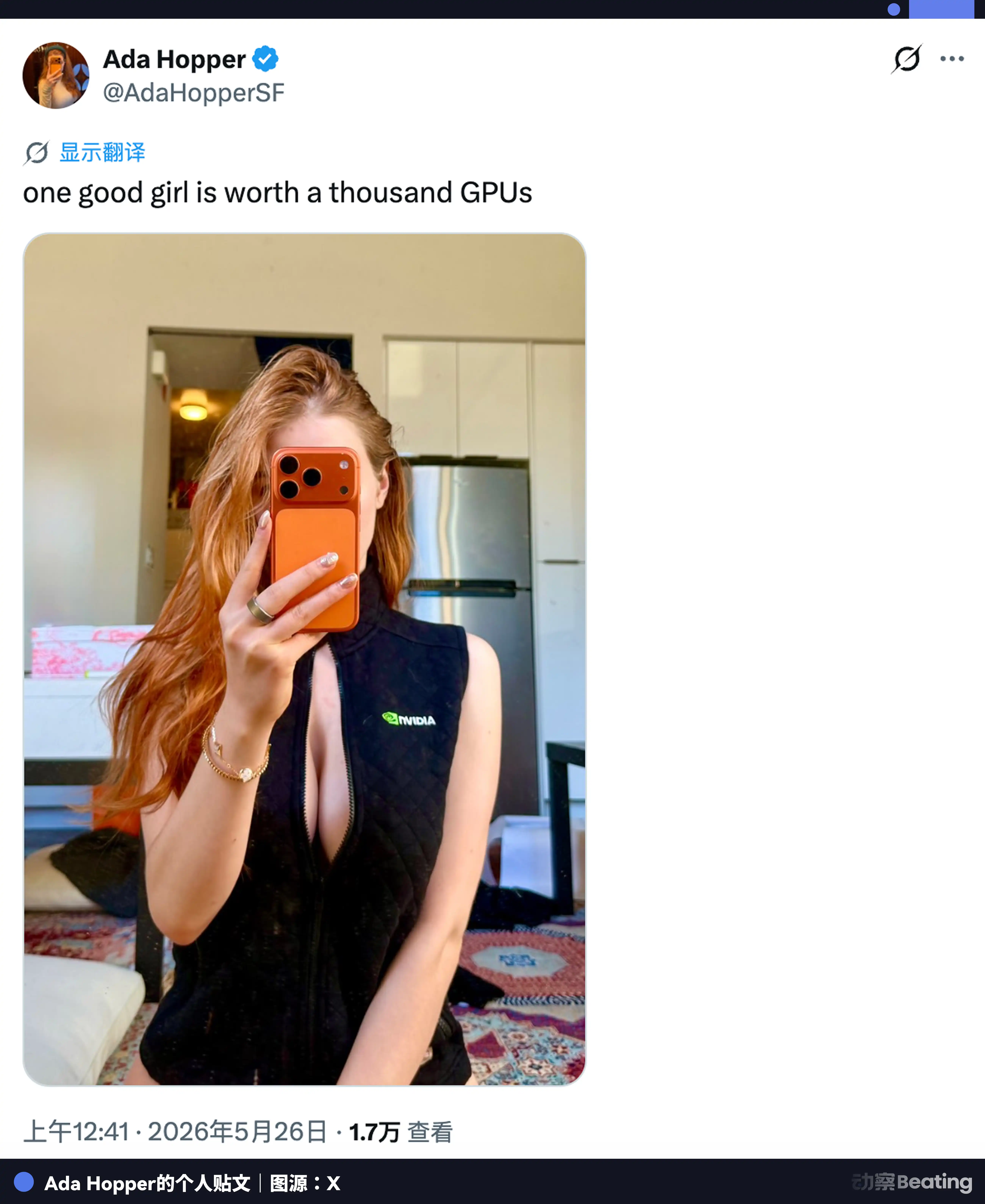
Ada Hopper charges $5,000 per hour. She once said something telling: “Talking about AI with these clients works incredibly well. Tech men get excited when a beautiful woman knows what a GPU is.”
Consider what this means. For $5,000 per hour, clients aren’t paying for beauty alone—flowers aren’t worth that. They’re paying for a beautiful person who actually understands what they’re saying. When you mention GPUs, she picks up the thread. When you discuss your worldview, she stays engaged. And you can’t dismiss her.
Talia Sable is a former programmer. Her self-introduction reads: “huge nerd,” fond of Dungeons & Dragons, AI, and supply chain management. Charges $3,000 per hour—her calendar is full.
Aella entered the field earlier, reportedly charging up to $6,000 per hour. She promotes a concept called “nerd-first”: a beautiful woman doesn’t just offer time and body—she takes seriously her client’s intellect and ideas. Put simply: your worldview isn’t just heard—it’s genuinely interesting to her.
This business is new, but the need it fulfills is ancient in Silicon Valley.
In 1980s cabarets, the most valuable skill wasn’t beauty—it was knowing how to say, “Boss, you’re amazing.” The boss knew it was fake. But it didn’t matter. Outside, he’s ignored. Inside, for a few hundred dollars, he becomes a king for the night. He knows it’s bought—but bought is better than nothing.
They have one thing going for them: they don’t deceive themselves.
Silicon Valley folks lack this virtue. They spend $5,000 per hour chatting with a beautiful woman about AGI and humanity’s future—then tell themselves it’s high-quality intellectual exchange. Maybe it is. But if it truly were, why must the interlocutor be both beautiful and flattering? You could have the same exchange with an MIT professor—free of charge.
The truth is simple: they don’t want conversation. They want someone sitting across from them, treating them seriously. Exactly like the cabaret.
When they talk about AGI with friends, no one listens. When they discuss transformers, people drift off after three sentences. Now, a smart, attractive person sits across from them, saying, “Go on.” Suddenly, they feel seen. That feeling sells for $3,000 to $6,000 per hour—market pricing, no haggling.
In this beautiful new era, understanding GPUs beats seduction every time.
Longevity, Ketogenic Diet, and Local Models
Ada Hopper was nervous before her first client meeting. Once seated, she realized the client wanted to discuss the same things she cared about: intermittent fasting, metabolic health, ketogenic diet. They spent the entire night discussing scientific papers. The $5,000-per-hour premium companionship service was spent analyzing how to eat meat more scientifically.
Traditional rich people spend money to impress others—buying Ferraris, wearing Patek Philippi watches, ensuring visibility. Silicon Valley’s new rich do the opposite. They spend money for themselves—or rather, for their bodies. They skip luxury cars and watches. Ask an engineer who just cashed out tens of millions what he recently bought. He says he got a Mac Mini to run local AI models. Another says he’s adopting a ketogenic diet, aiming to live to 120.
Marek has a client who adopted the entire longevity philosophy—so much so that he sees it as a moral duty. If technology can extend life, failing to pursue it is laziness. Under Marek’s influence, the client lost 50 pounds.
Another client gifted Marek a Mac Mini—not a designer bag, not jewelry, but a compact machine capable of running AI models locally, because he believed Marek should have her own on-device inference capability. Others commissioned AI-generated digital art exclusively for her.
She’s traveled internationally, shopped in Europe, even tried indoor wingsuit flying. Yet she gravitates toward old things: vintage jewelry, Edwardian-era clothing, mechanical movements hidden inside small objects. She loves watching tiny gears turn in circles. This hobby shares an odd kinship with her clients’ obsession with Transformers.

This isn’t traditional hedonism. Today’s ultra-wealthy study how to live 20 extra years, while quietly running large models at home. They obsess over their bodies like diligent engineers tending to a brand-new machine.
What they eat, how many hours they sleep, heart rate, body fat percentage—all meticulously tracked. As long as there’s a graph, they feel reassured. Life itself becomes a long-term experiment—its subject, themselves. Qin Shi Huang sent envoys to sea; today’s San Francisco elite monitor sleep curves. Methods have advanced, but the desire remains unchanged.
Unfortunately, some things resist quantification. Like sitting across from someone, listening to idle chatter. You never know when they’ll grow bored—or why they suddenly laugh. This cannot be measured, offers no stable return. Precisely because of that, it commands a premium price.
Before models change the world, they first transform the nights of the wealthy.
Good Morning, Night City
At this point, we can begin to see what this city looks like.
Here, companies don’t need to be mayors—they decide who stays and who leaves. Someone sells part of their stock options, suddenly gaining $30 million. They study longevity, sleep optimization, and how to fine-tune their body to peak performance. When bored at night, they can spend thousands hiring a smart, beautiful person just to talk.
Others live simpler lives. Waking at 6 a.m., commuting from Oakland or further, enduring over an hour of traffic to reach the city. Some code for these companies, others clean offices, serve coffee, deliver food, drive rideshares. With a monthly rent of $3,415 hanging overhead, they can only move farther out.
This city believes deeply in technology. It believes bodies can be optimized, sleep improved, productivity enhanced. Human relationships can even be packaged as a service. Open your phone, select, book, pay, cancel—no different from summoning a ride.
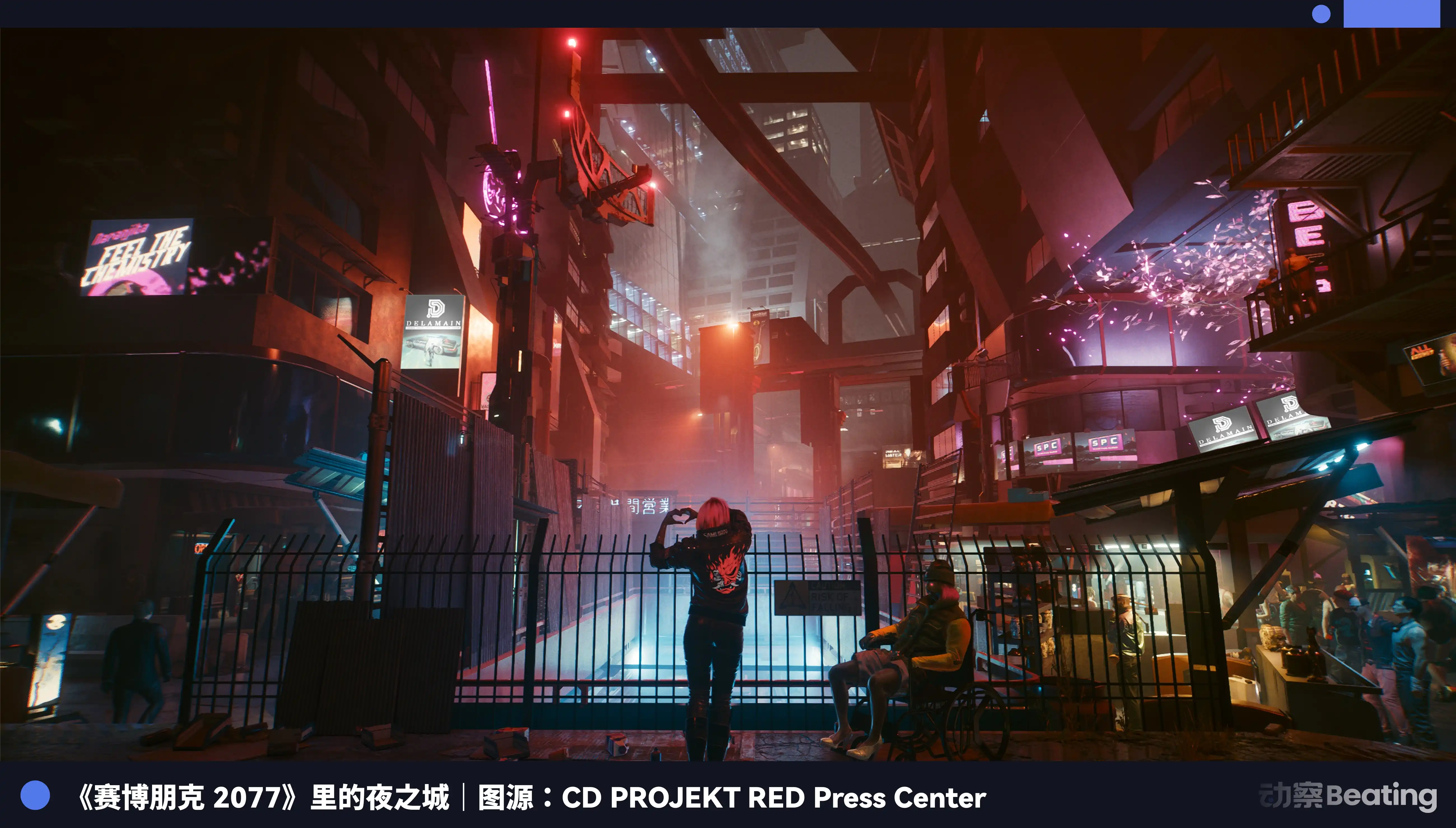
Anyone who’s played Cyberpunk 2077 will find this eerily familiar. CD Projekt Red once described Night City as: “a colossal city obsessed with power, charisma, and bodily modification.”
Swap “bodily modification” for longevity science and biohacking, “charisma” for AGI, “power” for AI companies and valuation charts—this description fits San Francisco in 2026 almost perfectly.
Cyberpunk is never just an aesthetic. Neon lights don’t make a city cyberpunk. Robots don’t either. It’s a social structure characterized by high technology and low human rights.
Technology advances relentlessly, while humans grow increasingly alienated from one another. Some begin to question natural limits—seeking extended lifespans, sharper minds, outsourcing every annoying aspect of life. Others calculate how far they must relocate just to remain in this city.
Night City didn’t start with cybernetic limbs.
It began when the city gradually accepted this arrangement: some keep upgrading, others keep retreating. Everyone rode elevators in the same building, waited at the same traffic lights—then returned to entirely different worlds.
San Francisco lacks neon lights and rarely rains. But it always evokes Night City.
Original: BlockBeats
Disclaimer: Contains third-party opinions, does not constitute financial advice
Pharos Network Unlocks AI Model Payment Channels, Introduces New Use Cases for $PROS and USDC as Platform Payment Instruments
06-15
NVIDIA Has Plenty of Cash—Why Is It Borrowing $20 Billion?
06-15
Will Claude Ban Accounts and Verify ID Cards? Face Recognition Was Old News from Two Months Ago, and "Handing Over Data to Police" Is a Misinterpretation
06-15
Japan's Central Bank on the Brink of Rate Hike—Can the AI Bull Run Withstand?
06-15
5-Second Breakthrough with Just 1 Interaction: Has the "Strongest Security Mechanism" of Claude Fable 5 Been Cracked by a Chinese Team?
06-13
Why Is the "AI Service Subscription Model" Inevitably Headed for Extinction?
06-13
Managing a company valued at nearly a trillion dollars, Anthropic's CEO has only one direct report.
06-13


