
ChainThink
Stay ahead, master crypto insights
Impact Analysis: Tariff Escalation and the Cryptocurrency Market
Impact Analysis: Tariff Escalation and the Cryptocurrency Market

2025-04-08 11:11
Author: Moulik Nagesh, Binance Research
Key Takeaways
In 2025, the US-led trade protectionism made a strong comeback. Since Donald Trump's re-election as president in January 2025, the United States has implemented a series of large-scale new tariffs—covering both specific countries and industries—which have raised concerns about a global trade war. In just the past week, the US has launched a new round of "reciprocal" tariffs, and other countries have also announced countermeasures.
This report will analyze how these tariffs (the most aggressive since the 1930s) affect the macroeconomy and the crypto market. We will examine tariff levels, macroeconomic trends (including inflation, growth, interest rates, and the Fed outlook), and their impact on crypto asset performance, volatility, and correlation based on data. Finally, we will also explore key observation points for the future, as well as the market prospects for crypto assets in an environment of stagflation and protectionism.
Tariff Resurgence in 2025
After years of relatively peaceful trade, 2025 saw a rapid reversal. Within days of returning to the White House, President Trump began fulfilling his campaign promises by imposing tariffs on a wide range of imported goods—covering specific countries and industries.
Trade tensions escalated on April 2. On that day, the US announced comprehensive "reciprocal" tariffs and named it "Liberation Day," marking a new turning point in this round of global trade war. The trade relationships previously seen as normalized with the US have undergone fundamental changes. The main events of the past week include:
- Base Tariffs: The US announced a new 10% uniform tariff on all imported goods, reversing decades of trade liberalization. This base rate became effective on April 5th.
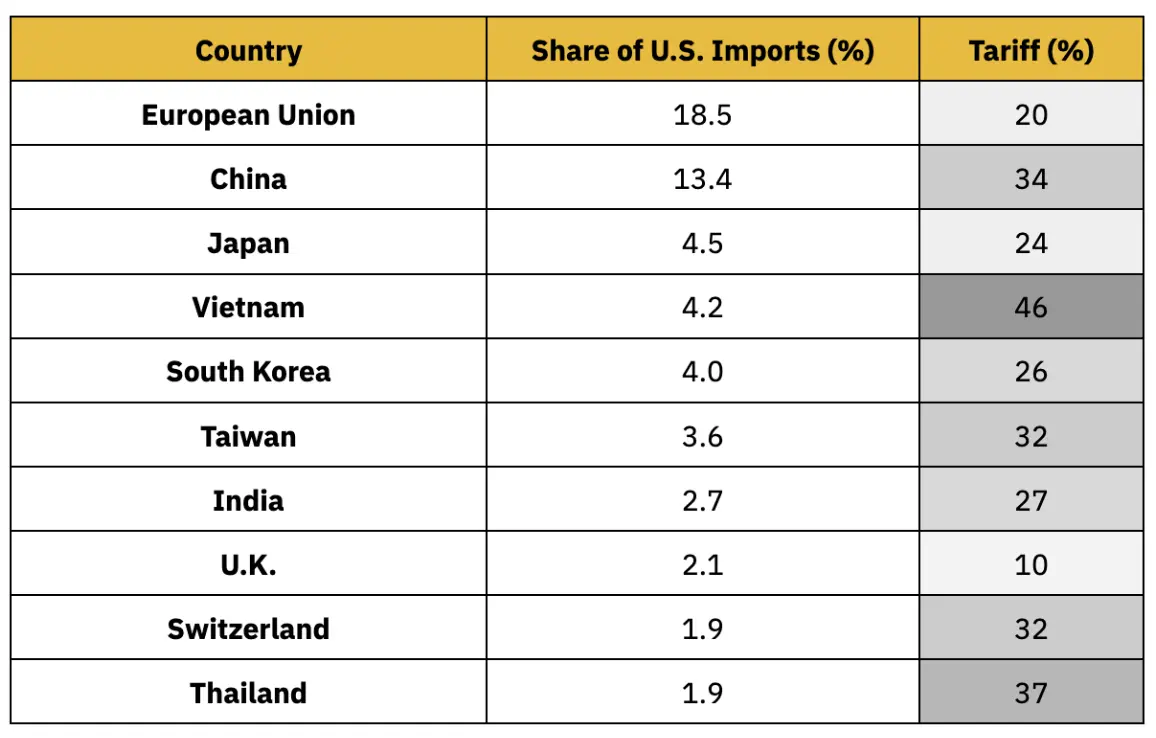
- Targeted Tariffs: In addition to the base rate, higher country-specific tariffs were imposed. President Trump called these "reciprocal" tariffs, aimed at countries that set high barriers for US products. Notably, Chinese goods will face an additional 34% tariff—adding to the existing 20%, resulting in a combined tariff rate of 54%. Other targeted tariffs include 20% for EU goods, 24% for Japan, 46% for Vietnam, and 25% for car imports. Canada and Mexico, which had already been subject to 20% tariffs in February, were not included in the new list.
- Global Retaliation: US trading partners responded quickly. By mid-February, several early taxed countries had announced retaliatory measures. Canada, unable to successfully secure a tariff extension from the US, decided to impose a 25% tariff on all US imports. China also responded early and further escalated on April 4, announcing a 34% tariff on all US imports.
With the implementation of "reciprocal" tariffs and escalating trade tensions, more countries are expected to introduce their own retaliatory measures. The EU has clearly stated it will respond soon, and other major economies have also developed related counterplans. Although the full extent of global responses is still unclear, current signs indicate that a broad trade war involving multiple fronts is forming.
Chart 1: On April 2, 2025, the "Liberation Day" tariffs covered up to 60 countries, including several major US trade partners Note: This table reflects the "reciprocal" tariffs imposed by the US on its top ten import sources on April 2.
Source: BBC, X (@WhiteHouse), Binance Research, as of April 3, 2025
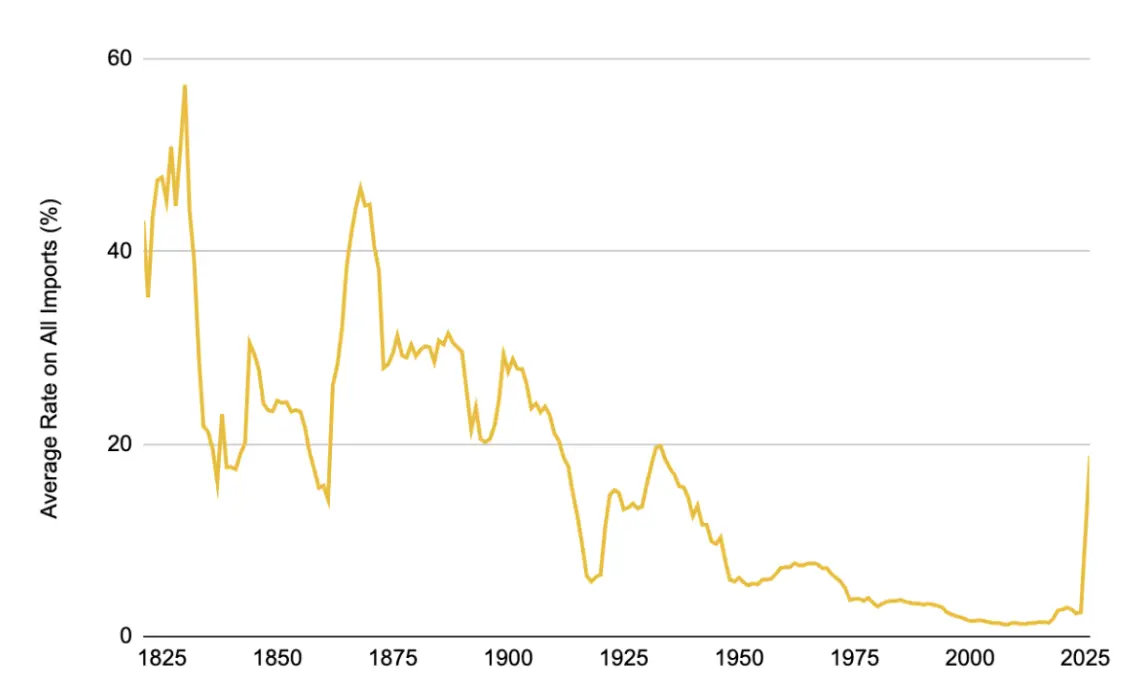
These policies have caused the US import tax rate to surge to the highest level since the Smoot-Hawley Tariff Act of 1930, which imposed comprehensive tariffs on thousands of goods during the Great Depression. According to available data, the average tariff rate in the US has risen to approximately 18.8%, with some estimates reaching as high as 22%—a significant jump from 2.5% in 2024.
As a reference, over the past few decades, the average tariff rate in the US has typically remained between 1–2%; even during the Sino-US trade friction from 2018 to 2019, it only rose to around 3%. Therefore, the measures in 2025 represent an unprecedented tariff shock in modern history—almost equivalent to a return to the protectionism of the 1930s.
Chart 2: US tariff increases have pushed import tax rates to the highest levels in nearly a century
Source: Tax Foundation, Binance Research, as of April 3, 2025
Market Impact: Cooling Demand, Risk Aversion, and Volatility Surge
1. Cooling Demand and Rising Risk Aversion
Market sentiment has clearly turned cautious, with investors exhibiting typical "risk-averse" behavior in response to tariff announcements. The total market capitalization of the crypto market has dropped by approximately 25.9% from its January peak, with nearly $1 trillion in market value evaporated, highlighting its high sensitivity to macroeconomic instability factors.
Crypto assets and stock markets have shown highly consistent movements, both facing cooling demand, widespread selling, and entering correction zones. In contrast, traditional safe-haven assets such as bonds and gold have performed well, with gold continuously setting new historical highs, becoming a safe haven for investors in times of macroeconomic uncertainty.
Chart 3: Since the initial tariff announcement, the crypto market has declined by 25.9%, the S&P 500 has fallen by 17.1%, while gold has increased by 10.3% and continues to set new historical highs
Source: Investing.com, CoinGecko, Binance Research, as of April 4, 2025
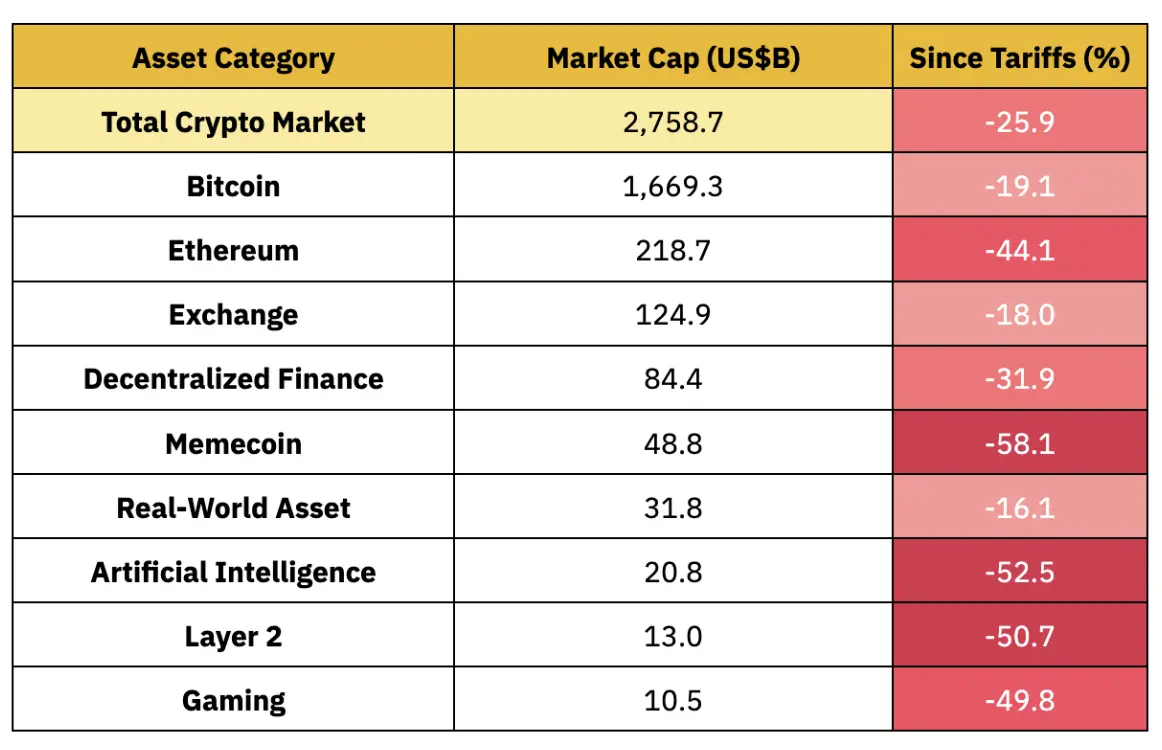
The severe market reaction also highlights the characteristics of crypto assets during periods of intense "risk aversion": Bitcoin (BTC) fell by 19.1%, and most mainstream altcoins fell by similar or even greater amounts. Ethereum (ETH) fell by over 40%, and high-beta sectors (such as Meme coins and AI-related tokens) plummeted by over 50%. This sell-off erased most of the gains in the crypto market since the beginning of the year. As of early April, even BTC's year-to-date (YTD) gain has turned negative—despite its strong performance in 2024.
Chart 4: Altcoins have fallen significantly more than Bitcoin under the macroeconomic panic triggered by tariffs, intensifying market pessimism
Source: CoinGecko, Binance Research, as of April 4, 2025
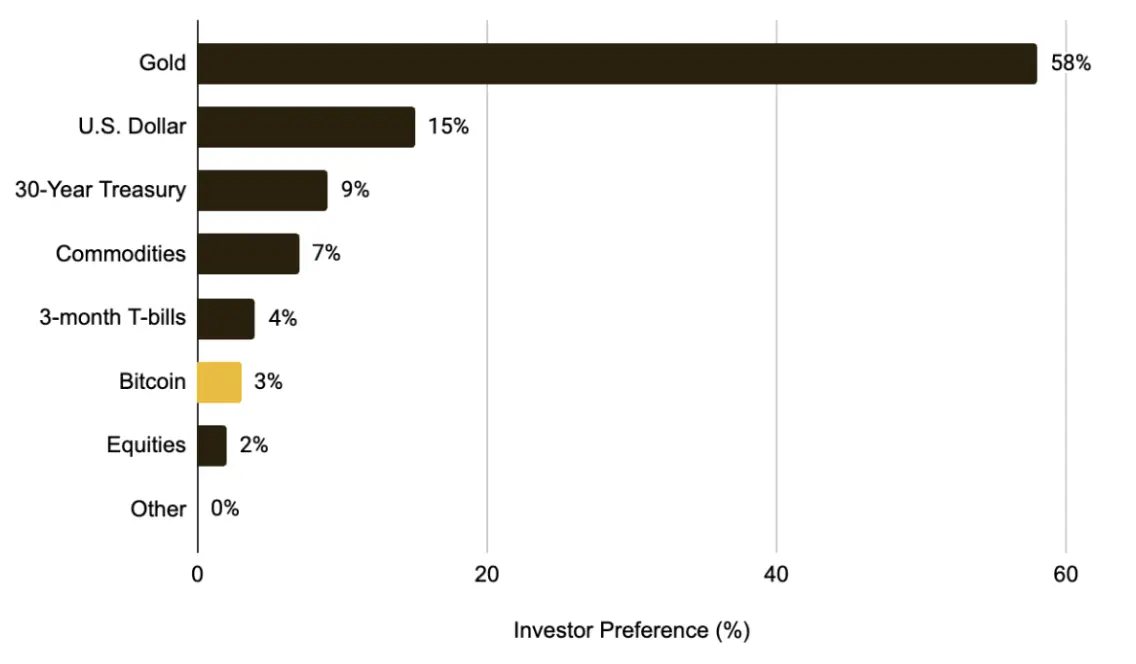
As the crypto market increasingly exhibits characteristics of a risk asset, if the trade war continues, it may continue to suppress capital inflows, temporarily suppressing demand for digital assets. Funds may remain on the sidelines or shift to assets considered safer, such as gold. This sentiment is also reflected in recent fund manager surveys, where only 3% of respondents indicated they would allocate Bitcoin in the current environment, while 58% prefer gold.
Chart 5: Only 3% of global fund managers view Bitcoin as their preferred asset class in a trade war scenario
Source: BofA Global Fund Manager Survey, Binance Research, as of February 2025
2. Volatility Surge
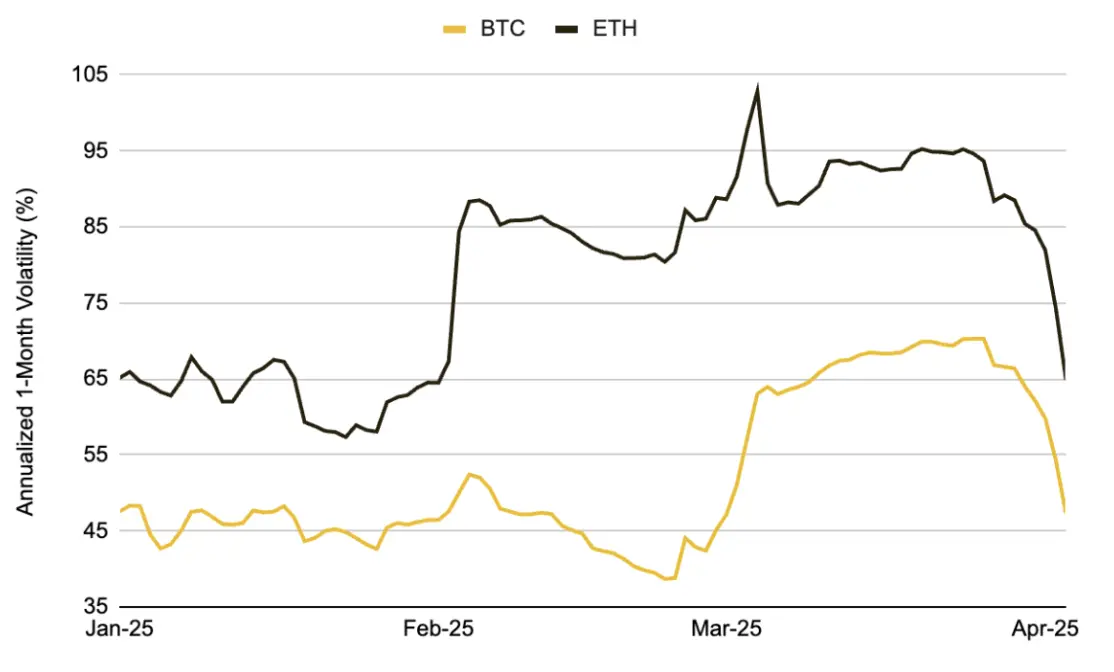
The market's sensitivity to tariff policies is evident, with every major announcement triggering significant price fluctuations. Over the past few months, BTC has experienced multiple sharp price swings—including one of the largest single-day drops since the 2020 pandemic crash. In late February 2025, when Trump suddenly announced plans to impose tariffs on Canada and the EU, BTC fell by about 15% in the following days, while its actual volatility surged. ETH's movement was similar, with its monthly volatility rising from around 50% to over 100%.
These market behaviors highlight the extreme sensitivity of the crypto market to policy changes in the current high-uncertainty macroeconomic environment. For the coming period, if the policy direction remains unclear or the trade war escalates further, the market will maintain high volatility. Historical experience also indicates that only after the market has fully digested and priced in the new tariff policies will volatility gradually decline.
Chart 6: At this stage, BTC's one-month actual volatility has risen above 70%, while ETH exceeds 100%, reflecting the market's severe fluctuations after the tariff announcement
Source: Glassnode, Binance Research, as of April 4, 2025
Macroeconomic Impact: Inflation, Stagflation Concerns, Interest Rates, and the Fed Outlook
1. Inflation and Stagflation Concerns
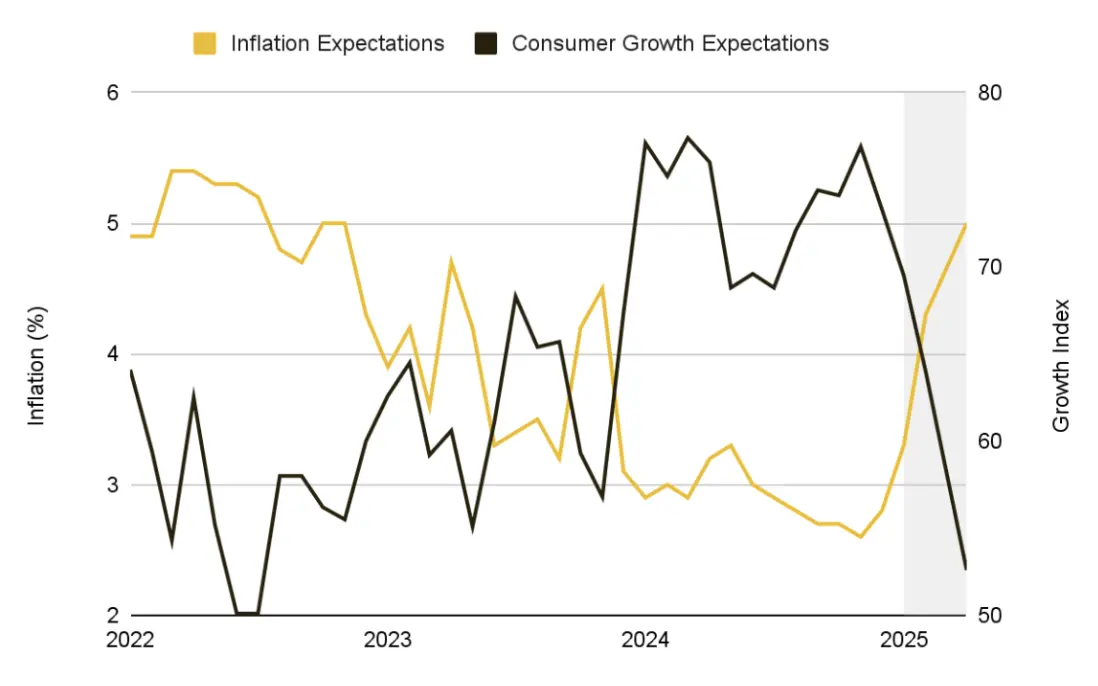
New tariffs effectively impose substantial additional taxes on imported goods, coinciding with the Federal Reserve's efforts to curb price growth, fueling inflationary pressures. Market concerns about these measures potentially disrupting the inflation decline process have already emerged. Market-based indicators such as one-year inflation swaps have surged above 3%, while expectations in consumer surveys have risen to around 5%, indicating a general expectation that prices will continue to rise over the next 12 months.
At the same time, economists warn that if the trade war escalates fully and triggers global retaliatory responses, the loss of global economic output could reach as high as $1.4 trillion. The US per capita real GDP is expected to decline by nearly 1% initially. Fitch Ratings states that if the comprehensive tariff system persists, most economies may enter recession and notes, "The current tariff levels in the US are so high that most economic forecasting models are no longer valid."
With rising inflation expectations and growth concerns, the risk of economic stagnation and rising prices (stagflation) is increasingly prominent.
Figure 7: Changes in macro conditions in 2025 have driven up 1-year expected inflation and decreased growth expectations
Source: University of Michigan, Binance Research, as of April 5, 2025
2. Interest Rate Prospects and the Fed's Stance
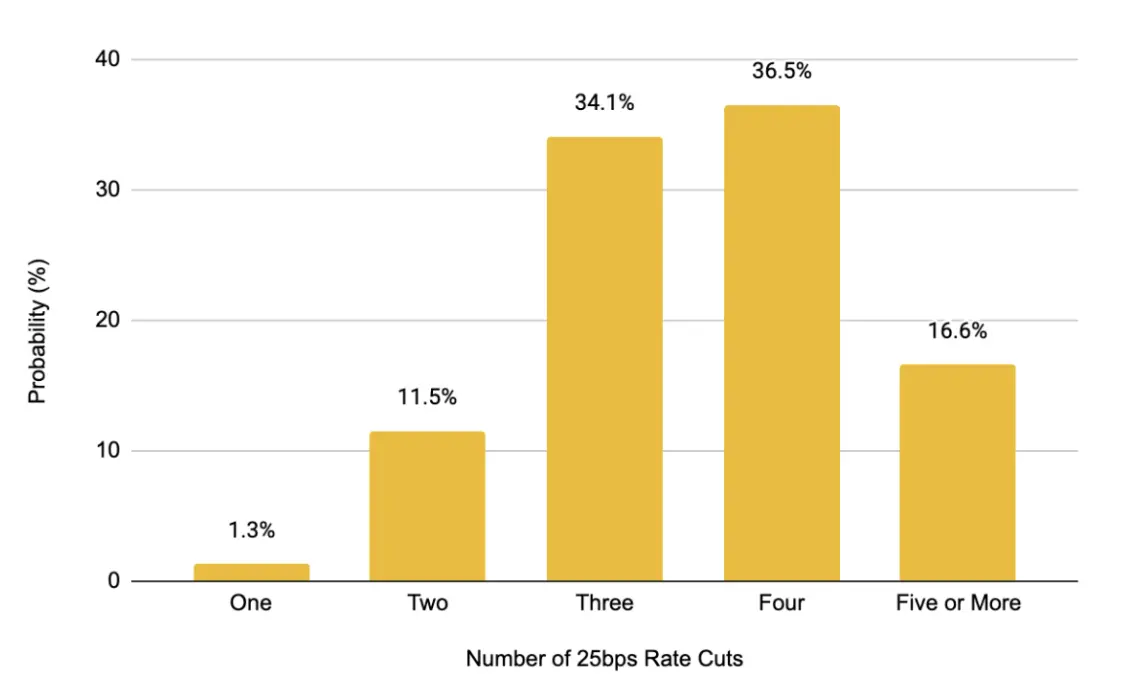
Federal funds rate futures data show that the market's expectations for rate cuts in the coming months have significantly increased. This marks a clear shift in attitude—just weeks ago, the Fed remained committed to curbing inflation, but now, due to growing concerns about economic growth prospects, the market has begun to expect monetary policy to possibly shift to a more accommodative stance to support the economy.
Figure 8: Market expectations for rate cuts in 2025 continue to rise, currently expecting four 25-basis-point cuts—far exceeding the previous expectation of one cut
 Source: CME Group, Binance Research, as of April 4, 2025
This shift in sentiment is reflected in public statements by Fed officials. They expressed concerns, emphasizing that the new tariffs contradict previous economic policy approaches. Now, the Fed faces a difficult choice: whether to tolerate the added inflation from the tariffs or to stick to an hawkish stance, risking further suppression of growth?
"The scale of tariffs announced in recent weeks exceeds expectations, and their impact on inflation and growth—especially the cumulative effect—needs to be closely monitored."
— Jerome Powell, April 4, 2025
In the short term, the Fed appears to remain committed to maintaining long-term inflation expectations stable. However, monetary policy decisions will continue to rely on data, depending on which signal—whether inflation or growth—is weaker. If inflation far exceeds the target, the stagflation environment may limit the Fed's policy response capacity. This uncertain policy outlook also exacerbates market volatility.
Outlook
1. Correlation and Diversification Allocation
The evolving relationship between crypto assets and traditional markets has become a focal point—and Bitcoin, as the leading asset in the market, is the best window to observe this change. The "risk-averse" events triggered by the trade war have significantly impacted the correlation structure between BTC and stocks and traditional safe-haven assets.
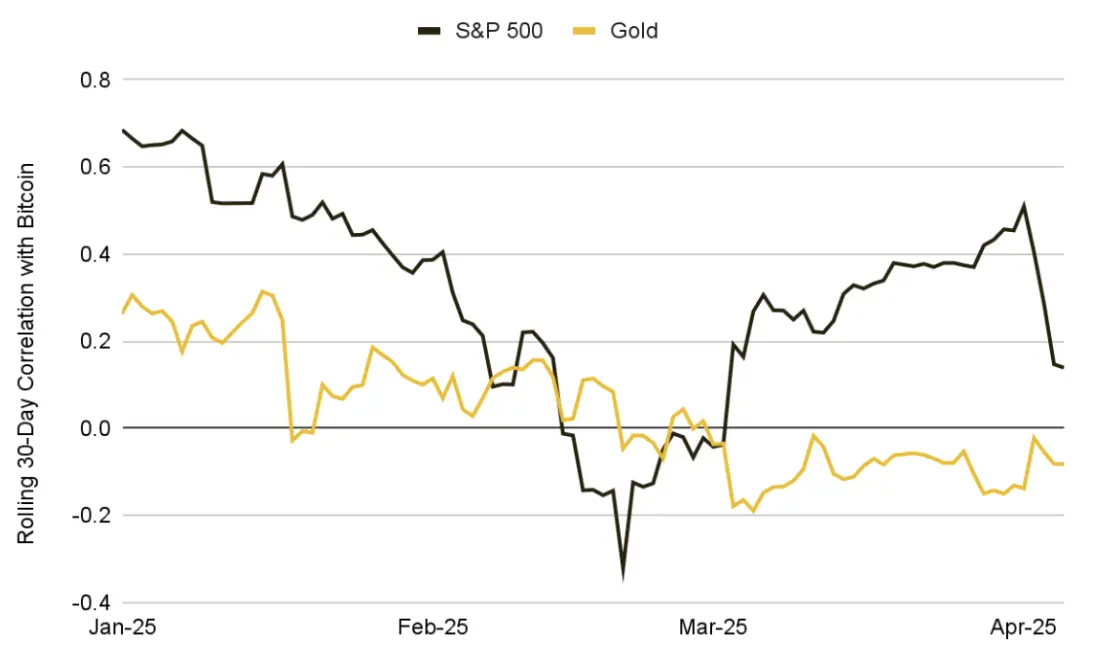
Since the first mention of tariffs on January 23, the initial market response was not consistent—Bitcoin and stock movements showed some independence, causing their 30-day correlation to drop to -0.32 on February 20. However, as trade war rhetoric continued to escalate and risk-averse sentiment spread, this figure rose to 0.47, showing that Bitcoin's linkage with overall risk assets increased in the short term.
In contrast, Bitcoin's correlation with traditional safe-haven assets like gold has clearly weakened—the originally neutral to positive relationship turned into a negative correlation of -0.22 in early April.
These changes show that macroeconomic factors, especially trade policies and interest rate expectations, are increasingly dominating crypto market behavior, temporarily suppressing the market structure driven by supply and demand logic. Observing whether this correlation structure continues will help understand Bitcoin's long-term positioning and its diversification value.
Figure 9: Initial reactions diverged, with BTC's correlation with the S&P 500 increasing as the trade war escalated, while its correlation with gold continued to weaken
 Source: Investing.com, Binance Research, as of April 5, 2025
2. Reclaiming the Safe-Haven Narrative
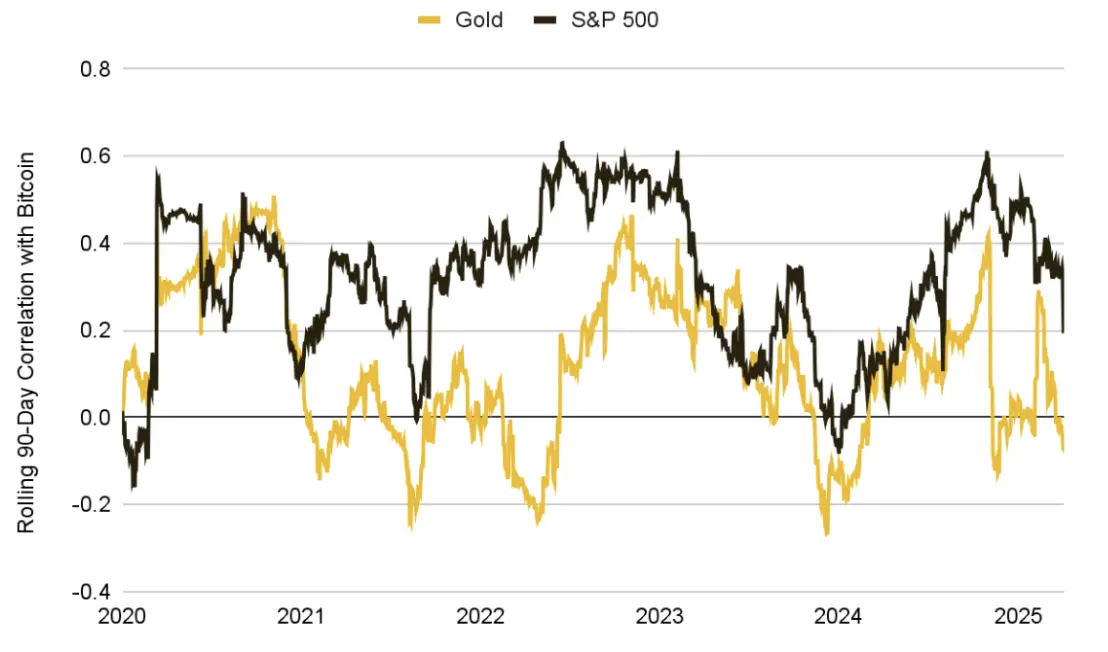
Although recent macro and liquidity shocks have highlighted the "risk attribute" of crypto assets, the long-term trend remains unchanged: Bitcoin's correlation with traditional markets usually rises during extreme pressure, but tends to decrease as the market stabilizes. Since 2020, the 90-day average correlation between BTC and the stock market has been about 0.32, and with gold, it has been 0.12, indicating that it has always maintained a certain degree of separation from traditional asset classes.
Even under the recent impact of tariff announcements, BTC has shown some resilience on days when traditional risk assets weakened. Meanwhile, the supply held by long-term holders has continued to rise—indicating that core holders have not significantly reduced their positions during recent volatility, but rather shown strong confidence.
This behavior suggests that although short-term price fluctuations have intensified, Bitcoin may still re-establish a more independent macro identity.
Figure 10: Since 2020, Bitcoin's long-term correlation with traditional assets has remained moderate: 0.32 with the S&P 500 and 0.12 with gold
 Source: Investing.com, Binance Research, as of April 5, 2025
The key question is whether BTC can return to a long-term structural correlation with the stock market. Similar trends were observed during the banking crisis in March 2023, when BTC successfully decoupled from the stock market and strengthened.
Now, as the tariff war escalates and global markets begin to adapt to a long-term fragmented trade landscape, whether Bitcoin can once again be viewed as a "non-sovereign, permissionless" safe-haven asset will determine its future macro role. Market participants will closely monitor whether BTC can retain this independent value proposition.
One potential path is to reclaim its appeal during periods of currency inflation and fiat depreciation, especially when the Fed turns accommodative. If the Fed starts cutting rates while inflation remains high, Bitcoin may regain favor as a "hard asset" or inflation hedge.
Ultimately, this process will determine BTC's long-term positioning as an asset class—and its diversification utility in investment portfolios. This also applies to other mainstream altcoins, which exhibit stronger risk attributes in the current environment and may continue to rely on BTC's dominant market sentiment.
3. The Crypto Market in a Stagflation and Protectionism World
Looking ahead, the crypto market will face a complex macroeconomic environment dominated by trade policy risks, stagflation pressures, and a breakdown in global coordination. If global growth continues to weaken and the crypto market fails to establish a clear narrative, investor sentiment may further decline.
Long-term trade wars will test the industry's resilience—potentially leading to a depletion of retail capital flows, slower institutional allocations, and reduced venture capital financing. The macroeconomic variables to watch in the coming months include:
- Trade Dynamics: Any new tariff lists, unexpected moderation measures, or significant bilateral changes (such as U.S.-China negotiations or escalation) will directly impact market sentiment and inflation expectations.
- Core Inflation Data: The upcoming CPI and PCE data are crucial. If they unexpectedly rise due to import costs, it will increase stagflation concerns; if the data is weak, it may alleviate central bank pressure and increase the attractiveness of risk assets, including crypto.
- Global Growth Indicators: Declining consumer confidence, slowing business activity (PMI), weak labor markets (rising unemployment claims, slowing non-farm payrolls), corporate earnings warnings, and yield curve inversions (common recession signals) may further trigger risk aversion in the short term. However, if macroeconomic weakness accelerates expectations of monetary easing, it may provide support for the crypto market.
- Central Bank Policy Pathways: How the Fed and other major central banks balance inflation and recession will determine the liquidity of various assets. If growth slows down but the Fed refuses to cut rates, risk assets will continue to face pressure; if it shifts to a more accommodative stance, it may bring a comprehensive rebound. If real interest rates decline (regardless of whether due to policy or persistent inflation), long-duration assets like Bitcoin may benefit. Central bank policy divergence (such as the Fed turning dovish, while the ECB remains hawkish) may also spark cross-border capital flows, further increasing crypto market volatility.
- Crypto Policy Events: ETF approvals, strategic BTC reserves, and key legislative progress may become independent catalysts in the current macroeconomic context, potentially breaking the "macro binding" state of crypto assets and re-emphasizing their uniqueness. However, one should also be vigilant about reverse risks, such as regulatory delays or adverse litigation developments, which could produce negative feedback.
Conclusion
The most aggressive tariff policies since the 1930s are having profound impacts on the macroeconomy and the crypto market. In the short term, the crypto market may continue to exhibit high volatility, with investor sentiment fluctuating with trade war news.
If inflation remains high while growth slows, the Fed's response will be a key turning point: if it shifts to a more accommodative stance, the crypto market may rebound due to improved liquidity; if it maintains a hawkish stance, risk assets will continue to face pressure.
If the macro environment stabilizes and a new narrative emerges, or if crypto assets regain their long-term safe-haven status, the market may see a recovery. Until then, the market may remain volatile and highly sensitive to macroeconomic news. Investors need to closely monitor global dynamics, maintain diversified asset allocation, and seek opportunities in the potential market misalignments brought by the trade war.
Disclaimer: Contains third-party opinions, does not constitute financial advice


AI Practical Guide
This column focuses on the real progress of Agents: technological evolution, application implementat

Crypto Weekly
Tracking on-chain movements of the smart money and institutions

Frontier Insights
Spotlight on Frontier, trending projects, and breaking events

Blowup Alert
As the 2026 crypto bear market deepens, exit scams and project blowups are becoming increasingly fre

Regulatory Watch
American Crypto Act – timely interpretations of policies worldwide

Popular Airdrop Tutorial
Selected potential airdrop opportunities to gain big with small investments

FusnChain
FusnChain