Europe's First Quantum Computing Company Lists on Nasdaq: Should Investors Buy Quantum Stocks Based on Performance or Options?
Europe's First Quantum Computing Company Lists on Nasdaq: Should Investors Buy Quantum Stocks Based on Performance or Options?


TL;DR
IQM Quantum Computers went public on the Nasdaq Global Select Market on July 2 via a merger with Real Asset Acquisition Corp., with ADS ticker IQMX and warrant ticker IQMX WS. According to company disclosures, IQM is Europe’s first pure-play quantum computing firm to list on a major U.S. exchange, with an equity valuation of approximately $1.8 billion prior to listing.
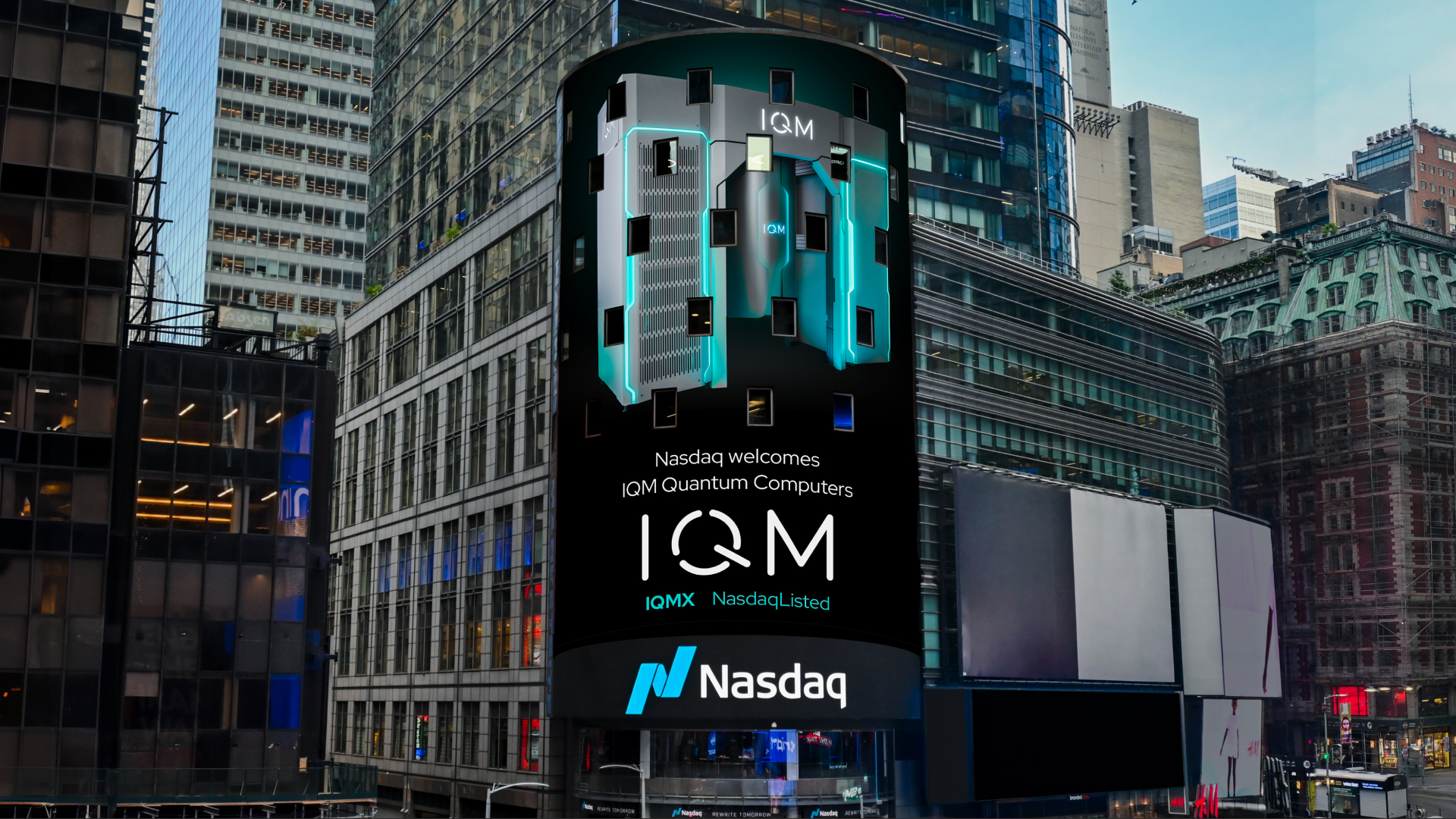
This move represents more than just a public listing—it marks a shift in valuation framework. European quantum hardware startups previously priced by government programs, research institutions, and private capital are now subject to public market scrutiny based on revenue, order backlog, cash position, and technological roadmap.
The management narrative positions IQM as having delivered systems, secured customer orders, and established in-house manufacturing capabilities. Proceeds from the IPO will fund global expansion and progress toward fault-tolerant quantum computing. However, the offering documents caution that the company operates in an emerging technology space, faces significant technical challenges, and may fail to achieve commercialization or market acceptance.
The key question for investors lies here: IQM has tangible deliveries—this is not a pure concept stock—but current valuations reflect primarily long-term technology options rather than proven, scalable profit models.
European Quantum Hardware Enters Public Pricing
The first implication of IQM’s listing is the introduction of a new publicly tradable valuation anchor for quantum computing. Previously, investors focused on IonQ, Rigetti, D-Wave, or treated IBM, Google, and Honeywell’s quantum divisions as internal corporate bets. With IQM’s entry, Europe’s superconducting quantum hardware path is now included in the same comparative framework.
This was achieved through a SPAC (Special Purpose Acquisition Company) merger—a faster route to public markets compared to traditional IPOs, though it often brings redemption risks, liquidity volatility, and post-merger valuation swings. For early-stage deep tech firms, SPACs do not validate business maturity but instead provide early access to public capital markets.
Company disclosures indicate that the merger and PIPE financing raised approximately €198.7 million (~$233.5 million in net proceeds). Post-transaction, pro forma cash stands at around €337 million (~$399 million). This capital will primarily support continued investment in quantum chips, control systems, cryogenic equipment, software stacks, and global delivery infrastructure.
IQM specializes in on-premise full-stack systems—delivering processors, control hardware, cooling systems, and software as integrated packages. For national laboratories, supercomputing centers, and government-affiliated institutions, on-premise deployment ensures sovereign control and system integration capability.
Revenue and Deliveries Reduce Pure Concept Risk
The strongest foundation for IQM’s valuation is its existing revenue and delivery track record. The company reported €31 million (~$36 million) in 2025 revenue, with a backlog of approximately $77 million in orders. Public materials confirm sales of 23 quantum computers, with delivery numbers disclosed variably as 15 or 18 units—using “15 to 18” is more conservative—and over 30 systems under construction.
While these figures appear modest compared to conventional tech firms, they carry weight within the quantum hardware sector. Quantum computing remains in its early stages, with many companies still reliant on R&D collaborations, cloud trials, and roadmap storytelling. IQM has already demonstrated one critical point: institutional buyers are willing to pay for current-generation systems.
The customer profile also defines boundaries. Current buyers are not large-scale enterprise users, but rather research institutions, national labs, supercomputing centers, and European sovereign technology initiatives. These clients purchase quantum computers not to replace existing compute clusters next year, but to build capacity, train teams, and test hybrid computing architectures in advance.
This gives IQM’s revenue real substance and prevents overextrapolation. Selling systems does not imply application explosion. A healthy order book does not guarantee stable cash flow. Listing on Nasdaq does not signify crossing a technological inflection point.
Fault-Tolerance Is the Core Technical Hurdle
The true challenge in quantum computing isn’t building a working machine—it’s making it reliable, scalable, affordable, and capable of repeatedly solving commercially valuable problems. The risk disclosures in IQM’s prospectus largely revolve around these pivotal hurdles.
Fault-tolerant quantum computing involves using error correction and redundancy to transform unstable physical qubits into more reliable logical qubits, enabling longer and higher-value algorithm execution. Most current quantum computers remain in the NISQ (Noisy Intermediate-Scale Quantum) era—characterized by high noise, moderate scale, and susceptibility to errors.
Fault tolerance is not a simple software upgrade. It demands higher-quality qubits, lower error rates, more sophisticated control systems, and hardware scales far beyond today’s benchmarks. Industry consensus holds that viable fault-tolerant systems will require orders-of-magnitude larger physical qubit counts.
This underscores a fundamental divergence in investment timing between quantum and AI. AI can leverage existing semiconductor infrastructure, cloud services, and enterprise software ecosystems for rapid adoption and short feedback loops. Quantum computing must first overcome physical engineering barriers before scaling to commercial workloads.
IQM leadership emphasizes existing deliveries, orders, and manufacturing capabilities, asserting that IPO proceeds will accelerate progress toward larger-scale systems and fault-tolerant goals. Yet cautious investors see another reality: current revenue remains small relative to a $1.8 billion valuation, customers are concentrated in research and government sectors, sustained R&D spending will drive cash burn, and future funding rounds may be necessary.
Order Execution Determines Valuation Patience
After going public, investors should focus less on quantum hype cycles and more on whether orders consistently convert into revenue. A $77 million backlog, if executed steadily, would strengthen confidence in IQM’s commercial traction. Slow or delayed conversions, however, could push valuations back into a tug-of-war between long-term potential and cash consumption.
Customer composition remains critical. As long as revenue stems predominantly from government entities, research institutions, and supercomputing centers, IQM’s commercialization still resembles pre-deployment infrastructure investment. Only when enterprise clients begin paying consistently for defined business use cases will the market reassess quantum computing’s transition from research procurement to commercial budget allocation.
Cash burn becomes a hard constraint in public markets. While the IPO provides a buffer reducing near-term fundraising pressure, quantum hardware remains a capital-intensive, engineering-heavy, delivery-driven path. If fault-tolerance progress lags behind the roadmap, the company must clarify how long current cash reserves will sustain operations—and whether future financing will dilute shareholders.
IQM’s listing opens a public market window for quantum computing and subjects this long-dated option to quarterly data validation. Whether the quantum narrative evolves from long-term imagination into investable current reality hinges first on order fulfillment, delivery execution, and cash runway.
Original: ChainThink
Disclaimer: Contains third-party opinions, does not constitute financial advice
WasabiCard Partners with Japan Innovation Group to Accelerate Digital Transformation in Japan’s Retail Sector and the Adoption of Stablecoin Payments
30 mins ago
Liang Fengyi: Plans to Establish Cybersecurity Framework for Licensed Institutions to Enhance Resilience Against AI-Driven Cyber Threats
33 mins agoBrookfield Leads Korea's First $8 Billion GPU Financing
47 mins agoOver $15 million in USDC reserves earnings approaching, Hyperliquid expects to repurchase approximately 180,000 HYPE tokens
1 hour agoEthereum Spot ETFs experienced a net outflow of $432 million last week, marking five consecutive weeks of net outflows.
1 hour agoBitcoin spot ETFs saw a net outflow of $203 million last week, with Fidelity's FBTC leading the outflows at $166 million.
1 hour agoFirst Day After Binance's Largest-ever Hack: $360M in On-chain Outflows, $600M in Bitcoin ETF Outflows
1 hour ago