a16z: The U.S. Needs the CLARITY Act to Seize Leadership in Stablecoin and Tokenization Standards
a16z: The U.S. Needs the CLARITY Act to Seize Leadership in Stablecoin and Tokenization Standards


Each generation has the opportunity to upgrade infrastructure.
The 1990s were about the internet. Policymakers worried it would disrupt existing industries and create new risks. But they didn’t force this technology into outdated regulatory frameworks; instead, they established rules that enabled innovation while protecting consumers. The result was one of the greatest periods of economic growth in U.S. history.
Today, we face a similar opportunity on blockchain networks. Stablecoins enable faster, cheaper payments. Tokenization is modernizing capital markets. Both rely on blockchain infrastructure.
These technologies will advance regardless of whether Congress acts. Whether the U.S. sets the standard—or cedes this ground to others—depends entirely on its own choices.
GENIUS Bill Proves Clear Rules Work
The GENIUS Bill demonstrates what thoughtful policy can achieve. Stablecoins are digital dollars that move as easily as bits across the internet. Sending $200 from the U.S. to Colombia via traditional channels may cost over $12 and take days. With stablecoins, the same transfer settles in seconds for just a few cents.
For years, regulatory uncertainty hindered stablecoin adoption. The GENIUS Bill changed that. By establishing reserve requirements and issuer frameworks, it eliminated all ambiguity and unlocked growth.
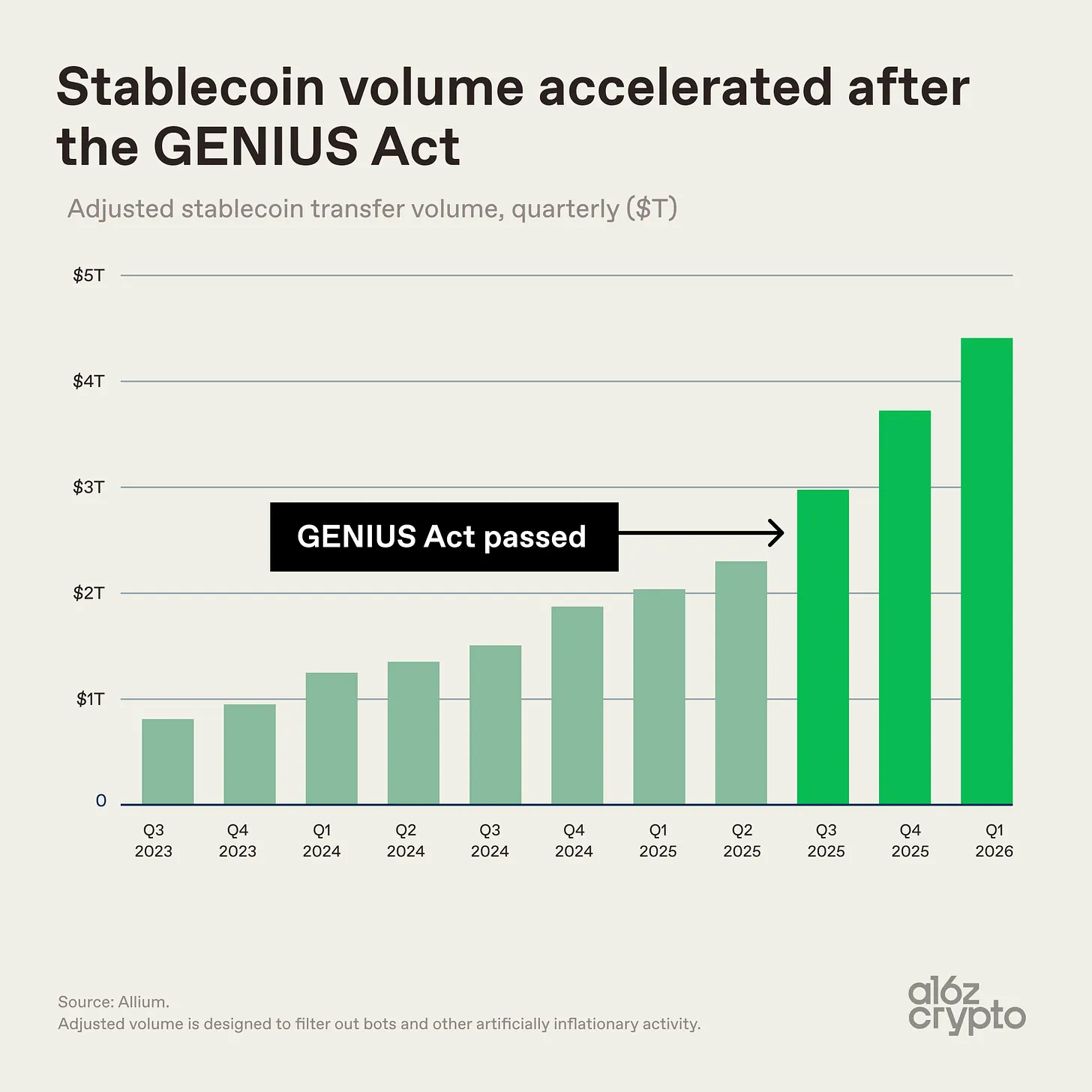
The results speak for themselves. The stablecoin market is now worth approximately $315 billion—over 50% larger than a year ago—and dollar-backed tokens have become one of the fastest-growing channels for U.S. currency abroad. According to Visa, stablecoins processed $100 trillion in transaction volume over the past 12 months. Major institutions—including JPMorgan, Citigroup, Visa, Mastercard, and BlackRock—are now deeper into blockchain infrastructure.
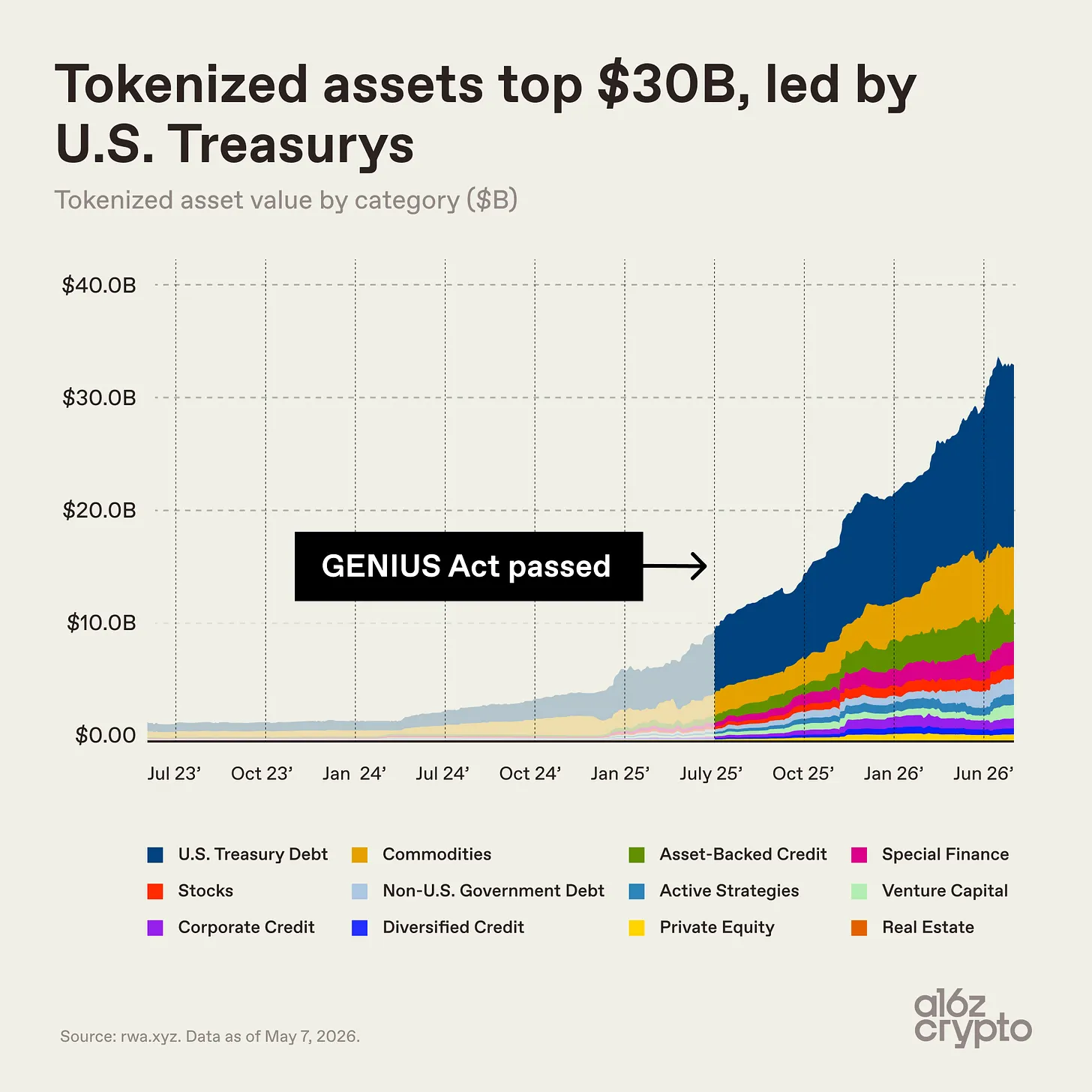
The key takeaway? The U.S. dollar is winning. Millions around the world without easy access to traditional dollar accounts can now hold and transact in digital dollars through software wallets. Clear rules help anchor this new system to American standards and institutions—not competing alternatives.
GENIUS proves smart regulation expands markets, not restricts them. But it only addresses part of the problem.
Blockchain Networks Still Lack Rules
Stablecoins represent less than 15% of the crypto market by market cap, but they depend on the remaining 85%—the underlying blockchain networks—which still lack a coherent federal framework. This is like regulating smartphones while ignoring the cellular network.
The CLARITY Act corrects this.
At its core, the CLARITY Act provides clear rules for blockchain networks and defines regulatory responsibilities in the digital asset market. It incentivizes transparency, risk reduction, and competition under a shared set of standards. By authorizing regulators to apply mature principles from traditional finance—such as proper custody, client asset segregation, and full disclosure—it helps prevent the next FTX-style catastrophe. It also unlocks the next wave of institutional adoption.
Major companies are already moving. BlackRock has launched tokenized funds. JPMorgan is building a blockchain-based payment system. DTCC, which holds $11.4 trillion in assets, is preparing to scale tokenized securities via the Canton Network. CLARITY removes entry barriers and provides a clear, compliant path for traditional finance to participate. This benefits not only the crypto industry, but also consumers, investors, and the long-term competitiveness of U.S. capital markets.
The Choice Before Us
History shows that open, neutral platforms governed by clear rules create the most value. The internet succeeded because entrepreneurs knew the rules of the game. They could build, attract capital, and compete based on merit—not regulatory speculation. Blockchain networks deserve the same opportunity.
The false dichotomy between regulation and innovation has been debunked. GENIUS has proven it: in the second half of 2025—after the law was signed—over $13 billion flowed into crypto startups, nearly double the $6.9 billion invested in the first half of the year before GENIUS. Meanwhile, projections indicate the tokenized asset market will grow 100-fold in the coming years. The real choice is between certainty and uncertainty: Can the U.S. claim leadership and build the future at home—or watch it be built elsewhere?

No law is perfect, and the CLARITY Act is no exception. The reality is that crypto currently has no consumer protections. CLARITY brings these safeguards into place. Like any legislation, no one gets everything they want—but today’s version moves the industry forward. It reflects months of bipartisan negotiation and significant industry compromise. Regardless of imperfections, the CLARITY Act is clearly better than continuing without any guardrails.
The decision Congress makes this year will determine where the next era of financial infrastructure thrives and who sets the rules. If the CLARITY Act passes, it will position the U.S. to lead again, just as it did with commercial internet. Failure to act means innovation will migrate elsewhere, unfolding under frameworks designed by others.
Author: a16z Crypto, Translated by: DeepChaos TechFlow
Disclaimer: Contains third-party opinions, does not constitute financial advice
The Competitive Landscape of U.S. Stock Tokenization: $3 Billion Market Cap, 5 Public Blockchains, 9 Core Assets
11 hours ago
Wall Street Cracks Down on "Shadow Stocks," Bullish Partners with Multiple Financial Giants: Bringing True Shareholder Rights to Tokenized U.S. Equities
16 hours agoTokenized Treasury Bonds Lose Momentum, Equity Tokenization Emerges as the New Battleground for RWA
08-11
The key to tokenization success: it's not about being on the blockchain, but whether it can truly measure value
08-05After Binance Alpha launches US equity memes, how far can this narrative truly go?
08-03The on-chain U.S. equity theme takes center stage, with ONDO surging 30% over three weeks—what catalyst is driving the speculation?
07-28Chatting with the Ondo Perps Team: U.S. Stocks as Collateral Is Just the Beginning, AI-Driven Trading Volume Will Be Key
07-17


