Yen Earthquake: The 1.37 Trillion Dollar U.S. Treasury Rebound Channel Opens, Fed Balance Sheet Expansion to Trigger Bitcoin and Gold
Yen Earthquake: The 1.37 Trillion Dollar U.S. Treasury Rebound Channel Opens, Fed Balance Sheet Expansion to Trigger Bitcoin and Gold


An Earthquake and the "Homecoming" of the Yen
In early March 2011, I was seated at a Deutsche Bank trading desk in Hong Kong’s ICC tower, providing liquidity for a basket of ETFs tracking Hong Kong stocks and Singapore Exchange indices. Suddenly, someone shouted across the room: “A massive earthquake has struck Japan.” The office TV switched to live coverage from Tokyo—the footage shuddered; then came news reports of a tsunami sweeping across northeastern Honshu. Fukushima was billowing smoke. The scene was sheer chaos.
The Nikkei plunged nearly 20% intraday. Meanwhile, USD/JPY collapsed toward 70, pushing the yen to one of its strongest levels since WWII. I personally despised a strong yen—just the year before, I discovered Niseko, but at an exchange rate of 80 JPY per USD, it was astronomically expensive.
The MSCI Japan ETFs I was trading in USD naturally carried embedded yen exposure. With the yen surging rapidly and violently, I couldn’t hedge the forex risk fast enough. Screw it—I’d just hold the long USD/JPY position outright. Because traders kept hammering my buy orders, my ETF positions grew increasingly long. A senior trader once said: whenever Japan faces a natural disaster (it sits on the Pacific Ring of Fire, far more frequently than most), domestic institutions—especially insurers—rush to repatriate overseas capital. This means selling foreign equities and bonds, primarily U.S. ones—a key point later: when the yen “comes home,” the currency strengthens.
The next day, the Nikkei opened lower again. Market fears were dominated by Chernobyl-like nuclear panic. The yen kept strengthening. I profited from my forex bets and wide bid-ask spreads. Eventually, markets rebounded, and I forgot exactly why—anyway, calm returned. To rebuild the nation and financial system, Abe Shinzo launched “Abenomics” in 2012—named after him—with a clear objective: weaken the yen. This meant having the Bank of Japan conduct unlimited bond purchases under Yield Curve Control (YCC), aggressive fiscal expansion, and ultimately replacing the leadership of Japan’s largest pension fund, GPIF, so it would increase overseas equity and bond holdings while reducing domestic securities exposure. The result? A consequence that still haunts the world today:
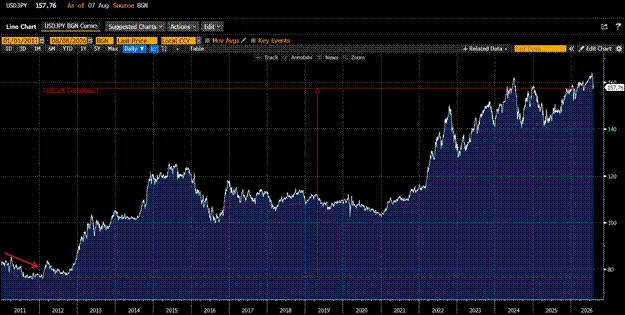
The yen lost over half its value.
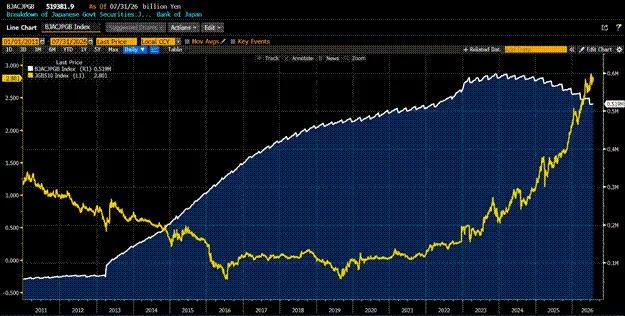
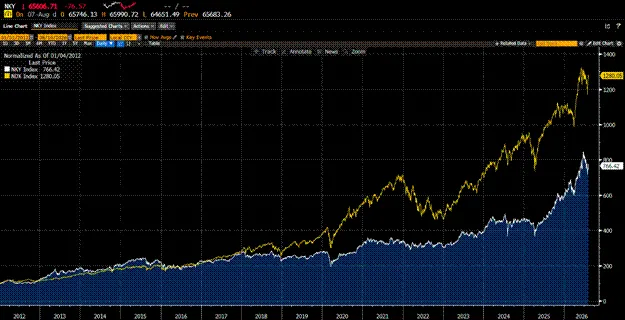
The collapse of the yen’s international purchasing power was a resounding success for global asset markets—the yen effectively became the funding currency for corporations and speculators. But this came with consequences. One was public anger. Though not directly linked, when you distort currency to erode workers’ dignity, strange things happen. Japanese people may appear docile on the surface, but in 2022, a man armed with a homemade firearm cold-bloodedly assassinated Prime Minister Abe Shinzo, who had spearheaded the yen devaluation frenzy. That’s inflationary “Try me if you dare.”
Devaluation also fueled xenophobia. Last winter, at the resort where I often skied backcountry, a Japanese man yelled at me: I couldn’t “ride the rope” up the mountain unless I bought a lift ticket. He didn’t know the resort was actually owned by a Chinese conglomerate—ironic, isn’t it? He raged at foreign skiers, while I clearly saw entire mountainsides packed with Americans. At USD/JPY 160, skiing in Japan cost half as much—or less—than in North America, even factoring in international airfare.
For over a decade, weak, weaker, weakest yen pushed global assets higher. But for the wealthy holding vast financial assets, good things always end. The yen is the most undervalued currency globally—and a thorn in the side of both the U.S.-China superpowers and ordinary Japanese voters. There are three ways to cut the Gordian knot, but only one appeals to the U.S. Treasury and Japanese politicians.
I’ll first explain the mechanics behind each mechanism driving yen strength, then clarify why officials favor the third. Next, I’ll discuss how this can be implemented politically. Finally—and the reason you’re reading this “plain talk”—I’ll detail why, as U.S. dollar liquidity surges, Bitcoin and crypto will soar.
The Triple Knot: Three Pathways to Strengthening the Yen
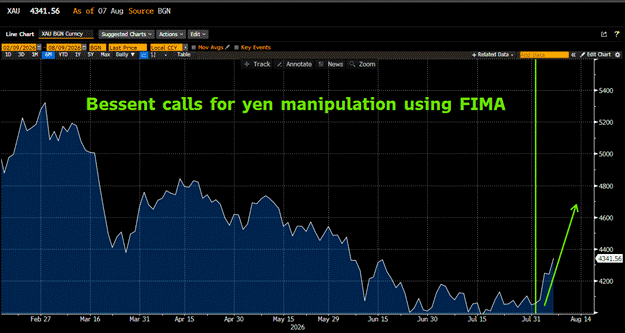
Before diving into details, crypto traders should ask: Why now, specifically, discuss yen strength? For decades, countless voices have cried: “Now is the time the yen must appreciate; global carry trades must unwind.” Two weeks ago, the U.S. and Japanese monetary authorities conducted a coordinated currency intervention—politely termed “coordination.” When you’re a commoner, it’s collusion and conspiracy; when you’re a state, you just rename it. U.S. Treasury Secretary Bessent (nicknamed “Buffalo Bill Bessent”) claimed he wants the Fed to raise the counterparty limit on FIMA repurchase facilities, enabling the Ministry of Finance to use its vast asset reserves to defend the yen. The MOF confirmed it’s working hand-in-hand with the U.S. to push USD/JPY lower. Authorities themselves told us: they’ve boarded the ship of global monetary change. So we must listen.
Option One: BOJ Rate Hikes (Dead End)
Currencies trade on interest rate differentials. The U.S. yield is 2.75% higher than Japan’s. Borrowing yen, converting to dollars, and buying U.S. Treasuries is a positive carry trade. Thus, no-arbitrage principles demand USD/JPY appreciation—that is, yen weakness relative to the dollar—to compensate for this spread. The simplest way to strengthen the yen is for the BOJ to hike rates to match other major central banks (which all raised post-pandemic).
To grasp the difficulty of BOJ rate hikes, remember: due to over a decade of YCC, the BOJ is the largest holder of “toxic” JGBs—it printed yen to buy bonds, capping the 10-year yield. When rates rise, bond prices fall; the deeper the decline, the greater the BOJ’s mark-to-market losses. Unlike us readers, the BOJ can theoretically lose infinite yen because it can print freely. But at some critical threshold, the world will lose faith in the yen due to hyperinflation, refusing to accept yen for oil, food, or medicine. We haven’t reached that point yet, but the BOJ must confront this catastrophic future. It’s precisely this fear of admitting losses that paralyzes them—resulting in only minimal hikes, watching passively as markets dump long-dated JGBs. The yen continues weakening, imported energy inflation tearing through society.
Politicians don’t want the BOJ to hike either—they rely on issuing JGBs to finance deficits. Higher yields mean higher interest payments, undermining their ability to buy votes via consumption tax cuts or other government handouts.
Finally, if the BOJ rapidly hikes and the yen strengthens, it would spike USD/JPY volatility, forcing everyone using yen to leverage global equities and bonds to liquidate. Recall July 2024: the yen surged from 160 to 140 against the dollar in days. I wrote two pieces: *Spirited Away* (August 6, 2024) and *Water, Water, Everywhere* (August 12). Newly appointed BOJ Governor Kazuo Yamamoto unexpectedly hiked rates and hinted further increases. Markets panicked, triggering mass liquidation of short yen and long other asset positions. Rumors circulated that several hedge fund pods PM were “tapped on the shoulder” and forced out—similar to Kenny G eliminating Leopold, except here, “tapping the shoulder” equals professional death. The yen hit 140, Nasdaq 100 and Nikkei dropped over 10%. The BOJ panicked, announcing on August 12 that future hiking paths would “consider market conditions”—effectively halting hikes. After the statement, the yen weakened again, stocks bottomed, and the “no down, only up” rally resumed.
The BOJ lacks the courage to endure acute market stress from aggressive rate hikes—compared to peers, its normalization path is painfully slow.
Option Two: Japanese Corporations Selling Foreign Assets (Also Unworkable)
I define “Japan Inc.” as companies and public entities holding financial assets. Albert A. E. Hartauer recounts in *The House of Nomura* a curious anecdote: after the 1987 crash, the MOF instructed Nomura to buy U.S. stocks to stabilize markets. Nomura, as a private firm, had no obligation to comply—but Japan is a conformist society. Often, shareholder returns aren’t the top corporate goal; full employment and national honor are. If the government signals private firms and individuals to sell foreign assets (mainly U.S. equities and bonds) and convert dollars into yen for repatriation, Japan Inc. will obey.
The clearest signal would come from GPIF—the nation’s largest pension fund. GPIF is governed by bureaucrats appointed by ministries. In 2014, to sustain Abenomics’ printing spree, the prime minister spent years installing loyalists onto the GPIF board, ensuring votes to increase overseas equity and bond holdings. This is crucial—GPIF manages $1–2 trillion. Once authorized in October 2014, a train that never stopped began rolling: they exchanged yen for dollars, buying U.S. equities and bonds. This created a structural yen-selling pressure, allowing speculators to confidently lever any financial asset with cheap yen, unafraid of rollover or repayment risks if the yen strengthens.
I mention GPIF because recently, MOF head Kataoka publicly stated it’s time to revise GPIF’s mandate to favor domestic securities over overseas ones. The paper bureaucrats at GPIF disagreed, claiming they’re accountable only to beneficiaries. Clearly, as Abenomics loyalists, they won’t support shifting mandates toward Japanese assets. Just as Abe manipulated the chessboard in 2012–2014, Prime Minister Kato must follow suit. For investors, the road map is clear: GPIF’s mandate will change, forcing it to sell hundreds of billions in foreign securities, returning capital that will boost the yen. This could last years—but it’ll infuriate Bessent, because Japan Inc., one of the largest U.S. bond holders, will shift from buyer to seller, destroying the stock and bond markets upon which Pax Americana relies to fund its empire. And because Pax Americana guarantees Japan’s security, Japan Inc. cannot sell its U.S. assets.
None of this is new. Everyone agrees the yen is cheap. Both the U.S. and Japan want USD/JPY to strengthen. But neither side dares bear the loss of USD/JPY falling from 160 to 90 (PPP-adjusted ~90). Option Three was greenlit the moment Trump’s ally “Weasel Warsh” (Warsh the Weasel—does he look like it? Acts like it too?) became Fed Chair. The 2026 “Treasury-Fed Accord” remains intact. Besides using RMP and policy rates below nominal growth to directly finance Bessent’s short-term debt issuance, Warsh has authority to implement Option Three—once and for all pegging USD/JPY at the level required to restructure the global economic system.
Option Three: Repo U.S. Treasuries to the Fed (Official Favorite)
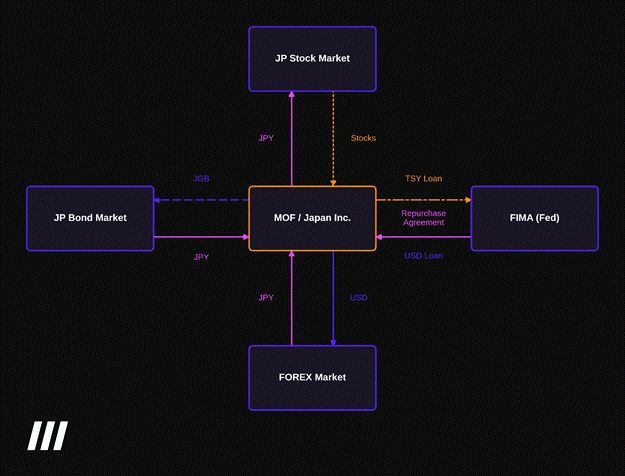
When Bessent speaks, pay attention—don’t get splashed by pipes again. And don’t argue.
Bessent explained plainly: the MOF and Japan Inc. shouldn’t sell U.S. Treasuries to fund yen defense. Instead, they should “repo” those Treasuries via the FIMA program to the Fed, obtain dollar loans, then use those dollars to buy yen. There’s a small snag in the plan—discussed later—but the box-and-arrow diagram above captures the essence.
Let’s walk through the process:
The implications of this policy:
Who is the sucker?
Why hasn’t it happened yet?
Currently, the FIMA facility caps outstanding loans per counterparty at $6 billion. The recent joint intervention used over $10 billion, pushing the yen up just 5%, with a half-life of only a few trading days. To make FIMA work, the cap must be eliminated entirely, and eligible counterparties expanded to include large Japanese corporations and semi-public investment vehicles (like GPIF). Who controls FIMA?
During the pandemic, the FOMC delegated rule changes to the “Foreign Exchange Subcommittee.” Voting members: Warsh (FOMC Chair), Williams (Vice Chair, NY Fed President), and Jefferson (Board Vice Chair). The committee can convene at any time, records aren’t published, voting outcomes aren’t disclosed—we only hear decisions. Does the subcommittee heed Bessent?
Naturally. Trump and Warsh speak regularly. Since Bessent laid out the cards needed to restructure USD/JPY clearly, Trump will stand with him. Thus, Trump and Bessent will issue directives to Warsh. Warsh has already proven himself a two-faced operator and a paper tiger. The balance sheet keeps expanding under RMP (managed by Williams’ NY Fed). Warsh claims to “listen to the market” when setting policy—yet the market clearly demands rate hikes, as 2-year yields exceed the effective federal funds rate by over 0.5%. Yet at the July meeting, he refused to hike, instead creating five working groups to “study” how the Fed should reform. Before these groups deliver recommendations, God arrived first. So in short order, Warsh proved himself yet another party hack, doing exactly what his boss demands. Like his predecessor, beta coward Powell, and the one before, garden gnome Janet Yellen (now Treasury Secretary, turned bad girl).
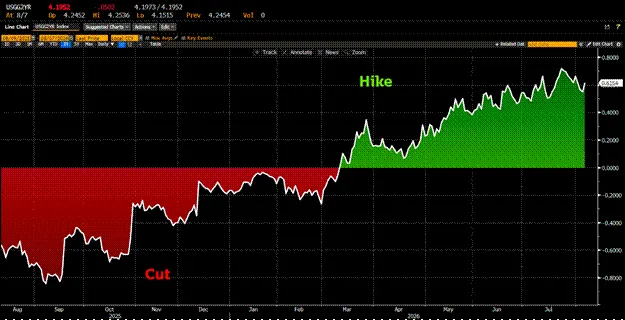
I don’t know when Warsh will convene the subcommittee and announce FIMA reforms to enable unlimited money printing to suppress USD/JPY. But I won’t bet it won’t happen. In fact, I bet it will—and continue adding to positions reflecting the Fed’s balance sheet resurgence. These assets are Bitcoin, physical gold, and gold mining stocks.
How Big Is It? $1.373 Trillion
The more printed, the higher Bitcoin climbs. So, is this FIMA maneuver big enough to act as a faucet, flooding tens of trillions of “fake coins” into the system and pumping our positions?
Right now, we focus on U.S. Treasury holdings, since only Treasuries are FIMA-eligible collateral. Future changes possible, but let’s stick to current assets. The two largest holders of U.S. Treasuries are the Japanese government and GPIF.
Japanese government-held U.S. Treasuries: $1.143 trillion
GPIF-held U.S. Treasuries: $230 billion
Total: $1.373 trillion
This number is accurate. For reference, the Fed printed roughly $4 trillion during the pandemic, proving its balance sheet expansion from 2020 to end-2021.
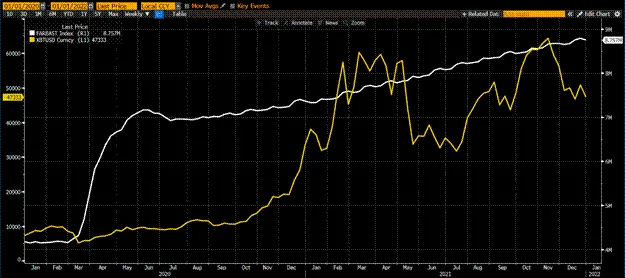
A very clear correlation exists between the growth of the Fed’s balance sheet (white line) and Bitcoin’s price surge (gold line). In my previous piece, I assumed AI infrastructure is entering a “capital waste” phase. This is critical, because the Trump administration wants this liquidity to fuel U.S. AI capital spending—not pump crypto. But my argument is: lending money to AI firms with positive ROIs—name one real tech giant truly profitable from massive spending, or one U.S. AI lab making profits under China’s token price pressures—is wasteful. Bitcoin’s rise reflects this inefficient capital allocation. Gold’s recent surge from a local low tells me the market would rather flood upcoming dollar fiat tsunami into monetary financial assets than hand cash to Sam Altman’s “burning machine” OpenAI or Musk’s mythical space data centers.
Shitcoin Season: Where Should Capital Flow?
I know you just want to know what Maelstrom is doing. But context determines your willingness to go all-in. As noted, I listen when Bessent speaks. If there’s one thing he excels at, it’s manipulating currencies. Search his track record with Soros—the man who broke the Bank of England in the pound forex market. Executing such currency maneuvers requires no elected politician’s approval, nor a term-limited official needing Senate confirmation. Just summon that sleepy Foreign Exchange Subcommittee to tweak the rules, and a flood of printed dollars sprays forth.
Seeing headlines about Bessent calling for FIMA reform, I immediately felt bullish. Every macro analyst I follow believes this signals a major turning point in USD/JPY direction. You must position early—they’re serious. Printing money is a political decision to solve tough economic realities. Politics is dirty—but this time, the Trump administration wants you to log into your brokerage and buy financial assets. That’s why Bessent made it crystal clear to all willing listeners: where the printed money will emerge. I’m listening—and I’ll do my part… by buying financial assets.
We’re already heavily allocated to Bitcoin, so the next question is: which horse runs fastest? Not an AI stock blog, but if you like that, keep drumming. Leopold’s low gave you a perfect chance to enter all AI assets. Switch to crypto: the most undervalued in the market is Ethereum (Ether). Its narrative? One of the few major altcoins not hitting new highs in 2025; additionally, Ethereum will become the settlement layer for RWA. That’s elite.
The next target is a coin that’s fallen to rock bottom but can easily multiply 5–10x: Ethena (ENA). Ethena’s only flaw is lack of buybacks—but I’m willing to overlook it, as it remains the sixth-largest stablecoin by circulating USD. ENA’s problem: falling price erased Bitcoin basis yield, leaving USDe’s yield barely above U.S. Treasuries. Holding a synthetic dollar exposed to CEX counterparty and smart contract risks makes no sense. That’s why ENA’s circulation dropped 75% from highs and its price fell over 90%. Even modest dollar liquidity growth would instantly revive the basis yield, triggering massive inflows into USDe. A small amount suffices to pull ENA out of the mud—so it’s my short-term, high-risk bet for a 5x gain in the coming months.
I haven’t yet emptied my dollar balances. We must wait for Warsh to convene the subcommittee and change FIMA rules. Stay vigilant—it might happen unnoticed. But gold and USD/JPY should start moving before official announcement. Even without other reasons, someone close to the Trump administration with heavy positions will front-run. Every asset class has seen this—why would gold and forex be different?
The era of cheap yen is over. Good. Too many foreigners are stomping on my snow trails in Hokkaido’s magical volcanoes. And you skiers—go to hell. When you come to the backcountry, bring me a splitboard.
Author: Arthur Hayes (co-founder of BitMEX), Translated by: DeepTide TechFlow, Images: 1) Government bonds held by the Bank of Japan (white) show vertical upward trend, suppressing the 10-year yield (gold); 2) Diagram illustrating capital flow in Option Three (boxes and arrows); 3) 2-year Treasury yield minus effective federal funds rate; 4) High positive correlation between Fed balance sheet (white line) and Bitcoin price (gold line)
Disclaimer: Contains third-party opinions, does not constitute financial advice
Talis Protocol suffers attack resulting in loss of 5,700 NFTs; platform halts listing auctions and will compensate users
14 mins ago
Senator Lummis: The CLARITY Act Aims to Facilitate Direct Intelligence Sharing Between Crypto Firms and Federal Law Enforcement Agencies
23 mins agoAnalysis: Binance hacker laundered approximately $242 million worth of funds via Tron within two days
35 mins agoUS Market Pulse (November 2): Intel Records Worst Drop in 50 Years, Focus This Week on Midterm Elections and Apple Earnings
38 mins agoMalicious apps were removed from the Solana DApp Store after being displayed for approximately one hour and had previously requested users' seed phrases.
6 hours agoSet a Quarterly Profit Record, Strategy Reports Approximately $21 Billion in Operating Profit, CFO Andrew Kang to Depart
6 hours agoAnalysis: The BTC price spread between Coinbase and Binance has widened to its highest level of the year; the spread may narrow after Binance resumes withdrawals
11 hours ago