Hackers behind GTA 6 leak launch a token, surging 20x in one day
Hackers behind GTA 6 leak launch a token, surging 20x in one day


GTA 6 is arguably the most anticipated video game on this planet, needing no introduction. After twelve years of waiting and multiple delays, it has finally been confirmed for a November release this year. Its rumored production cost reaches as high as $2 billion—equivalent to the construction cost of Dubai’s Burj Khalifa, the world’s tallest skyscraper. A single game burning through the price of a supertall building.
Starting at $100 for pre-orders, players have spoken with their wallets. According to data from market analysis firm Sensor Tower, pre-order volume has already surpassed 4.38 million copies, with an unprecedented trend of premium version dominance: 89% of pre-order buyers opted directly for the Ultimate Edition. Roughly calculated, pre-sales alone have generated over $400 million in revenue.
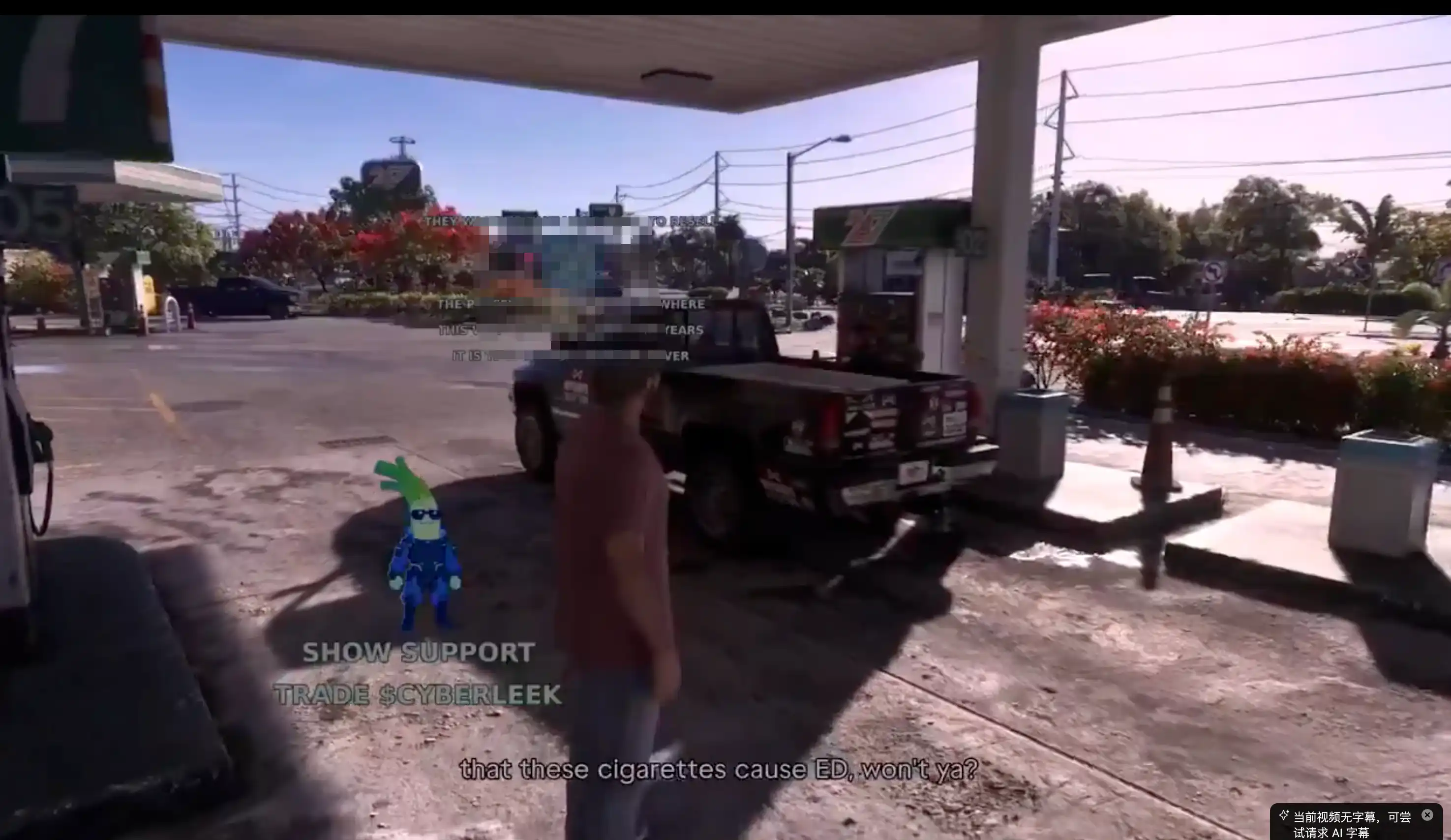
We assumed that the publisher would gradually build hype leading up to November release day, when players could finally play. But an unexpected twist emerged: gameplay footage was leaked.
When the first batch of leaked videos surfaced, player reactions were relatively relaxed—viewing it as "free content," while casually checking what Rockstar Games had secretly developed this time.
Indeed, some sharp-eyed observers caught the details. In a recent high-speed supercar driving clip, players noticed that slamming brakes at high speed causes brake rotors to glow red due to overheating, then cool down gradually; water surface reflections, automatic door locking after smashing windows during car thefts—these subtle technical nuances, only visible to those who understand the craft, left many viewers amazed by Rockstar’s technical prowess.
But things started to take a strange turn in recent days.
A self-proclaimed group called Cyberleek claimed they would release a PC client for GTA 6—meaning anyone could play this $2 billion flagship title completely free of charge. If true, this would be the most audacious piracy event in gaming history.
This claim was quickly debunked: gaming media Insider Gaming formally retracted the report and apologized, admitting the images and discussion were fabricated by a fake account, and simply didn’t hold up under scrutiny. The real Cyberleek has only released short video clips and map screenshots so far, never distributing a full downloadable PC client. Nearly all online links claiming “full version download” are actually malware and trojans.
Although the story was false, Cyberleek had prepared a remarkably advanced marketing strategy around the leak—they launched a meme coin.
The usual script goes: something happens, becomes famous, someone jumps on the bandwagon and launches a meme coin. Cyberleek flipped the sequence entirely: they launched the token first, then triggered the leak.
The timeline is as follows:
· August 14: They spent approximately 13,878 ARIO on Arweave to permanently secure the cyberleek-related domain. At this point, no GTA 6 leaks existed yet.
· August 15: The $CYBERLEEK token was officially created, with 1 billion tokens minted in one go. Of these, 27% (~270 million) were transferred to a reserve wallet. Subsequently, a liquidity pool was launched on Raydium, with an initial fully diluted valuation of just ~$55,000.
· August 16: A low-key post was made on X (formerly Twitter) announcing the launch—largely ignored initially, followed by two days of dead trading volume.
· August 18: First real gameplay footage and map screenshots of GTA 6 appeared—each video embedded with unremovable watermarks and QR codes pointing to the official website and token. Trading volume surged immediately: up ~13x within one hour, with hourly trading volume exceeding $5 million.
On-chain investigations revealed that a single originating wallet network (transferring ~156 SOL via around 20 temporary wallets starting August 13) simultaneously covered all expenses for domain registration, token creation, website deployment, and leak distribution—indicating the domain, token, website, and leaked content were all pre-prepared by the same entity.
As of today, the token has appreciated roughly 20x—from a low of ~$0.0014, its 24-hour surge peaked at 17x, with market cap reaching up to $29 million.
Even more sophisticated moves followed. On August 22, Cyberleek publicly burned approximately 270 million developer-reserved tokens—about 27% of total supply—claiming it proved they wouldn’t dump and run. Yet they still retained tokens worth over $500,000, and continue profiting from transaction fees, with estimates suggesting earnings of ~$70,000 so far.
The token even features a legitimate “tokenomics” model: holders can vote on what content will be leaked next. By sending tokens to designated addresses, voting determines whether the next leak is a plane segment or another clip—QR codes for the token appear everywhere in the leaked videos. The official website slogan is blunt: “Higher market cap = More leaks.”
The source of this leak points to Rockstar’s India division. Cyberleek allegedly breached their systems and obtained the Xbox development build of GTA 6.
India has now become infamous for repeated security lapses. Just two months ago, Apple suffered a nearly identical incident. In June 2026, Apple’s core supplier, Tata Electronics, fell victim to a cyberattack—630GB of over 200,000 files were posted on the dark web, exposing the iPhone 18 Pro’s supplier list, component specs, and drop test photos.
Global tech companies have relocated R&D and manufacturing to India, but carried along the weak link of supply chain security. Headquarters remain fortress-like, while third-party branches and contract manufacturers remain the softest targets for attackers.
Another victim of this drama: Netflix.
Rockstar made an unprecedented decision: handing the extended preview of GTA 6 exclusively to Netflix, premiering six hours earlier on Netflix before being released on YouTube and other platforms. Turning a game promotional video into a paid streaming exclusive—something unprecedented in gaming history.
Netflix’s aggressive push stems from its direct rivalry with YouTube. Reports indicate YouTube offered multi-million-dollar exclusive deals, demanding top creators “not publish content on Netflix,” with non-signers facing algorithmic de-prioritization penalties.
Now, hackers have flooded the internet with leaked GTA 6 content, effectively undermining Netflix’s expensive six-hour exclusivity window. The biggest beneficiaries? YouTube: the trailer will eventually go free anyway, and “the largest game leak in history” brings them massive organic traffic—zero cost, maximum gain. Although Rockstar remains committed to its original plan, the commercial value of this paid exclusivity has already been halved by Cyberleek’s free video drops.
Original article: BlockBeats
Disclaimer: Contains third-party opinions, does not constitute financial advice
SpaceXAI to Tidy Up Subscription Chaos, Grok and Cursor to Unify Plans Within Weeks
15 days ago
JPMorgan: Oracle's Backlog Orders Up by $26 Billion, Funding Trail Raises Questions
15 days ago
The Nasdaq-100 Index futures decline widens to 1.5%
15 days agoJefferies: Expecting Fed rate hike this week, Wunsch's comments to be pivotal
15 days agoData: Bitcoin's current holding volume has decreased by 13.5% compared to September 3rd, suggesting the market may have already begun deleveraging ahead of time
15 days ago
The UK's Financial Conduct Authority is exploring regulatory exemptions for tokenized gold
15 days agoKOSPI Index drops over 3%, SK Hynix down 6.34%
15 days ago

