Hyperliquid is also going to have a Layer 2—what you need to know?
Hyperliquid is also going to have a Layer 2—what you need to know?


On August 22, HYPE price broke above $80, setting a new all-time high. Capital and attention swiftly returned to Hyperliquid, while HyperEVM saw a long-awaited meme coin rally, giving rise to two high-market-cap tokens: egg and joff.
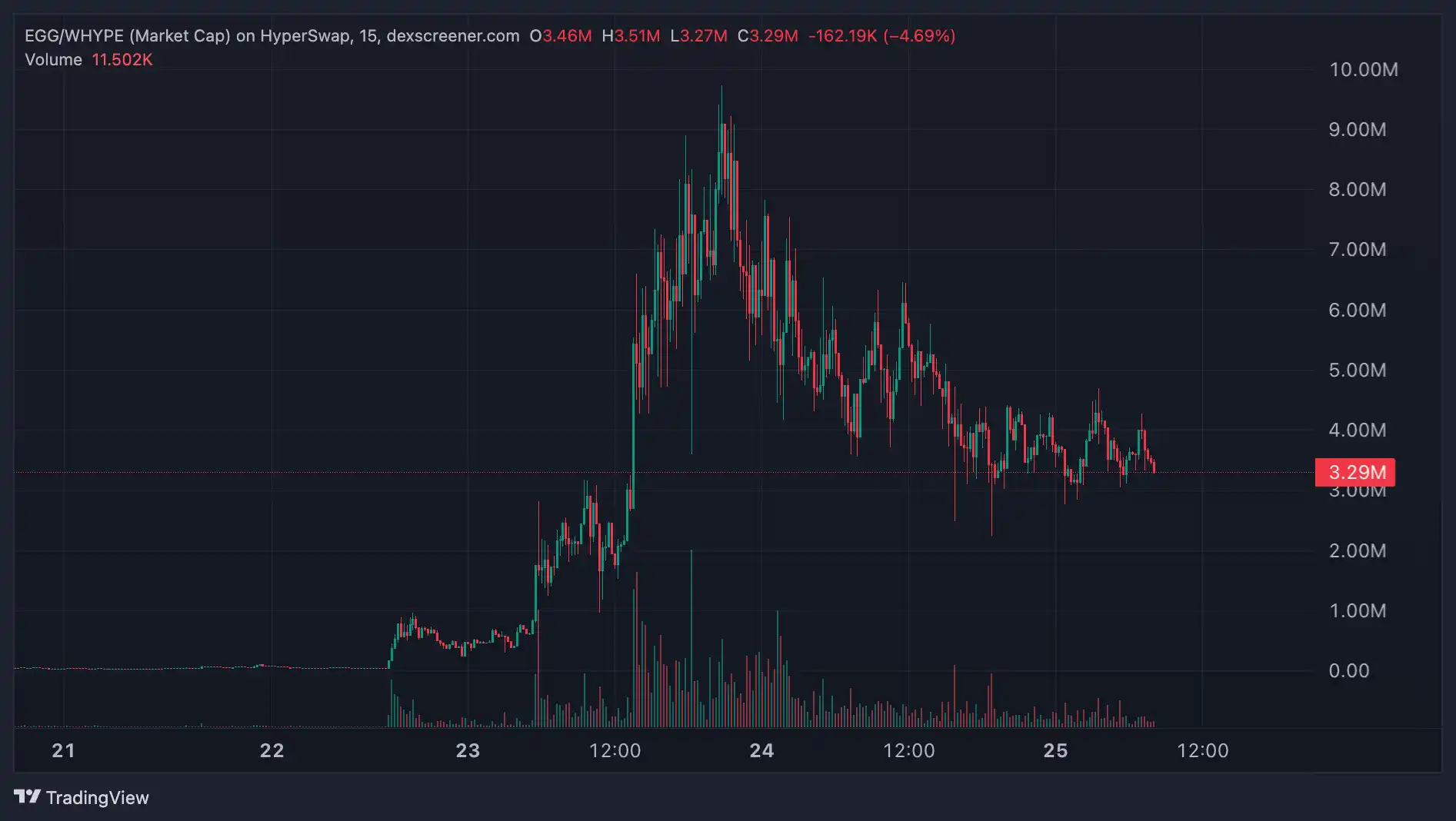
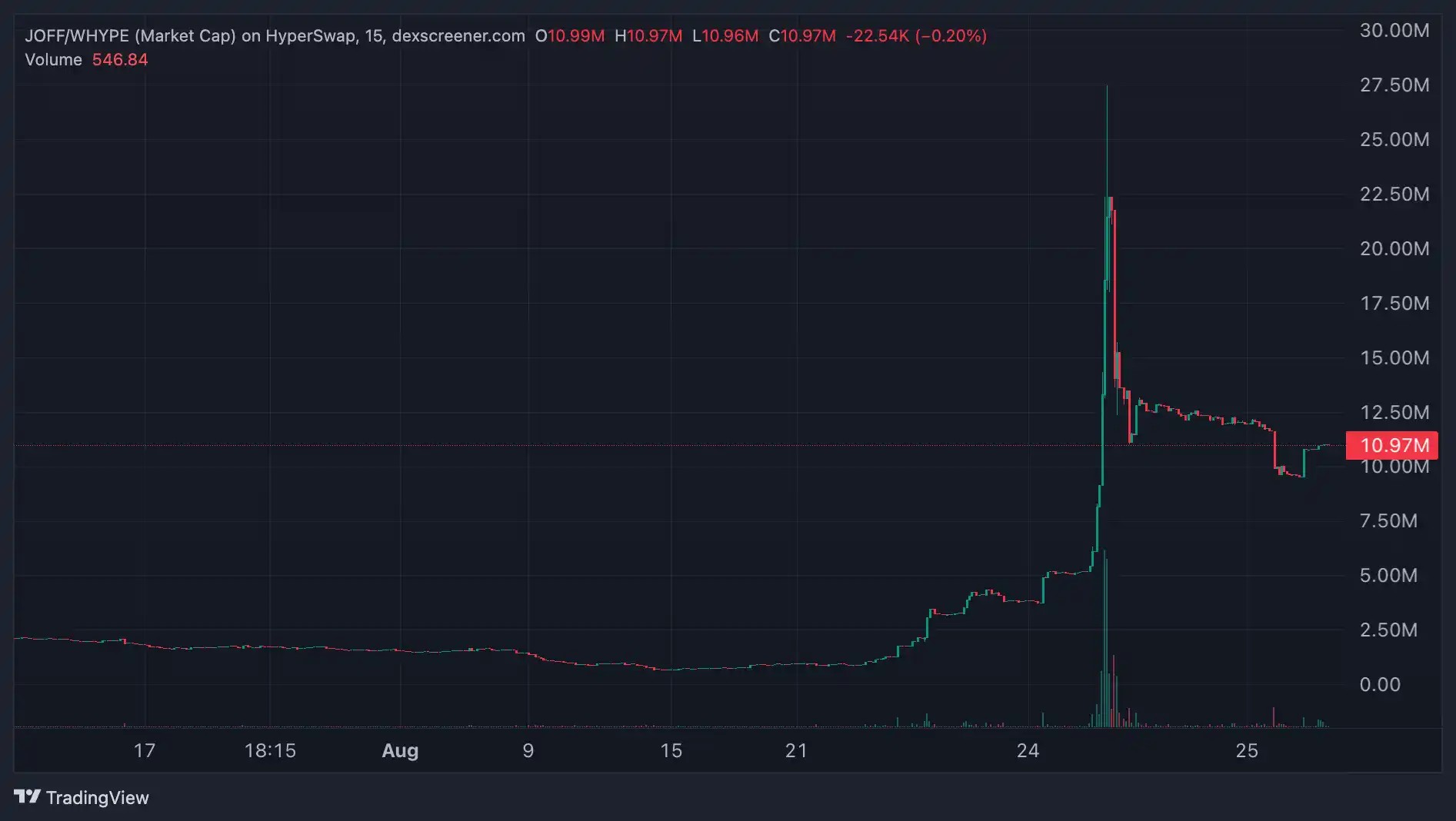
Heat comes fast, and fades even faster.
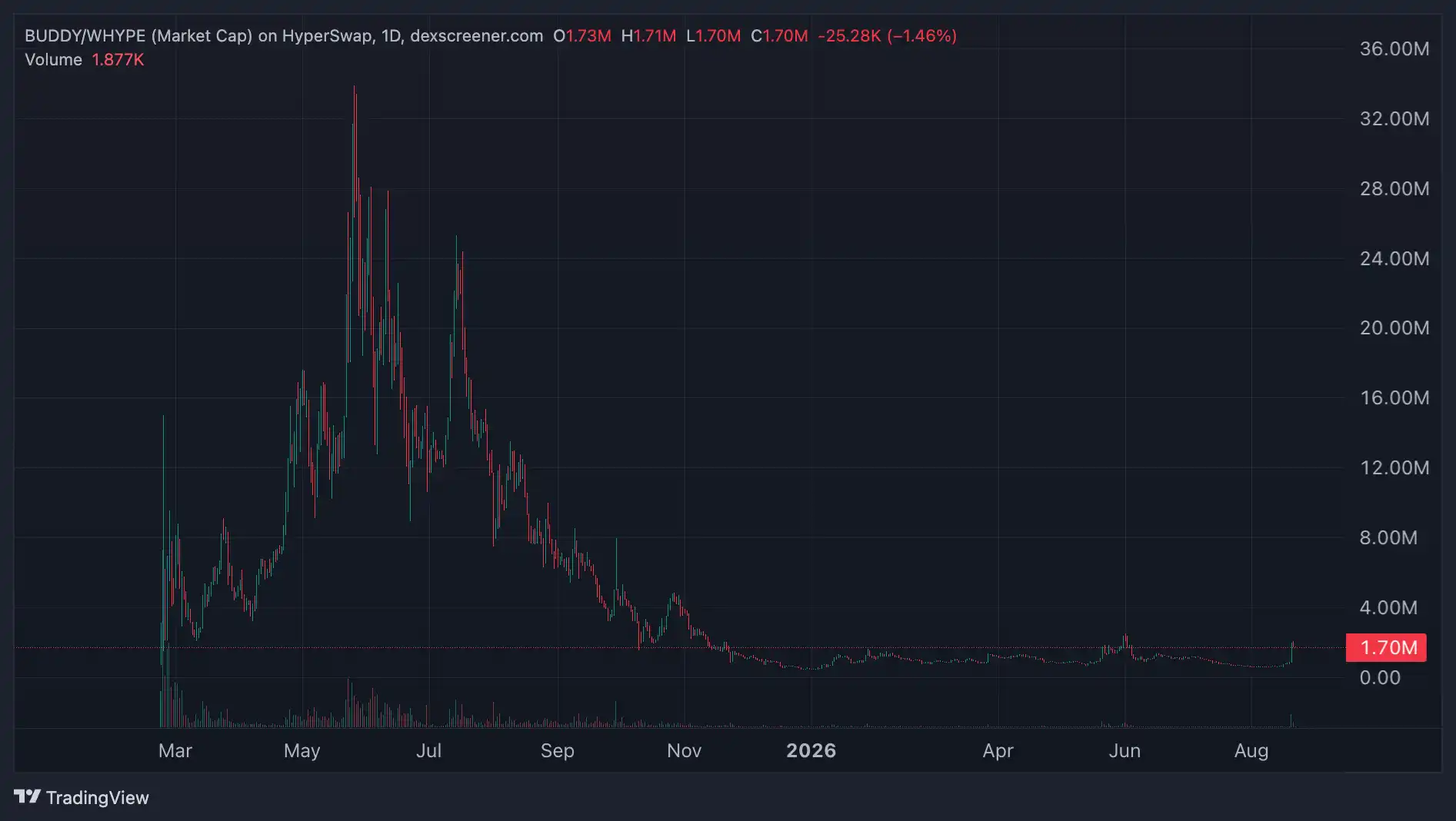
This has almost become the standard script for meme coins on HyperEVM. During the first meme season in June last year, BUDDY’s market cap briefly reached $35 million, but since then no token has managed to sustain momentum. HyperEVM is never short of retail speculators—but what it lacks is a robust trading infrastructure capable of absorbing this speculative demand.
HyperEVM employs a dual-block architecture, connecting to HyperCore while leaving complexity squarely on developers and traders. During network congestion, a simple swap can incur over $10 in gas fees, with extreme cases reaching $20. After new token launches, teams must independently source AMMs, spot liquidity, and perpetual contract markets—there is currently no unified token launch platform on HyperEVM to streamline these steps.
Kinetiq identified this gap. As the largest liquidity staking protocol on Hyperliquid, it announced the launch of Elysium, Hyperliquid’s L2. Following the announcement, discussions around KNTQ revaluation, HYPE value capture, and application migration rapidly spread across the community.
Kinetiq initially addressed the liquidity issue post-HYPE staking. Users deposit HYPE into the protocol and receive kHYPE, which accrues staking yield. kHYPE can then be deployed in lending, yield strategies, and other DeFi applications, enabling a single asset to serve both staking and liquidity functions simultaneously.
Currently, Kinetiq’s TVL stands at approximately $1.214 billion. Beyond kHYPE, Kinetiq has launched additional products including Earn, kmHYPE, Launch, and Markets.
According to Kinetiq’s design disclosures, Elysium will continue using HYPE as its native gas token. Users won’t need to purchase an additional base asset to access the new network, and transaction demand generated on Elysium will directly expand HYPE’s use cases.
Performance is the first layer of improvement. Kinetiq claims that Elysium’s block speed and throughput will exceed HyperEVM by several orders of magnitude at launch, with a long-term goal of achieving block times close to those of HyperCore. Clearly, Kinetiq aims to build an execution environment suitable for high-frequency spot trading, automated market making, and applications requiring continuous state updates.
The more critical component lies in Elysium’s integration with HyperCore.
HyperEVM currently uses the L1Read precompile contract to allow smart contracts to read data from HyperCore, but only exposes limited order book information—primarily best bid and ask prices. Elysium plans to upgrade L1Read, providing developers with richer market depth and near-block-top fresh quotes.
For ordinary traders, this may just mean seeing more levels on the order book. For market makers, however, the implications are profound: they can continuously quote on Elysium’s AMM while simultaneously reading HyperCore’s depth and pricing for effective hedging.
Kinetiq views PropAMM as one of the first application types Elysium must attract. These AMMs rely on proprietary capital from professional market makers and are highly sensitive to latency and hedging efficiency. According to Kinetiq’s data, Solana-based PropAMMs have consistently handled significantly higher spot volume than HyperCore. Elysium seeks to replicate this segment of spot trading demand that Hyperliquid has so far missed.
Hyperliquid’s current shortcomings in spot trading extend far beyond mere transaction speed.
Issuing spot assets on HyperCore requires participation in Ticker auctions and rebuilding the order book from scratch; launching tokens on HyperEVM forces developers to independently find launch platforms, AMMs, and market makers. Even if a new token gains short-term traction, it struggles to sustain liquidity flow into HyperCore. While spot and perpetuals appear part of the same ecosystem, they follow entirely separate paths.
Elysium proposes a complete pipeline: new tokens are first minted on Elysium, bootstrapped via long-tail AMMs; once liquidity grows, they migrate to PropAMM; then opt to establish a HyperCore spot order book; finally, they leverage HIP-3 to list perpetual contracts.
This is precisely what Kinetiq refers to as a “value-accretive L2.” While Ethereum L2s are often criticized for siphoning activity and fees from the mainnet, Elysium aims to channel newly generated on-chain activity back into HyperCore. It uses HYPE as gas, establishes spot markets on HyperCore, and returns derivatives to HIP-3. The more active Elysium becomes, the greater the theoretical transaction volume HyperCore could capture.
Kinetiq’s native token, KNTQ, also features a distinct value capture mechanism. The Elysium sequencer revenue model allocates 25% to applications consuming block space, 25% to Kinetiq’s treasury, and the remaining 50% to repurchase KNTQ from public markets and burn it via the Hyperliquid Assistance Fund.
Among Elysium’s potential use cases, memes are the most intuitive—but the true stress test of the chain’s ceiling lies in novel Perp DEXs like PaperTrade with complex settlement logic.
We’ve previously covered PaperTrade. It reads Hyperliquid’s order book prices and enables users to settle profits and losses directly against a public LP pool. Transactions do not enter HyperCore’s matching engine; instead, profit queues, LP balances, and PAPER token minting logic all run within HyperEVM smart contracts.
This design inherently depends on high-frequency state updates. Every open, close, profit queue entry, and subsequent repayment requires on-chain execution—yet HyperEVM’s slow confirmation times and high gas costs directly degrade user experience. More realistically, any high-performance chain integrating external price oracles can replicate PaperTrade’s mechanism with lower gas fees and more aggressive token incentives. PaperTrade’s reliance on Hyperliquid stems from native pricing and native users—qualities now being eroded by HyperEVM’s subpar performance.
Elysium offers another possibility. PaperTrade can continue reading HyperCore prices, leverage enhanced L1Read for richer order book data, and shift settlement and token logic to a faster execution environment—without leaving Hyperliquid for performance, nor surrendering its core price source to external oracles.
No wonder Kinetiq’s founder Omnia specifically mentioned PaperTrade after Elysium’s launch: “It now has a home.”
Similar opportunities await in options, algorithmic trading, and lending protocols requiring real-time hedging. HyperCore already hosts the most active on-chain traders and deepest liquidity. Elysium’s ambition is to enable developers to run more sophisticated financial logic alongside this existing liquidity.
Original article: BlockBeats
Disclaimer: Contains third-party opinions, does not constitute financial advice
Lighter allegedly under attack, related addresses withdrawn approximately 10.39 million USDC and exchanged for ETH
46 mins ago
The German Bundestag has passed a new law enabling customs authorities to seize cryptographically secured assets of uncertain origin without initiating a criminal investigation.
1 hour agoSolana Launches 1.0, Mainnet Removes Beta Tag
1 hour agoHKMA and SWIFT Collaborate to Explore Interoperability of Tokenized Deposits for Cross-Border Payments
1 hour agoApproximately 53.9 million KAVA tokens were stolen in the HARD Lend security incident, which did not compromise the underlying security of the Kava Chain.
1 hour agoChan Mao-po: Publicly Offered Tokenized Funds in Hong Kong Grow by Approximately 7-Fold Annually
2 hours agoMonetary Authority of Singapore and Deutsche Bundesbank Complete Cross-Border Digital Asset Settlement Interoperability Test
2 hours ago