The BIT Investment Opportunity Forum Held in Hong Kong, Exploring the Next Phase of Market and Asset Allocation Opportunities
The BIT Investment Opportunity Forum Held in Hong Kong, Exploring the Next Phase of Market and Asset Allocation Opportunities


On the afternoon of August 26, during the Bitcoin Asia 2026 Conference, global digital asset financial services group BIT (formerly Matrixport) hosted an investment opportunity forum in Hong Kong under the theme "Traditional Capital Markets, Digital Assets, and Beyond." The event brought together over ten distinguished speakers, including institutional investors, family office representatives, prominent stock market commentators, media personnel, and scholars, engaging in a deep-dive discussion on macroeconomic cycle observation and digital asset allocation strategies. During the forum week, Bitcoin experienced a strong rebound, briefly breaking above the $80,000 threshold and reaching a three-month high. Amid shifting macro liquidity expectations and recovering risk appetite, market discourse intensified around whether digital assets had already exited a temporary downturn and entered a new strategic allocation window. Over 200 investors, institutional delegates, and industry partners from Hong Kong and globally attended the event.
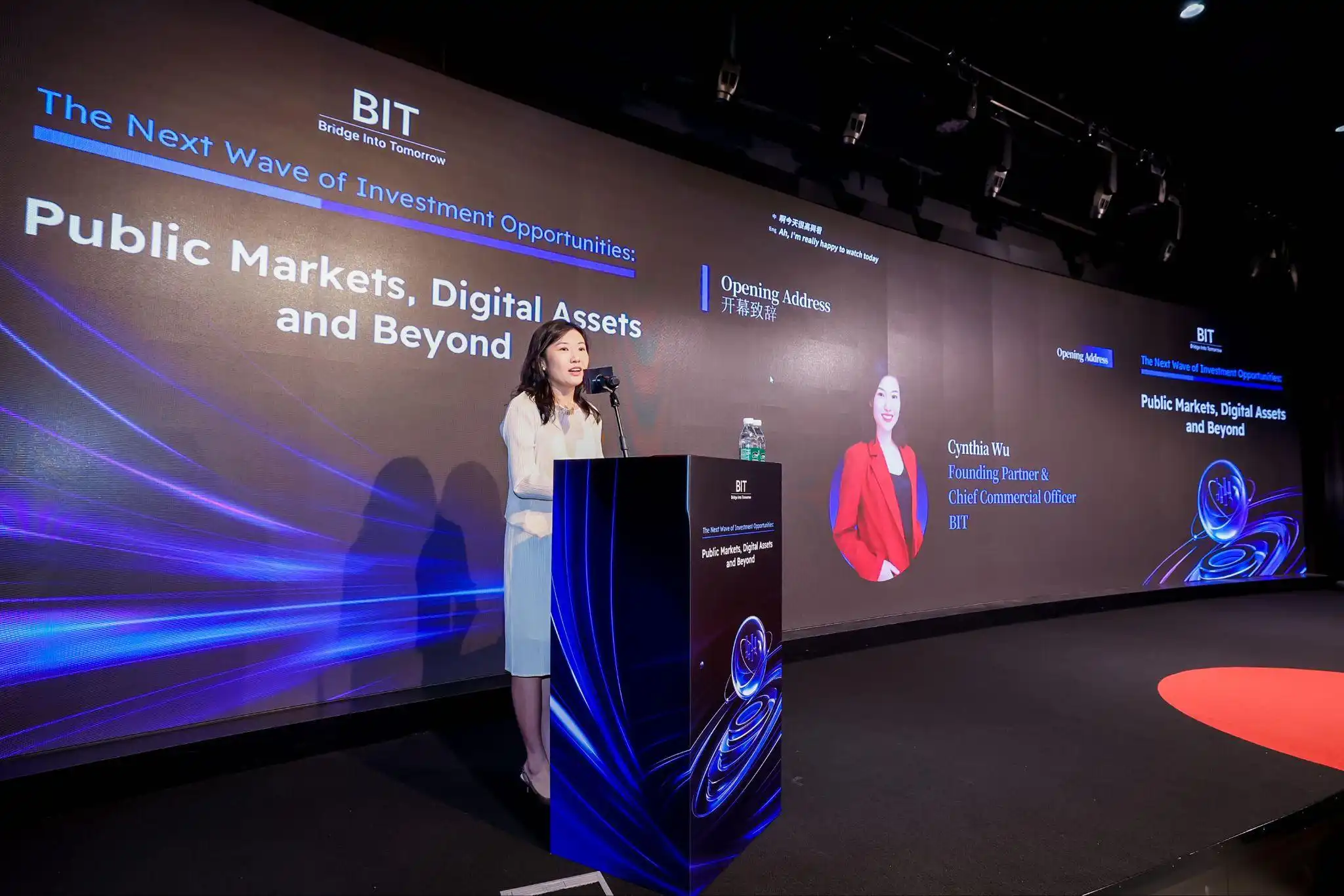
The forum opened with Cynthia Wu, Co-Founder and Chief Business Officer of BIT. Over the past seven years, BIT has consistently prioritized security and risk management as foundational pillars of its business development, continuously refining its trading, custody, and operational infrastructure. Throughout this period, BIT’s operations have remained centered on delivering long-term, sustainable financial services to clients within a controlled risk framework. In 2026, BIT expanded this philosophy into additional asset classes, officially transitioning into a multi-asset digital finance platform: launching U.S. equities spot trading in February, followed by margin lending, short selling, and options—cumulative transaction volume for these products now stands at approximately $4 billion. Embedding risk management throughout its growth journey enables BIT to deliver consistent long-term service. This evolution is only possible due to sustained client trust and support from partners in infrastructure, product design, and service delivery. BIT itself remains in a continuous process of learning and building. Moving forward, the platform will introduce HKD deposit/withdrawal capabilities and Hong Kong stock trading, further enhancing its integrated service ecosystem between traditional finance and digital assets.
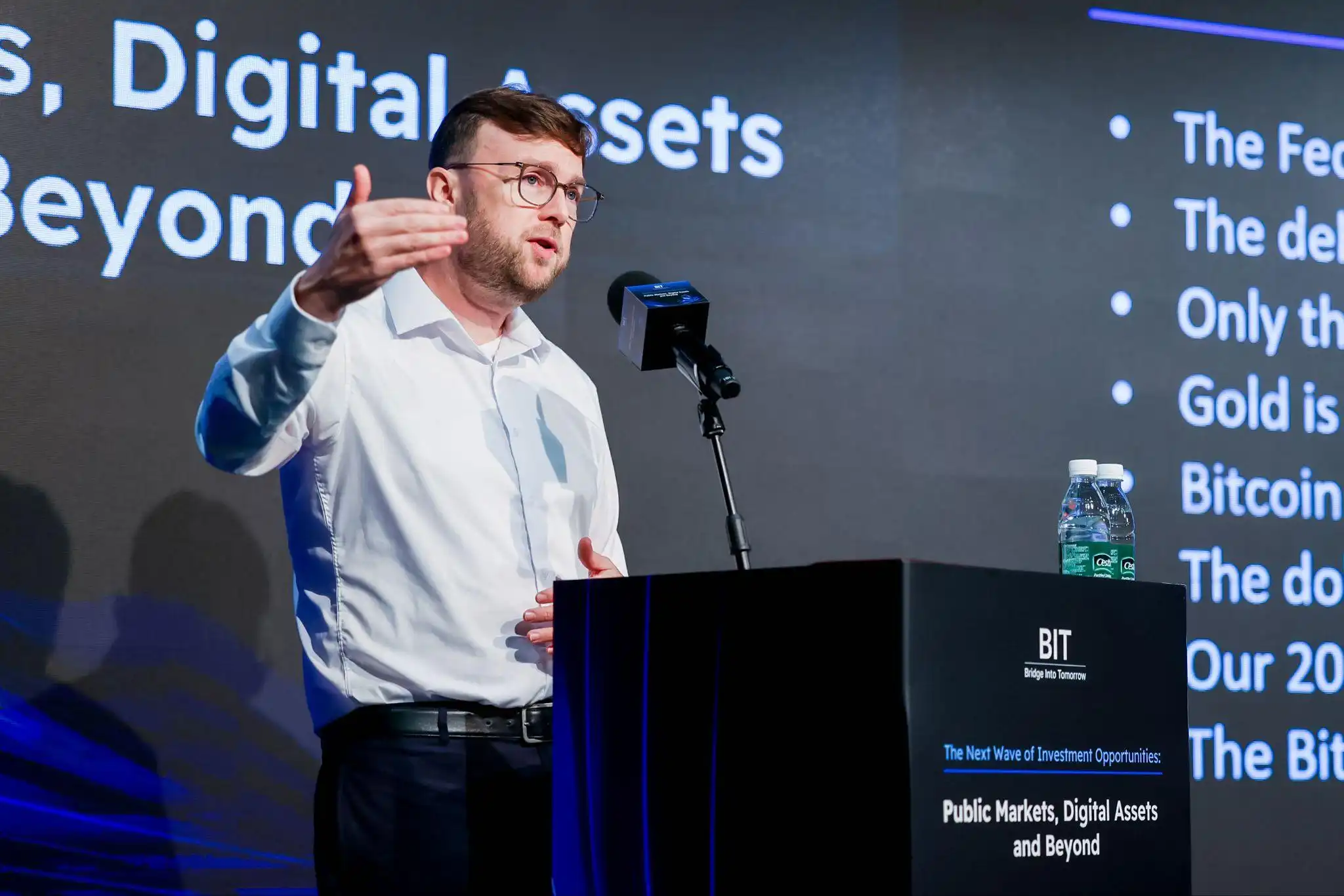
Subsequently, BIT’s Special Analyst Markus Thielen delivered a comprehensive presentation on macroeconomic cycles, systematically reviewing historical patterns and clarifying future directional signals for asset valuation. Based on a historical analysis of Bitcoin’s price data over the past 14 years, Markus refined the widely accepted “four-year halving” cycle into a more precise price movement pattern: “35 months of upward trend, followed by 12 months of correction.” A breach below the one-year moving average typically indicates a bearish phase, whereas a retest and close above both the one-year MA and 21-week MA, combined with monthly RSI approaching cyclical lows, declining demand for put options, and a break of long-term downtrend lines, often signal the end of a correction and the start of a new bullish cycle. However, he emphasized that Bitcoin’s own price cycle does not operate linearly but rather intersects with the broader, longer-term macro “debt-liability supercycle,” resulting in phased overlaps rather than simple synchronicity: U.S. Treasury debt levels do not move in lockstep with Bitcoin prices. Instead, the debt trajectory determines the long-term slope of appreciation, while dollar strength and liquidity conditions dictate when a rally begins. Bitcoin’s intrinsic price cycle governs the rhythm of each upswing and correction. According to his assessment, the current moment represents a confluence of three key factors: continued debt expansion, the end of dollar strength, and Bitcoin having just completed approximately 12 months of adjustment. Therefore, he concludes that the next bull cycle—expected to last roughly two to three years—is now underway. He presented a tangible valuation anchor: based on current U.S. Treasury size, Bitcoin’s fair value should be around $100,000, suggesting today’s price remains relatively undervalued.
Roundtable: As AI Sector Valuation Logic Is Reconstructed, Where Will Global Capital Migrate?
The first roundtable was moderated by Sunny, CEO of PANews, featuring Elio Cui, Head of BIT’s Securities Business; Ming ZHAO, CEO of AVS; Crystal He, CEO of Delin Family Office; and Sunzi Dahu, a renowned Hong Kong stock commentator and full-time trader. The discussion focused on the current squeeze in cash flows among AI giants: Can AI still attract long-term capital inflows, or has capital rotation already shifted toward new directions?

The collapse of nearly $2.4 trillion in market cap across the Big Seven tech firms in June 2026 served as the starting point. Panelists debated whether capital expenditure guidance in the AI sector would slow down, and whether cash flows could sustain such massive investments amid rising corporate borrowing. Seen through a longer technological cycle lens, this correction resembles another healthy de-risking akin to the dot-com bubble of 2000—not a disappearance of the sector, but a crystallization of companies capable of enduring economic cycles.
Regarding the next allocation direction, panelists’ views revealed a bifurcated trend between “defensive certainty assets” and “structural high-volatility assets”: some capital remains willing to stay in high-growth sectors like AI for excess returns, while other funds are rotating into gold, Real World Assets (RWA), and stable cash-flow businesses to hedge uncertainty—where gold continues to gain favor amid geopolitical tensions. Elio explained: as market expectations for interest rate hikes or a Federal Reserve policy shift intensify, capital will flow from high-volatility, high-growth assets toward relatively scarce, higher-certainty assets like gold and Bitcoin—precisely why he currently focuses on gold, Bitcoin, RWA, and quality cash-flow infrastructure firms. He sees significant growth potential in stablecoins and RWA, yet acknowledges a persistent challenge: despite large issuance volumes, trading activity remains sluggish. Crystal He reinforced this from an institutional investor perspective: even major players like BlackRock and Franklin Templeton—with trillions in assets—are long-term allocators to RWA, but face four key constraints: limited asset variety (with ~40% of $31.4 billion issuance being U.S. Treasuries), insufficient liquidity, predominantly single-chain development lacking cross-chain interoperability, and ongoing need for regulatory and policy guidance.

Even the top-ranked RWA category—tokenized U.S. equities—faces similar challenges. On the surface, this is driven by the strong wealth effect and broad appeal of U.S. stocks, enabling wider access to this asset class. But fundamentally, it reflects “lowered entry barriers,” not the emergence of a novel asset: tokenization finally gave users who previously couldn’t open brokerage accounts their first access point. Industry data shows that total on-chain monthly trading volume for tokenized U.S. equities reached approximately $9.22 billion in June 2026—equivalent to a weekly average of about $2.1 billion—still less than 1/180th of a single day’s trading volume on Nasdaq (~$383.7 billion). This reveals that while entry barriers have fallen, true market validation of liquidity and underlying asset convertibility remains unproven: when large-scale buying or redemption occurs, investors often discover that the underlying U.S. equity liquidity behind the tokens is far from abundant. This reality underscores a critical insight: direct, reliable access channels connecting to the U.S. capital markets—offering real underlying assets and deep liquidity—remain irreplaceable in the near term.
Fire-side Chat: Web3 Is Transitioning from Conceptual Narrative to Institutionalized Trust via Verifiable Records
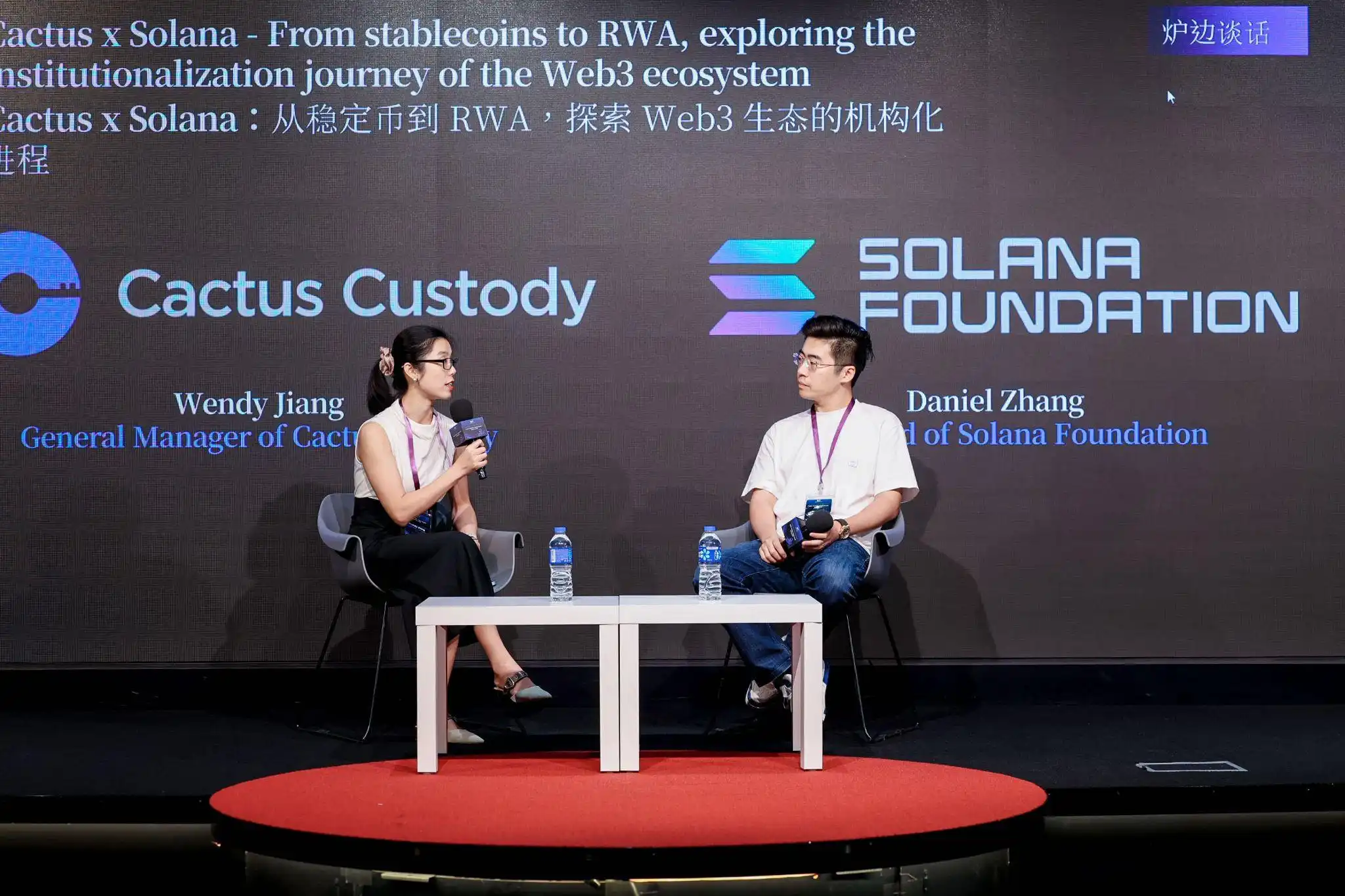
Wendy Jiang, General Manager of Cactus Custody under BIT, and Daniel Zhang, Chinese-speaking region lead at Solana Foundation, discussed the institutionalization path for public blockchains, stablecoins, and RWA. As Web3 evolves from a phase dominated by “storytelling” and conceptual experimentation into an era led by institutional capital and anchored in verifiable, auditable records, competition among blockchains is no longer about whose narrative is more compelling—but about who can deliver a track record of security and genuine economic activity that withstands time and regulatory scrutiny. Daniel stated directly that Hong Kong’s SFC has currently approved only three cryptocurrency spot ETFs: BTC, ETH, and Solana—among which the Solana ETF is the world’s first of its kind launched in Hong Kong. Under Hong Kong’s regulatory framework, the number of tokens permitted for retail investor trading remains extremely limited. Consequently, the practical choices for institutions seeking to support long-term, large-scale RWA and stablecoin distribution are effectively narrowed to just Ethereum and Solana. He also proposed a highly professional benchmark: assessing a blockchain’s true economic vitality requires looking beyond total stablecoin issuance—instead, measuring the “velocity of capital circulation.” By transaction volume metrics, Solana currently ranks among the global top tier alongside Ethereum. Wendy used the metaphor of a “broad highway” to describe the role of custodians in the institutional capital influx into blockchain ecosystems: as traffic volume (institutional capital) increases, the need for robust fuel stations and service facilities grows proportionally. Both participants agreed that the “window of opportunity” for new blockchains has closed—historical records recognized by institutions and regulators are difficult for newcomers to replicate.
Peak Discussion: The New Era of Digital Asset Investment—from “Should We Allocate?” to “How Should We Allocate?”
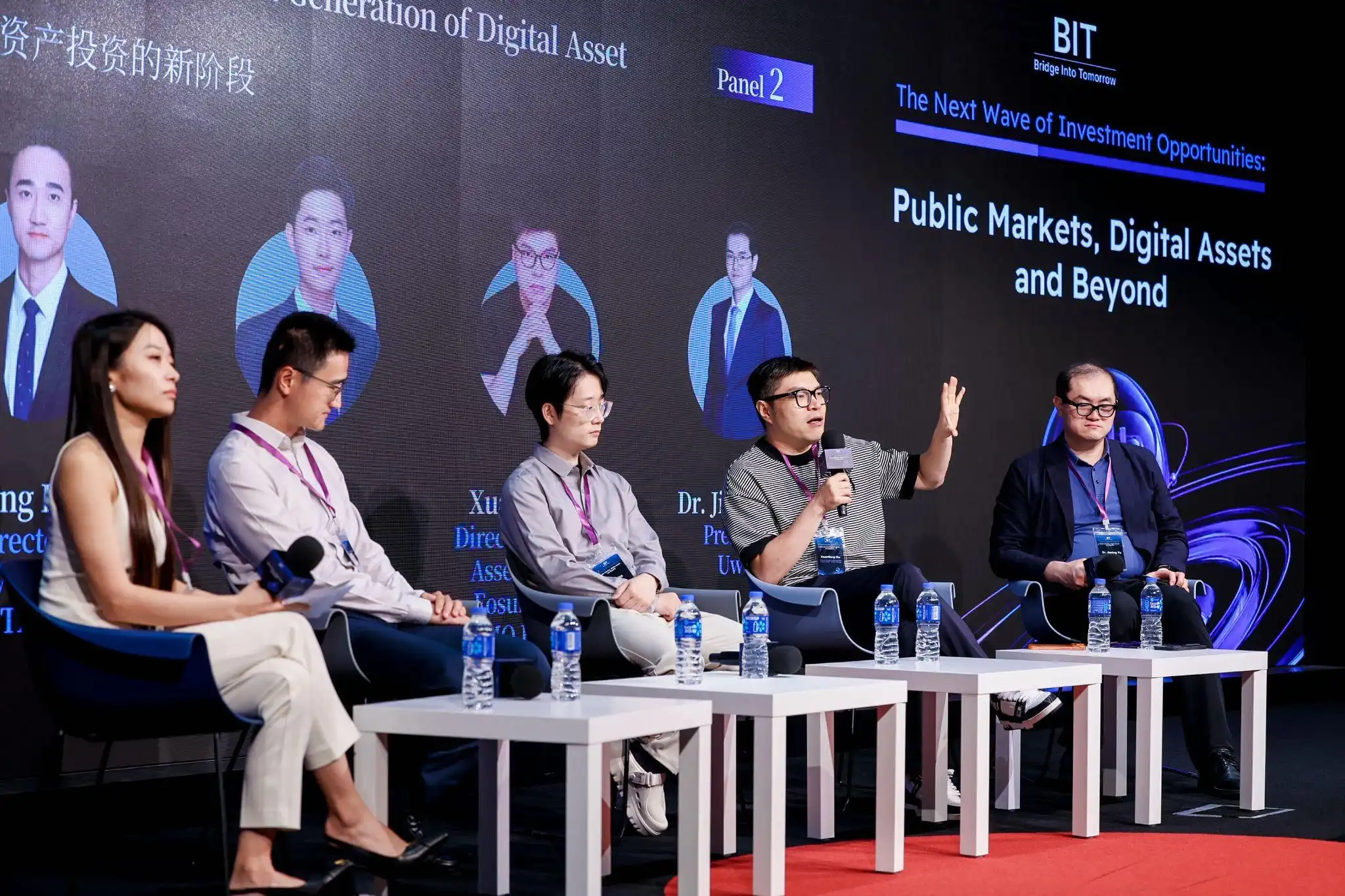
The second roundtable was moderated by Megan Xiao, Head of Structured Products at BIT, featuring Ding Long, Investment Director at TDTC; Charles, CIO of B7 Capital; Hu Xuanfeng, Director of Digital Assets at Fosun Wealth Holding; and Yu Jianing, Principal of Uweb. They explored the new stage of digital asset allocation. Previously, investors asked “Will BTC go up?” Now, they grapple with “I see the right direction but can’t time the entry”—how to manage price exposure and leverage structured tools for diversified asset allocation is emerging as a new strategic approach. Addressing this question, each expert offered insights from their domain expertise.
Yu Jianing began with investor psychology: he observed a shift from speculative behavior to multi-asset allocation, where participants no longer obsessively wait for “the final drop,” identifying four core allocation themes: “carbon-silicon symbiosis, lifespan doubling, quantum leap, and deglobalization.” Hu Xuanfeng analyzed from an asset attribute perspective: crypto assets are evolving from mere speculative narratives into containers for bundling traditional assets onto-chain, with institutional-grade custodians serving as the essential infrastructure enabling institutions to truly “enter the game” and deploy global portfolios. Charles highlighted from a quantitative trading angle: while crypto strategies exhibit higher Sharpe ratios than traditional markets, they lack stability. As market makers and institutions increase, arbitrage margins shrink, and high-frequency trading capacity remains constrained—indicating that the era of “sleeping on one direction” and profiting passively is ending. Investors should retain a portion of non-beta-related, stable return products within their portfolios and avoid betting everything on coin price movements alone. Ding Long added from an industrial perspective: “mining as asset production” and “balance sheet management” are entirely different endeavors—miners must assess power source stability and utilize structured products from platforms like BIT to manage and enhance cash flow.
Megan summarized from BIT’s own structured product offerings: digital asset allocation is no longer a simple “Buy & Hold” strategy, but a dynamic, tool-driven management process—“identifying trends” is important, but “anchoring on tools and execution pathways” determines whether one can survive market cycles. BIT’s structured products are precisely the tangible embodiment of this “tool + pathway” approach: by instrumentizing and productizing sophisticated strategies such as volatility management and yield enhancement, ordinary investors can access structural returns previously accessible only to institutions—without needing to build complex positions themselves. This represents one viable solution to the central question: “How to allocate?”
Closing Dialogue: Face-to-Face with Ni Da—From Fed Policy to Whether Young People Should Leverage

In the final segment, Elio Cui, Head of BIT’s Securities Business, engaged in a direct dialogue with Phyrex Ni Da, a leading Web3 KOL, on-chain data analyst, and macroeconomic commentator, diving deep into the most pressing topics of the day.
On the highly anticipated policy path of the Federal Reserve and U.S. Treasury for the remainder of 2026, Ni Da offered a contrarian view compared to mainstream consensus: he believes the Fed is likely to remain on hold this year—“neither raising nor cutting rates.” From a more ground-level economic perspective, he cited supply chain transmission effects from oil prices, employment data drag caused by immigration enforcement policies, and the fact that U.S. debt levels are so elevated that further tightening would be unsustainable—even the newly appointed Fed Chair quietly abandoned forward guidance. To Ni Da, all these signs point unmistakably to a “downward interest rate” signal.
Regarding the market’s burning question—“Why did Bitcoin suddenly surge past $80,000?”—Ni Da, a seasoned trader, provided a grounded analysis of market liquidity: the volume behind this rally wasn’t particularly high. More accurately, it was driven by “fewer sellers and more buyers,” creating supply-demand imbalance that pushed prices upward—not by a surge of new capital inflow. When discussing the current cycle’s bottom, Ni Da clearly has a “ledger” in mind: he judges that the base structure is largely complete. Even if another test occurs, it will likely stabilize between $57,000 and $58,000, with the likelihood of falling below $51,000 now minimal. His confidence stems from observing Bitcoin spot ETF fund flows and institutional holding behavior: recent ETF inflows have transitioned from previous net outflows to sustained net inflows, and most long-term institutional holders and publicly listed companies haven’t shown large-scale sell-offs in recent months. Some institutions that once reduced holdings have even halted sales and stabilized their positions—collectively indicating institutional recognition of current price levels.
On the controversial topic of whether young people should use leverage, Ni Da rejected a patronizing tone. He acknowledged that for young individuals with limited capital, leverage is indeed one of the few realistic ways to amplify returns—within their risk tolerance. Yet the real challenge isn’t whether one dares to use leverage, but whether one can consistently preserve the ability to “stay in the game”—a skill requiring long-term cultivation and discipline. Speaking of his own “hand of cards,” he revealed he uses BIT’s U.S. equity platform to employ options leverage and margin financing to invest in index ETFs like VOO and QQQ—precisely because BIT’s secure and stable leverage settings enable efficient capital deployment.
From macro debt cycles to stablecoin infrastructure, from blockchain competition dynamics to real backtested drawdown data in quant strategies, and from veteran traders’ candid views on Fed policy to philosophical reflections on leverage, this forum stood out for its depth and professionalism, painting a panoramic picture of the next wave of investment opportunities for attendees—investors, institutional delegates, and industry partners alike. As echoed by many participants: “The market never lacks opportunities—it’s missing the right timing and the right way to understand them.”
About BIT
BIT (formerly Matrixport), founded in 2019, is a leading global digital asset financial services group headquartered in Singapore. With offices across seven countries and regions, BIT connects traditional finance and digital asset markets through a robust governance model, advanced technology, and compliant operations.
BIT offers comprehensive digital asset services to global institutions and professional investors, including trading, custody, asset management, liquidity provision, and financing solutions, supporting the on-chain integration and application of Real World Assets (RWA). Its entities hold relevant licenses and are regulated in Singapore, Hong Kong, Switzerland, the UK, the US, and Bhutan, including Singapore’s Major Payment Institution (MPI) license and Switzerland’s FINMA Collective Investment Scheme license.
As of now, BIT manages over $6 billion in assets, with monthly trading volume exceeding $7 billion, and has paid over $2 billion in interest to clients cumulatively. The company’s valuation exceeds $1 billion and has been featured in the 2024 Hurun Global Unicorn List and the 2025 Singapore Fintech Unicorn List.
Disclaimer
1. This content is for event summary and general information sharing only and does not constitute investment advice, financial advice, tax advice, or any offer, solicitation, or recommendation for securities, digital assets, or other financial products.
2. Statements, opinions, and data included herein reflect the personal views of speakers only and have not been independently verified by BIT. They do not represent the views of BIT or its affiliated entities. BIT makes no representations or warranties regarding accuracy, completeness, or timeliness.
3. This document may contain forward-looking statements and descriptions of future markets, business, or products. Such statements are based on assumptions as of the publication date and involve uncertainties, with actual results potentially differing significantly. The timing and availability of related business and products depend on regulatory approvals and internal arrangements, which may change or be withdrawn.
4. Digital asset prices are highly volatile and may experience sharp fluctuations within short periods due to market, technical, or regulatory factors, potentially resulting in total loss of principal. Past performance does not guarantee future results.
5. Derivative instruments such as leveraged trading, margin financing, and options carry high risks, with losses potentially exceeding initial investments and triggering forced liquidation. These products are not suitable for all investors. Investors are solely responsible for their investment decisions.
6. Structured products and certain services are available only to professional investors meeting suitability requirements in relevant jurisdictions. Specific terms, risks, and target audiences are governed by product legal documentation.
7. Data sources include third-party public information and industry statistics, as of August 28, 2026.
8. This content is not intended for individuals in jurisdictions where the dissemination or use of such information is prohibited by local laws and regulations, nor does it constitute solicitation in those jurisdictions.
9. Services and licensing status of BIT’s various entities vary by jurisdiction; refer to each entity’s licensed scope for details.
Original Source: BlockBeats
Disclaimer: Contains third-party opinions, does not constitute financial advice
Talis Protocol suffers attack resulting in loss of 5,700 NFTs; platform halts listing auctions and will compensate users
14 mins ago
Senator Lummis: The CLARITY Act Aims to Facilitate Direct Intelligence Sharing Between Crypto Firms and Federal Law Enforcement Agencies
23 mins agoAnalysis: Binance hacker laundered approximately $242 million worth of funds via Tron within two days
36 mins agoUS Market Pulse (November 2): Intel Records Worst Drop in 50 Years, Focus This Week on Midterm Elections and Apple Earnings
38 mins agoMalicious apps were removed from the Solana DApp Store after being displayed for approximately one hour and had previously requested users' seed phrases.
6 hours agoSet a Quarterly Profit Record, Strategy Reports Approximately $21 Billion in Operating Profit, CFO Andrew Kang to Depart
6 hours agoAnalysis: The BTC price spread between Coinbase and Binance has widened to its highest level of the year; the spread may narrow after Binance resumes withdrawals
11 hours ago