Podcast Notes | Taiki Maeda: Continue Bullish on ZEC to $20,000 – Buy Bitcoin a "Quantum-Resistant" Insurance
Podcast Notes | Taiki Maeda: Continue Bullish on ZEC to $20,000 – Buy Bitcoin a "Quantum-Resistant" Insurance


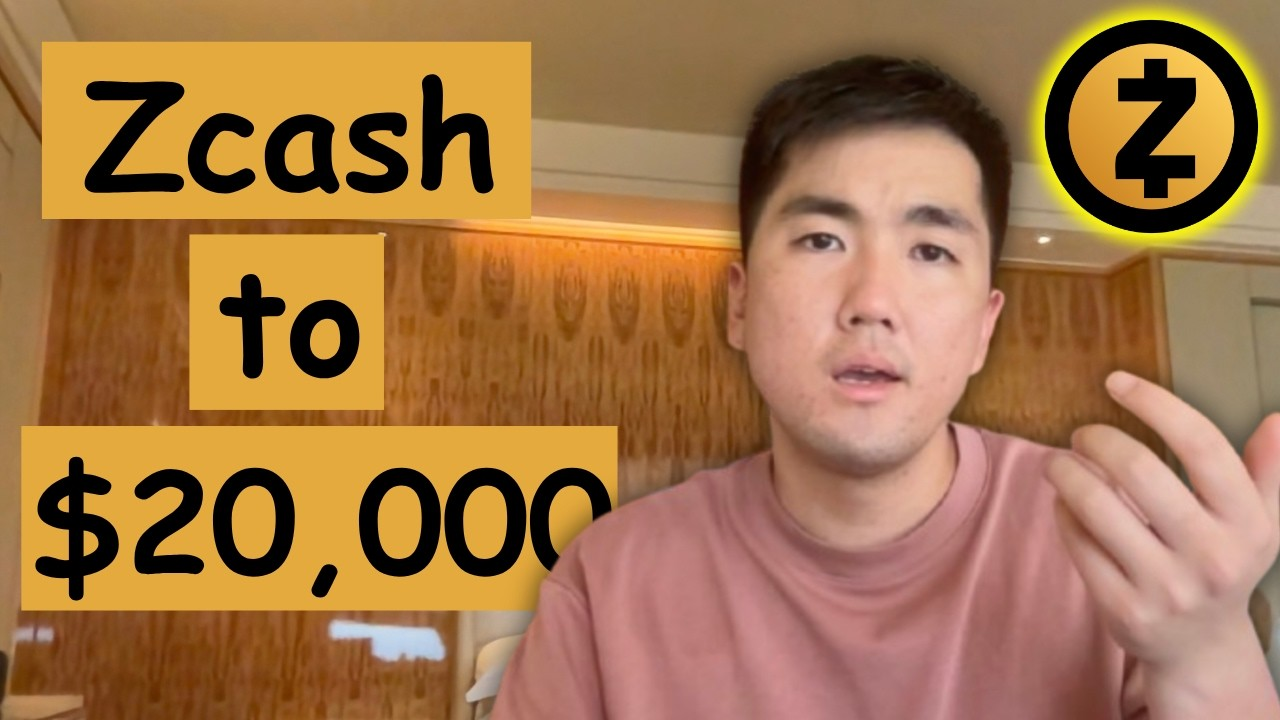
Podcast Source: Taiki Maeda (https://www.youtube.com/watch?v=kBcJNSxAY5w)
Original Title: How Zcash Flips Bitcoin
Publication Date: 2026-10-09
Key Takeaways
II. Notable Insights
III. Full Transcript
1. Lead with the Conclusion: Personal Bet That Zcash Flips Bitcoin
Taiki Maeda: My personal price target is $20,000 per Zcash before this bull cycle ends. To understand why this could happen, we must first study the “flip narrative” of every bull cycle since 2017. There’s always one asset that rises so violently that people genuinely believe it can unseat the incumbent. In 2017, it was BCH’s block size war—people truly believed BCH could flip Bitcoin. In 2020, ETH leveraged the DeFi supercycle trying to flip Bitcoin, branding itself “ultrasound money.” In 2024, Solana riding the meme supercycle may challenge ETH. The key isn’t whether you believe it—but whether others do. That belief alone is enough to generate market momentum. Studying historical cycles reveals that outsized returns come from identifying the challenged incumbent and betting on the challenger attempting to steal its market share. Some call this late-mover advantage.
2. Last-Mover Advantage: Niche Dominance Meets Grand Vision
Taiki Maeda: Peter Thiel’s quote on “last-mover advantage” in *From 0 to 1* is perfectly apt. The idea is that first-mover advantage lets you capture share while rivals scramble, but “first” is merely a tactic—not the goal. What truly matters is becoming the last great innovator in a market, enjoying decades of monopoly profits. The method resembles chess: as grandmaster Capablanca said, to succeed, you must study the endgame before anything else. In crypto, two assets perfectly embody this—and reflect my own portfolio. First is Hyperliquid, which dominates the perpetual futures niche, with a long-term vision to build infrastructure for all finance. Its ambition is massive, and if realized, token holders would reap extraordinary rewards. The second is Zcash. I’ll spend more time here because Zcash’s asymmetry is frankly absurd—it’s an asset profoundly misunderstood. You might react with disbelief: “No way, bro,” even thinking I look like someone who deserves a punch. But consider this: Bitcoiners have actively chosen to keep Bitcoin stagnant.
3. What Zcash Got Right: Fulfilling Nakamoto’s Original Vision
Taiki Maeda: Zcash dominates the privacy coin niche, and its long-term vision—the ultimate endgame—is fulfilling Nakamoto’s original intent for Bitcoin: peer-to-peer electronic cash. The whitepaper clearly states “peer-to-peer electronic cash,” yet Bitcoiners are content with zero changes, turning Bitcoin into digital gold—a perfectly valid evolution. I still hold Bitcoin and believe it has immense value. But every cycle brings an asset challenging the incumbent’s dominance and stealing market share. As quantum threats loom and consumer demand for privacy evolves, Zcash now has a wedge to pry open—gaining market share and capital flow. Most crucially, and almost entirely ignored, is Project Tachyon—an upgrade that may be one of the most impactful in crypto history.
4. Project Tachyon: Scalability and Quantum Resistance Must Be Bundled
Taiki Maeda: It does two things. First, it introduces scalability, paving the way for Zcash to reach thousands—or even tens of thousands—of TPS. Second, it makes Zcash quantum-resistant. And critically, both must be done together. You cannot solve quantum resistance without solving scalability, because post-quantum signatures are estimated to be 10 to 30 times larger than classical ones. If a chain only addresses quantum risk, it will suffer severe bloat. Thus, they must be bundled—and that’s exactly what Tachyon delivers. The timeline remains uncertain. In a April interview, the lead developer said delivery hoped for within the year. But after the Orchard pool vulnerability and potential infinite mint bug surfaced in June, Q1 2027 is more realistic. I’m recording this from Singapore; a Zcash event happens in days. If Zooko takes the stage and lays out a concrete Tachyon roadmap, just that single event could trigger a major rally for Zcash.
5. Mutable vs Immutable, and the Security Budget Problem
Taiki Maeda: A Twitter analyst rightly pointed out how to properly understand Zcash: the core difference between Bitcoin and Zcash isn’t privacy or quantum—it’s mutability. Zcash can change; Bitcoin cannot. This is a trade-off: Bitcoin’s immutability comes with stronger guarantees and fixed supply, while Zcash can better adapt to emerging threats like quantum computing and evolving user needs. Even beyond that, there’s the security budget issue. After all 21 million Bitcoins are mined, what then? I honestly don’t know. The community either says “we’ll deal with it later” or jokes about “stealing Nakamoto’s coins before quantum computers arrive and injecting them into the final emission.” But what then? Contrastingly, the Zcash community is discussing “network sustainability mechanisms”—similar to EIP-1559—where part of transaction fees are burned and redirected into emission. At least they’re seriously debating it. Applying Jevons Paradox: if Zcash achieves ultra-low cost, ultra-high speed—say, tens of thousands of TPS—more users will adopt it, generating sufficient fee revenue to incentivize miners. This is a missing piece in Bitcoin’s puzzle, which Zcash is now filling.
6. Thought Experiment: Zcash Stealing Bitcoin’s Capital Flow by 2028
Taiki Maeda: Close your eyes and imagine 2028—a plausible timeframe. Project Tachyon is live. Zcash is quantum-resistant and on its scalability roadmap (e.g., starting at 5,000 TPS, lab tests suggest up to 10K, 20K, even 30K TPS). Meanwhile, Bitcoiners fracture over Q-Day: one faction panics, saying “Bitcoin won’t rise due to Q-Day—let’s steal Nakamoto’s coins instead”; another claims this ruins Bitcoin’s pristine genesis and refuses any change, even if theft occurs. Internal conflict makes large institutional allocators hesitant to commit significant capital to Bitcoin as a store of value. Coincidentally, 2028 is also an election year. After seeing Trump launch meme coins and extract value, perhaps Democrats will introduce new narratives around certain asset classes—or heavier wealth taxes. Whether you agree or not, this scenario could unfold. High-net-worth individuals will seek non-sovereign, off-regulatory capital storage—Zcash becomes a viable candidate.
7. Reflexivity: Price Self-Reinforcement and Insurance Logic
Taiki Maeda: The market currently prices Zcash’s “flip probability” at roughly 1.5%, since Zcash’s BTC ratio hovers near 1.5%. I believe this ratio is far too low—the market severely underestimates Zcash’s right-tail potential. From a simplified lens, Zcash rising from $400–$500 to $1,000–$1,200 could simply stem from growing privacy awareness, enough to attract crypto-native capital. But what truly drives exponential growth is something like Tachyon. If Zooko gives a credible roadmap in the coming weeks—“We’ll achieve X KTPS by second half 2027”—I wouldn’t be surprised if Zcash surges dramatically. People will start asking: “Wait—Zcash is private, scalable, and Bitcoin isn’t. Zcash has a quantum roadmap, Bitcoin doesn’t. Why shouldn’t it be worth more?” Naval once said: Bitcoin is insurance against fiat; Zcash is insurance against Bitcoin—sometimes it pays, sometimes it doesn’t. You don’t need to bet on a full flip. Like a Bitcoin whale, you can sell 2% of your BTC and buy Zcash as a hedge—no harm done. For someone to buy Zcash when it reaches 10% or 20% of Bitcoin’s market cap—double-digit percentages—they must genuinely believe it can flip Bitcoin, because that’s a 5x upside relative to Bitcoin. Interestingly, on-chain data already shows old Bitcoin whales swapping BTC for Zcash. You’ll never hear Bitcoin maxis openly selling BTC for Zcash, but some rational maxis say: “What’s wrong with selling 2% of my BTC to buy Zcash? Just insurance.”
8. Investment Philosophy and Self-Positioning
Taiki Maeda: Stanley Druckenmiller’s most fitting quote: “Never invest in the present. Always imagine the world 12, 24, or 36 months ahead, then invest in that future. Because whatever you’re thinking now is already priced in.” To earn outsized returns in the AI era, you must think first-principles critically about what others are missing, then invest in that future. Get it right—make big money. Get it wrong—get wiped out. Life works that way. This episode is both a forecast of the world and a letter to my future self. By end-of-2028, I might be sipping cocktails watching this video—either thrilled I called it right, or laughing at how wildly wrong I was, with Bitcoin at $1M and Zcash at zero. But I find the latter extremely unlikely. If Zcash were destined to fail, it would’ve gone to zero after the Orchard FUD in June. Instead, it survived, nearing all-time highs. The market is pricing in something real. Zcash is among the most misunderstood assets. Many OGs, largest Bitcoin bulls, and ETH holders still carry biases from two years ago. But today’s Zcash—with Tachyon—is fundamentally different. Zcash’s 9–10 year poor price performance and proof-of-work emission make it one of the closest things to Bitcoin’s “pristine genesis.” I’ll sell as it rises—I hold a majority of my net worth in Zcash. Holding to $20,000 without selling would be irresponsible. But just the imagination that “Zcash can cancel Bitcoin” is enough to cross psychological barriers.
Compiled & Translated: DeepTide TechFlow
Disclaimer: Contains third-party opinions, does not constitute financial advice
Anthropic Revenue Explodes—Why Is the AI Market Still Diving?
9 days ago
From Institutional Settlement to Open Ecosystem: Can Canton Replicate Robinhood Chain’s Development Path?
9 days ago
Former PayPal President: How to Rebuild the Payment System in the Age of AI Agents After Apps and Buttons Disappear?
10 days ago
$20 Billion Short, How OpenAI Revenue Controversy Is Impacting AI Market Trends
10 days ago
Optimism Takes Over Multiple L2s Including Unichain—Is Single-Point Risk on the Rise?
11 days ago
Building the "AWS of the AI Era": B.AI Unveils Major Upgrade to Multimodal Matrix and Responses API, Unlocking Computational Advantages to Establish an Inclusive Intelligent Foundation
12 days ago
Pearl: Can AI Inference and Mining Coexist? | Project Introduction
15 days ago


