Goldman Raises Global Equity Exposure, While Citi Unloads Long Positions — Time to Add or Trim?
Goldman Raises Global Equity Exposure, While Citi Unloads Long Positions — Time to Add or Trim?


On October 12, Christian Mueller-Glissmann, Head of Goldman Sachs' Asset Allocation Team, upgraded the bank's three-month tactical view on global equities from neutral to overweight. The following day, Citigroup's U.S. equity strategy team revoked its overweight recommendation on U.S. stocks and unwound its long positions in the S&P 500 Equal Weight Index.
Both Wall Street giants made opposing moves within the same window, pointing to a central question: given that indices are near record highs and long-end yields have rebounded above 5%, should investors add or reduce exposure in the near term? Neither firm denied that earnings growth remains intact.
In institutional allocation terminology, overweight means allocating slightly more weight relative to a benchmark, while underweight implies less. These are not binary buy/sell signals. Goldman’s adjustment brought its three-month tactical stance back into alignment with its longer-term, already bullish 12-month framework. Citigroup’s move only removed its U.S. equity overweight and equal-weight long exposure—without declaring a bearish outlook on U.S. equities.
Goldman’s logic is straightforward: after nearly three months of flat index performance, upward revisions to earnings expectations have naturally lowered valuations, improving the risk-reward profile.
The team’s rationale is based on a consensus expectation for year-over-year S&P 500 Q3 earnings growth hovering around 25%. Concurrently, forward P/E has declined from approximately 21x in early June to around 19x. With prices unchanged but earnings expectations rising, the implied payoff for entering the earnings season is no longer overwhelmingly skewed as it was in summer.
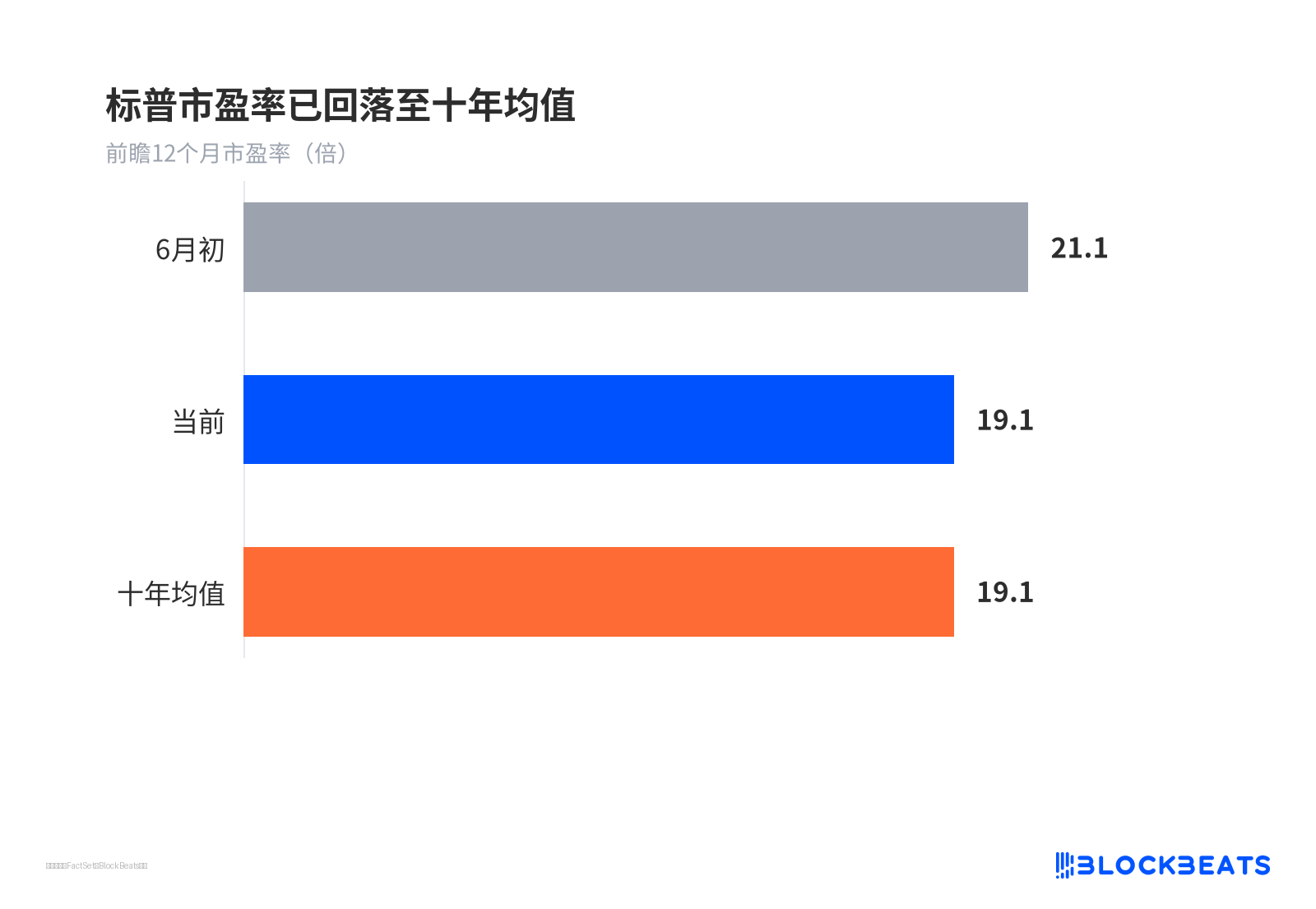
Regionally, Goldman maintains an overweight on the U.S. and Asia, and underweight on Europe. Industrially, it recommends a barbell strategy: one end comprises global technology, the other consists of rate-sensitive, low-volatility, high-dividend equity-like assets resembling bonds. The former bets on sustained AI demand; the latter acts as a buffer should tech pullbacks or growth concerns intensify.
This rating represents a positioning suggestion, not a new index-level forecast. When Goldman says valuations are more attractive, the reference point is the summer peak—not absolute cheapness.
Citigroup’s trigger is POLLS—a composite framework synthesizing positioning, sentiment, liquidity, leverage, and stress metrics. Its recent reading has entered historically elevated zones typically coinciding with market tops, directly prompting Citigroup’s withdrawal of the overweight stance.
The position unwound was the long exposure in the S&P 500 Equal Weight Index. Unlike market-cap-weighted indices where giants like NVIDIA dominate, equal weighting assigns each of the 500 constituents one vote, thereby flattening the influence of mega-caps and offering a better gauge of overall market breadth rather than concentration in a few tech leaders.
In essence, Citigroup is signaling a risk of overcrowding in terms of market breadth—not declaring the end of the U.S. tech bull market. The bank itself emphasizes this is a tactical risk reduction, not a shift to bearishness, nor a call to flee en masse into safe-haven assets.
Within the same week, Bank of America’s Michael Hartnett offered a third perspective. In his October 9 fund flow report, he maintained a sell signal on the bull-bear indicator, noting the largest weekly net inflow into money market funds since April 2020, and identifying the November mid-term elections as the primary source of volatility before year-end. His overall stance leans toward caution on the sell side.
An easily misinterpreted element lies in fixed income. Goldman upgraded its 12-month government bond view from neutral to overweight, stating bonds should gradually transition from portfolio drag to hedge, yet its three-month bond view remains neutral—with near-term preference for short-duration and cash.
Near-term neutrality paired with long-term overweight can coexist. Combining them into a unified “overweight” call for both equities and bonds erases the critical variable of maturity.
Another issue lies in the stock valuation itself. The S&P 500’s forward P/E of ~19x implies an earnings yield of ~5.3%, compared to the 10-year U.S. Treasury yield hovering near 5.2%, placing equity risk premium at historically low levels. Relative to its own high of ~21x in June, U.S. equities are indeed cheaper—but still relatively expensive versus Treasuries. The same data set, viewed through different benchmarks, leads to opposite conclusions.
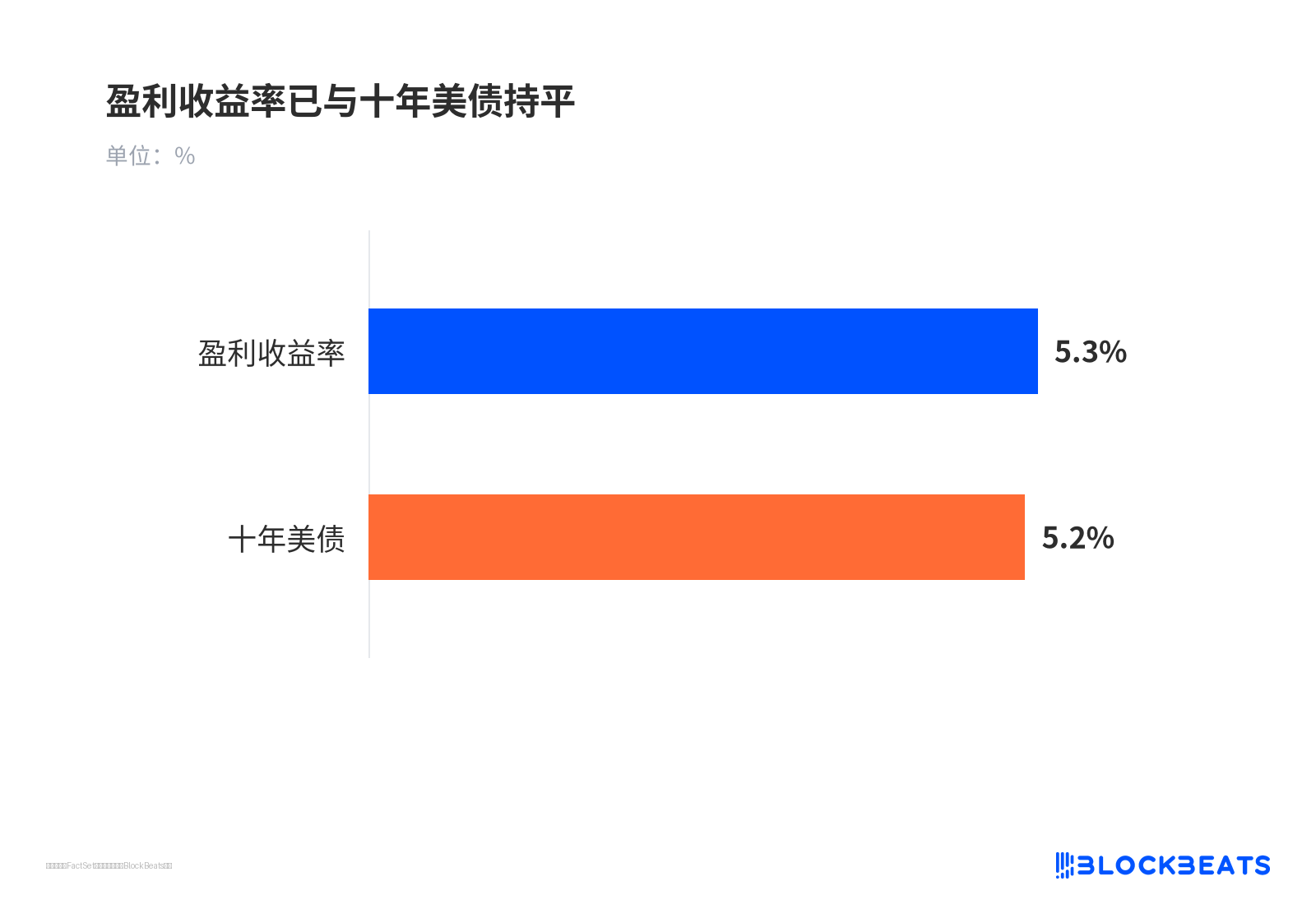
The Q3 earnings season has now begun, and the market faces two key tests: whether ~25% earnings growth can be realized, and whether AI capex translates into profits beyond paper gains.
Currently, earnings are highly concentrated—NVIDIA and Micron alone are estimated to contribute over one-third of incremental growth. Earnings beats remain largely company-specific. Should their guidance falter, the narrative of aggregate earnings momentum could unravel at the index level.
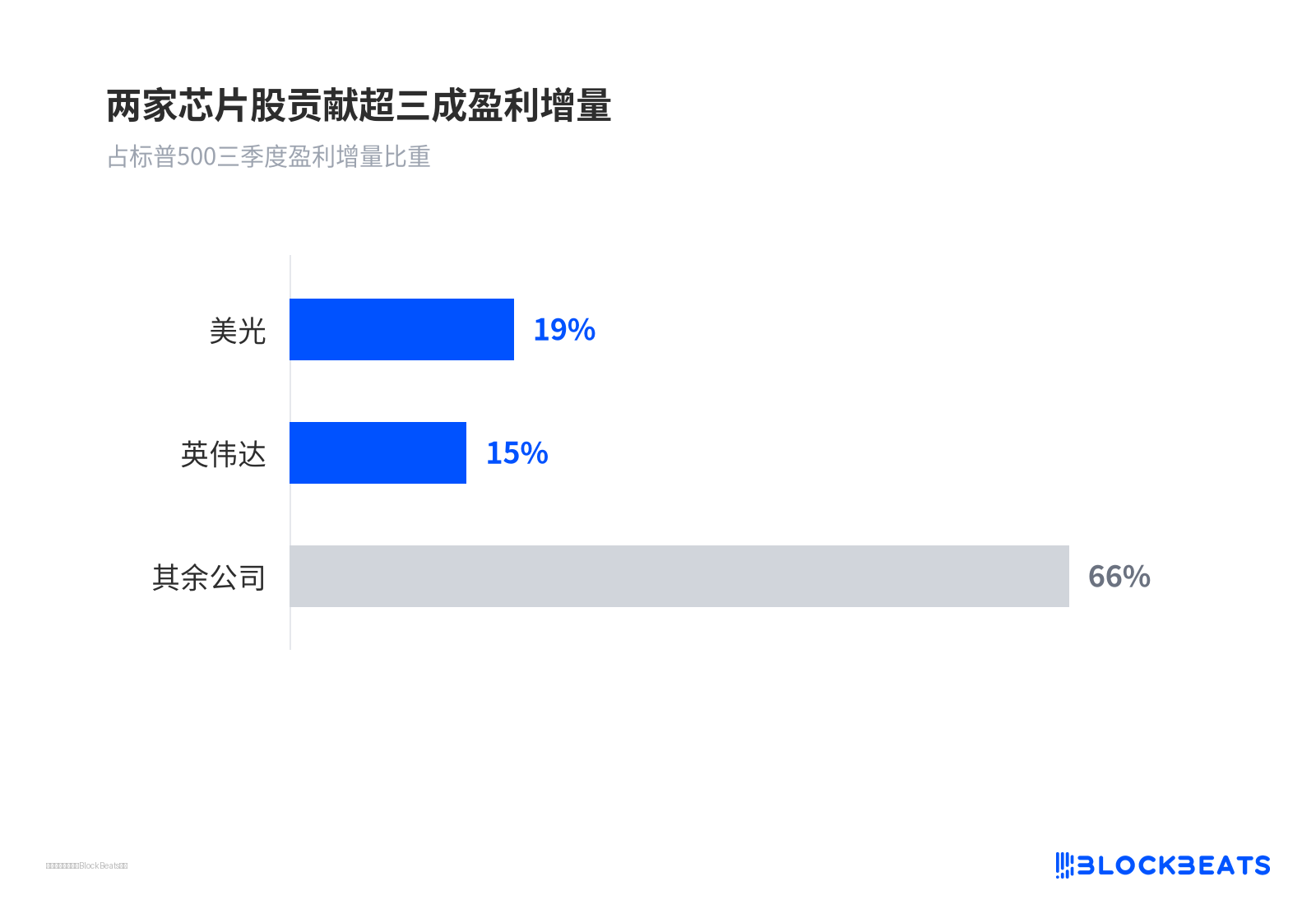
Interest rates remain equally pivotal. Whether the 10-year U.S. Treasury yield can hold steady, how inflation data ultimately plays out, and the outcome of the November mid-term elections will all impact the viability of Goldman’s barbell structure—particularly the rate-sensitive, high-dividend leg, which fundamentally hinges on interest rates ceasing to rise.
Until these two factors become clearer, Goldman’s overweight and Citigroup’s risk reduction can both be true simultaneously. They address different questions: the former assesses whether the earnings season’s payoff has improved, while the latter evaluates whether positioning at elevated market levels has become overly crowded. The ultimate arbiter will be actual earnings figures and the real-world constraint of long-end interest rates on valuation anchors.
Original: BlockBeats
Disclaimer: Contains third-party opinions, does not constitute financial advice
Bitcoin breaks below $80,000 ahead of Fed decision, put option demand still dominant
30 mins ago
Japanese GMO Hit by Hackers Demanding $50 Million Ransom, Customer Data Possibly Leaked
36 mins agoGalaxy Digital Turns Profitable in Q3, Achieves $323 Million Net Profit
42 mins agoBitcoin at $80,000: A Tug-of-War with No Winners
2 hours agoSTRC holders will vote on daily dividends, with Saylor controlling 32.9% of voting power
2 hours agoSony's L2 Soneium Launches ipUSD and IP Vault, Allowing Users to Purchase Music Copyright Funds on-chain
3 hours agoWall Street Cracks Down on "Shadow Stocks," Bullish Partners with Multiple Financial Giants: Bringing True Shareholder Rights to Tokenized U.S. Equities
3 hours ago