
ChainThink
Stay ahead, master crypto insights
What Are "Coin Stocks" Trading On? Sorting Out The Most Popular Cryptocurrency-Related Stocks In The US Market
What Are "Coin Stocks" Trading On? Sorting Out The Most Popular Cryptocurrency-Related Stocks In The US Market
2025-06-23 11:08
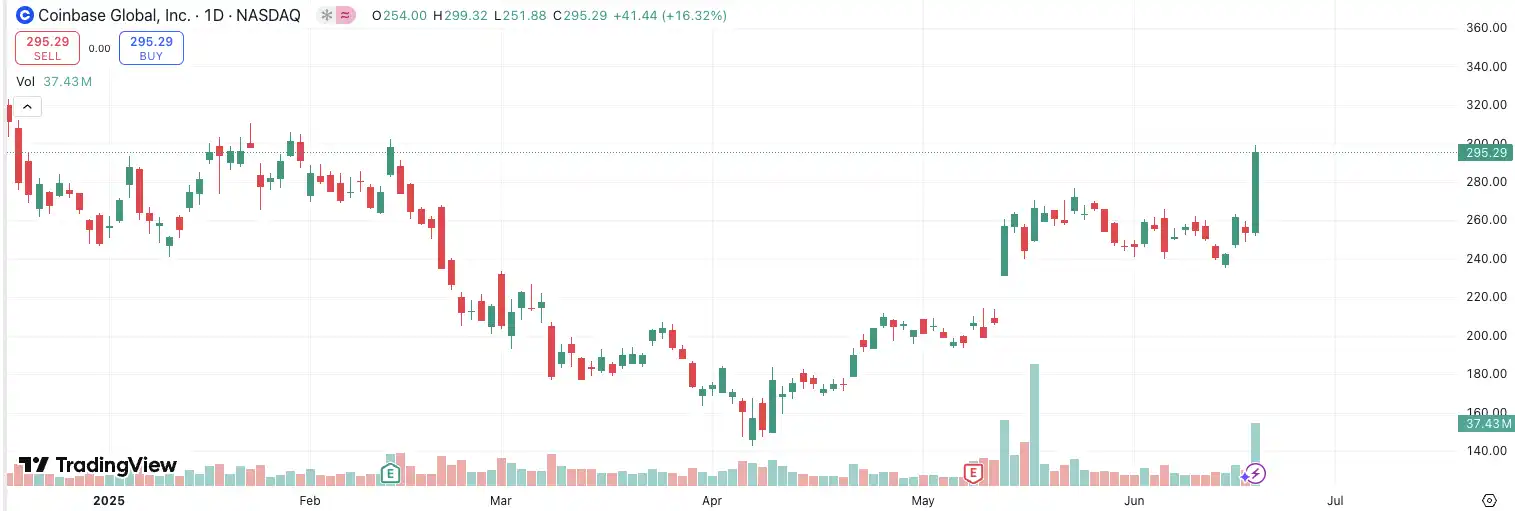
On May 19, 2025, Coinbase Global (stock code: COIN) was officially included in the S&P 500 Index, marking that cryptocurrency stocks are gradually entering the mainstream. Subsequently, Circle Internet Group (stock code: CRCL), a major stablecoin issuer, listed on the New York Stock Exchange on June 5, with an IPO price of $31. By June 19, its stock price had surged over 600%, ushering in a "mini-season" trend in the U.S. stock market.
Cryptocurrency company stocks are becoming a special "crypto hotspot": traditional market investors are beginning to pay attention to companies in the crypto industry, while crypto enthusiasts view the stock price changes of crypto stocks as one of the indicators of market fluctuations. This article will sort out the recent hot topics of crypto-related stocks in the U.S. market.
Note: This article was written on June 19. Due to the escalation of the Middle East war situation, the current stock price and the prices mentioned in the article may differ to some extent.
Circle and Stablecoin Concept
Circle Internet Group (Stock Code: CRCL)
Listing Time: June 2025 | Exchange: NYSE | Stock Code: CRCL | Market Cap: Approximately $42 billion
On June 5, 2025, "The First Stablecoin Stock" Circle Internet Group (stock code: CRCL) officially listed on the New York Stock Exchange, becoming the first major cryptocurrency company to successfully go public after Coinbase. The IPO price was $31, doubling on the first day, and by June 19, the stock price had soared to $199.81, setting a new record for the three-day cumulative performance of U.S. IPOs since 2020.
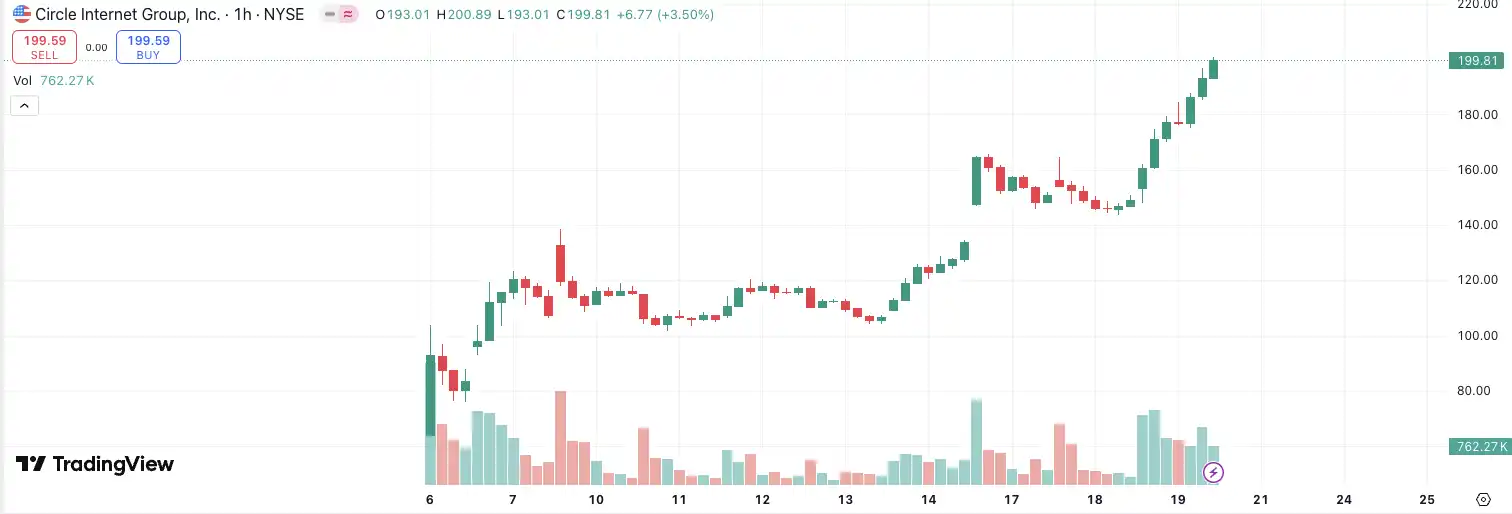
Circle was founded in 2013, initially entering the market with the P2P payment application Circle Pay, and at one point it also entered the exchange business (such as Poloniex), but did not achieve breakthroughs. In 2018, Circle began to shift to the stablecoin sector, cooperating with Coinbase to focus on the issuance and management of USDC. Currently, USDC is widely used on multiple platforms including Binance and Uniswap, becoming one of the most active stablecoins in DeFi and cross-border payments.
With the implementation of the U.S. GENIUS Act and Hong Kong's stablecoin regulatory regulations, the surge in CRCL is not only a recognition of its fundamentals and revenue model, but also reflects a concentrated bet on the future value of the stablecoin sector. Stablecoins are gradually evolving from marginal tools to core infrastructure, and large financial institutions on Wall Street have frequently released intentions to issue stablecoins. The scarcity of Circle and policy dividends jointly drive its valuation surge.
In addition, Circle continues to expand its use cases in global cross-border clearing, on-chain settlement, and government cooperation. More and more companies are using USDC as an alternative to SWIFT for real-time stable payments, attempting to build a more efficient and transparent fund flow network through blockchain technology. In the future, CRCL's performance is not only an evaluation of a tech company by investors, but also a pricing of the possibilities of a new global payment system.
Related Reading: The Night Before the Stablecoin Revolution: Circle's Surge and the Accelerated Boom of Stablecoins
Coinbase Global (Stock Code: COIN)
Listing Time: April 14, 2021 | Exchange: NASDAQ | Stock Code: COIN | Market Cap: Approximately $75 billion
Coinbase was founded in 2012, serving over 120 million users across more than 100 countries. The platform supports multiple cryptocurrency trading assets and provides retail and institutional services, including Coinbase Custody and Prime, managing over $200 billion in assets. Coinbase holds multiple state licenses in the U.S. and continues to deepen its presence in the crypto field, including public chains, infrastructure, and payments.
Recently, the Coinbase ecosystem has seen multiple significant updates: its Layer2 network Base has performed well, with DeFi TVL exceeding $5 billion, and it announced the integration of DEX on Base into the main application, injecting liquidity into on-chain assets; at the same time, it partnered with Shopify to launch a USDC checkout feature, promoting the commercial payment of stablecoins; on the consumer side, it also partnered with American Express to launch the first crypto credit card, Coinbase One Card; additionally, Coinbase also launched CFTC-compliant perpetual contract features in the U.S. and acquired the options exchange Deribit, accelerating its layout in the derivatives market.
Behind the surge of CRCL, the market seems to have overlooked that Coinbase is actually the biggest winner of this feast. USDC was jointly launched by Circle and Coinbase through the Centre alliance in 2018, and after the dissolution of the alliance in 2023, Coinbase obtained shares in Circle in August of the same year. According to the IPO documents of Circle, Coinbase received half of the remaining revenue from the USDC reserves, "earning 50% passively."
Related Reading: Coinbase Wants to Be "American Binance"
The "Bitcoin Reserve" Concept
MicroStrategy Incorporated (Stock Code: MSTR)
Listing Time: June 1998 | Exchange: NASDAQ | Stock Code: MSTR | Market Cap: Approximately $103 billion
Before entering the crypto field, MicroStrategy's core business was providing a business intelligence software platform, helping enterprises conduct data analysis, report creation, and information dissemination, which was unremarkable. What truly brought MicroStrategy into the mainstream was its Bitcoin reserve strategy.
Since August 2020, CEO Michael Saylor pioneered Bitcoin as the main reserve asset on the company's balance sheet, continuously increasing his Bitcoin holdings through methods such as issuing convertible bonds. As of mid-2025, the company held over 500,000 Bitcoins, accounting for nearly 3% of the global Bitcoin circulation, and promised "not to sell a single Bitcoin."
This strategy made MicroStrategy become a "de facto ETF" for Bitcoin in the U.S. stock market, providing many institutional investors with a channel to "indirectly hold Bitcoin through traditional financial markets." Benefiting from the continuous rise in Bitcoin prices, MSTR's stock price surged from $12 in 2020 to over $360, a gain of more than 30 times, with a correlation between its market cap and Bitcoin price ranging from 0.7 to 0.9, showing a very strong positive correlation.
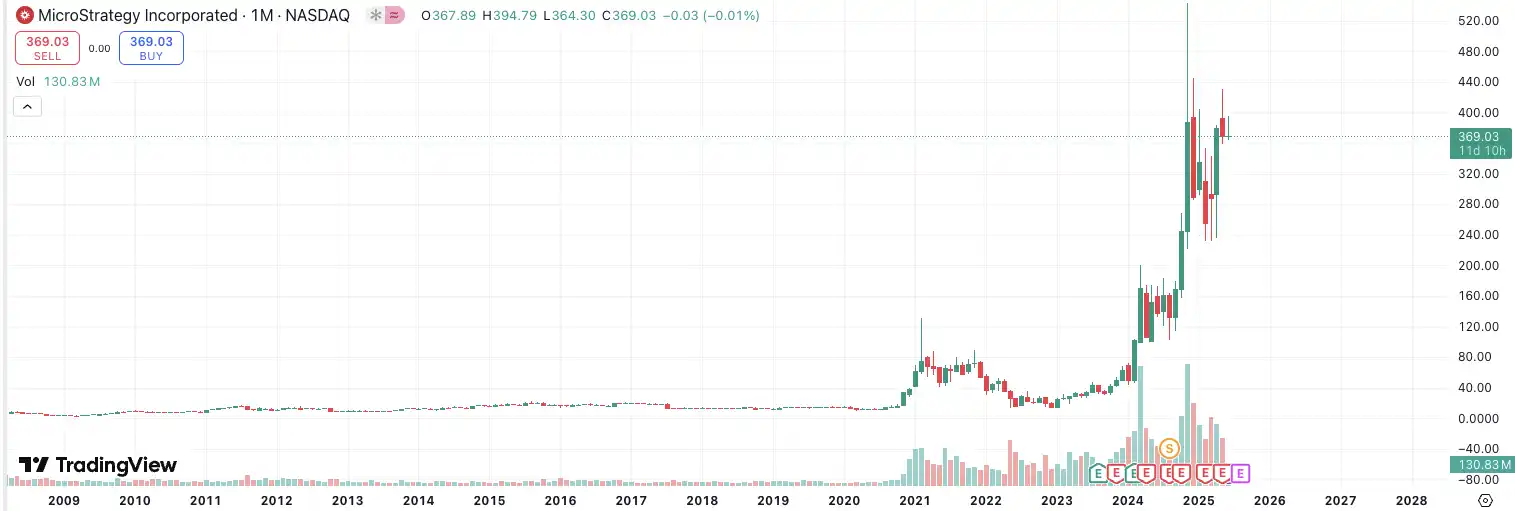
With the acceleration of Bitcoin's financialization, the approval of ETFs, and the increased demand for institutional allocation, MicroStrategy's "BTC-centric" strategy is no longer an isolated case, but has evolved into a benchmark for the entire crypto industry. Its pioneering model has triggered a chain reaction, with more and more companies beginning to imitate the "MicroStrategy path" — actively buying Bitcoin through financing and bond issues, incorporating it into their balance sheets, and sparking a new wave of "public company Bitcoin hoarding."
GameStop Corp. (Stock Code: GME)
Listing Time: June 2002 | Exchange: NYSE | Stock Code: GME | Market Cap: Approximately $10.5 billion
GameStop is a multi-channel video game and consumer electronics retailer headquartered in the United States, with operations covering the United States, Canada, Europe, and Australia. The company sells new and used game consoles, physical and digital game software, and various accessories through its brand stores such as GameStop, EB Games, and Micromania, as well as international e-commerce platforms, with hardware and peripherals being its main source of income.
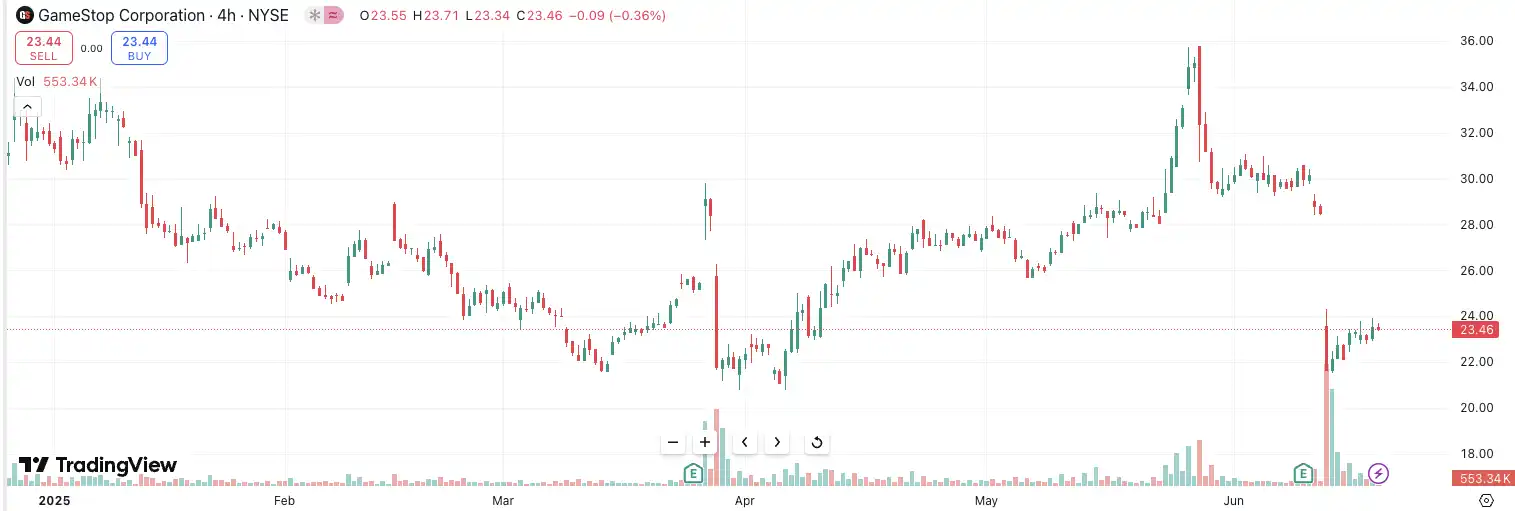
In February 2025, CEO Ryan Cohen met with Michael Saylor, founder of MicroStrategy, an event seen by the market as a key signal that GameStop was emulating MicroStrategy's "Bitcoin hoarding" model. In March, the company announced plans to take Bitcoin as a reserve asset. The stock price rose by 12% in March. Rumors in February also boosted GME's stock price by 18%.
At the end of May, the company confirmed it had purchased approximately 4,710 Bitcoins (worth about $513 million), officially adding Bitcoin to its balance sheet and joining the "MicroStrategy model," making it the 13th largest Bitcoin holder globally. Due to short-term news, on June 11, the company announced a $1.75 billion note issuance plan for strategic Bitcoin reserves. After the announcement of the note issuance, GME's stock price fell over 11% after hours on June 11, and on June 12, the stock price plummeted over 23%, partly due to a 17% drop in first-quarter revenue to $732.4 million, as well as reflecting investor concerns about potential share dilution and Bitcoin investment strategies. Recently, GME completed a $2.25 billion convertible senior note issuance to strengthen its Bitcoin strategy. On June 17, GME's stock closed at $22.99, down about 1.4% for the day.
Trump Media & Technology Group Corp (Stock Code: DJT)
Listing Time: September 2021 | Exchange: NASDAQ | Stock Code: DJT | Market Cap: Approximately $5.1 billion
Trump Media & Technology Group is a comprehensive technology company focusing on social media, digital streaming, and technological infrastructure. Its flagship product Truth Social aims to create a space encouraging free speech and decentralized moderation, and is also an important Trump stock.
On May 27, 2025, DJT suddenly announced the initiation of a $2.5 billion Bitcoin vault strategy, explicitly including Bitcoin in its asset reserves for "financial stability and long-term value storage." This news directly stimulated a short-term increase of 1.17% in Bitcoin, pushing the price above the $112,000 threshold. DJT's stock price experienced a rollercoaster fluctuation after the news was announced, rising before the market opened, then falling nearly 12% shortly thereafter, recording the largest single-day decline since March 10, 2025, reflecting investors' concerns about Bitcoin investment.
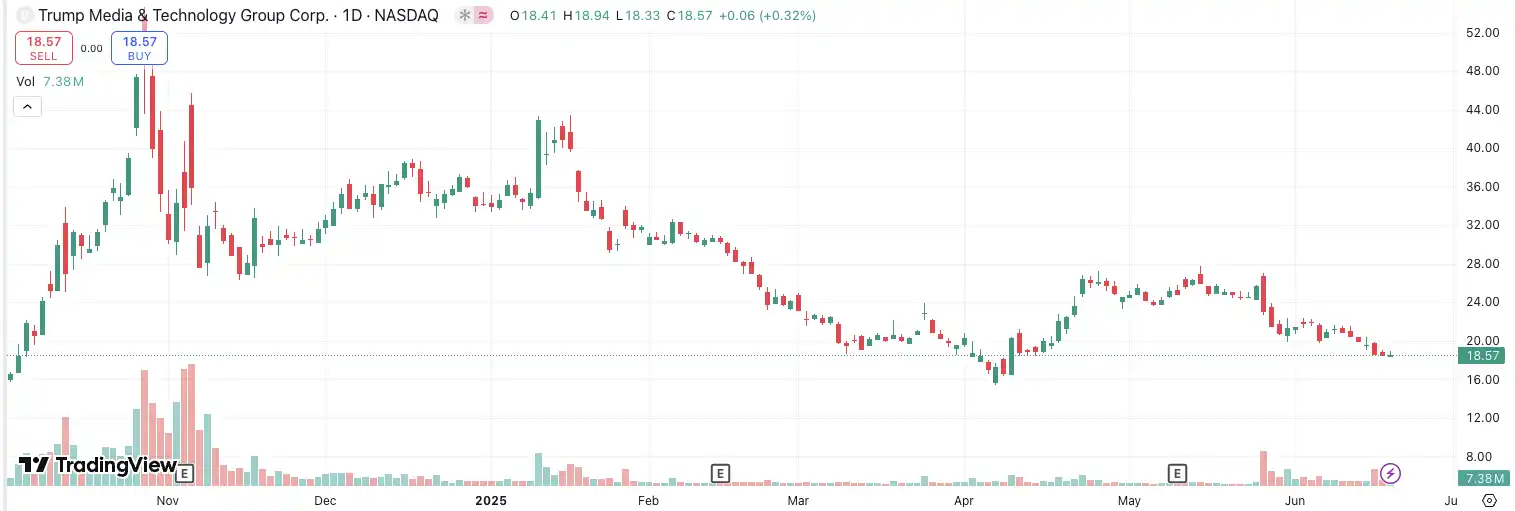
In June, DJT announced that its S-3 registration statement was approved by the SEC and immediately initiated equity and convertible bond agreements with approximately 50 investors, with a total financing amount of $2.3 billion. According to disclosure, the majority of this financing will be directly used to purchase Bitcoin, making DJT the second major U.S. publicly listed company to include Bitcoin as a strategic asset reserve after MicroStrategy.
Other Companies
What was once considered a high-risk niche strategy by MicroStrategy is now evolving into a mainstream narrative path that companies across industries are competing to emulate. More and more companies are beginning to incorporate cryptocurrency assets into their reserve systems, trying to restructure their valuation logic through "cryptocurrency reserves + capital market leverage."
Fitness equipment manufacturer Interactive Strength (stock code: TRNR) and medical company Semler Scientific (stock code: SMLR) have already invested funds to purchase Bitcoin, approving investment plans of up to $5 million and 1,570 Bitcoins respectively. Artificial intelligence company Genius Group (stock code: GNS) is also not lagging behind, spending $14 million to purchase 153 Bitcoins. Additionally, several other companies such as Rumble (stock code: RUM), Anixa Biosciences (stock code: ANIX), and LQR House (stock code: YHC) have also joined the Bitcoin investment ranks.
Related Reading: The "MicroStrategy Effect" Sweeps the U.S. Stock Market: 30 Companies Buy Crypto as Reserves, Stock Prices Rise by 400% on Average
The "Crypto Stock Integration" Concept
SharpLink Gaming (Stock Code: SBET)
Listing Time: May 1997 | Exchange: NASDAQ | Stock Code: SBET | Market Cap: Approximately $600 million
SharpLink Gaming is an online technology company operating in the sports betting and online casino gaming sectors, connecting sports fans with licensed online sports betting operators, offering personalized betting promotions to sports fans. The company's operational performance is not ideal, with consecutive losses. Net profit in 2023 was -14.243 million USD, and total revenue in 2024 was -4.571 million USD.
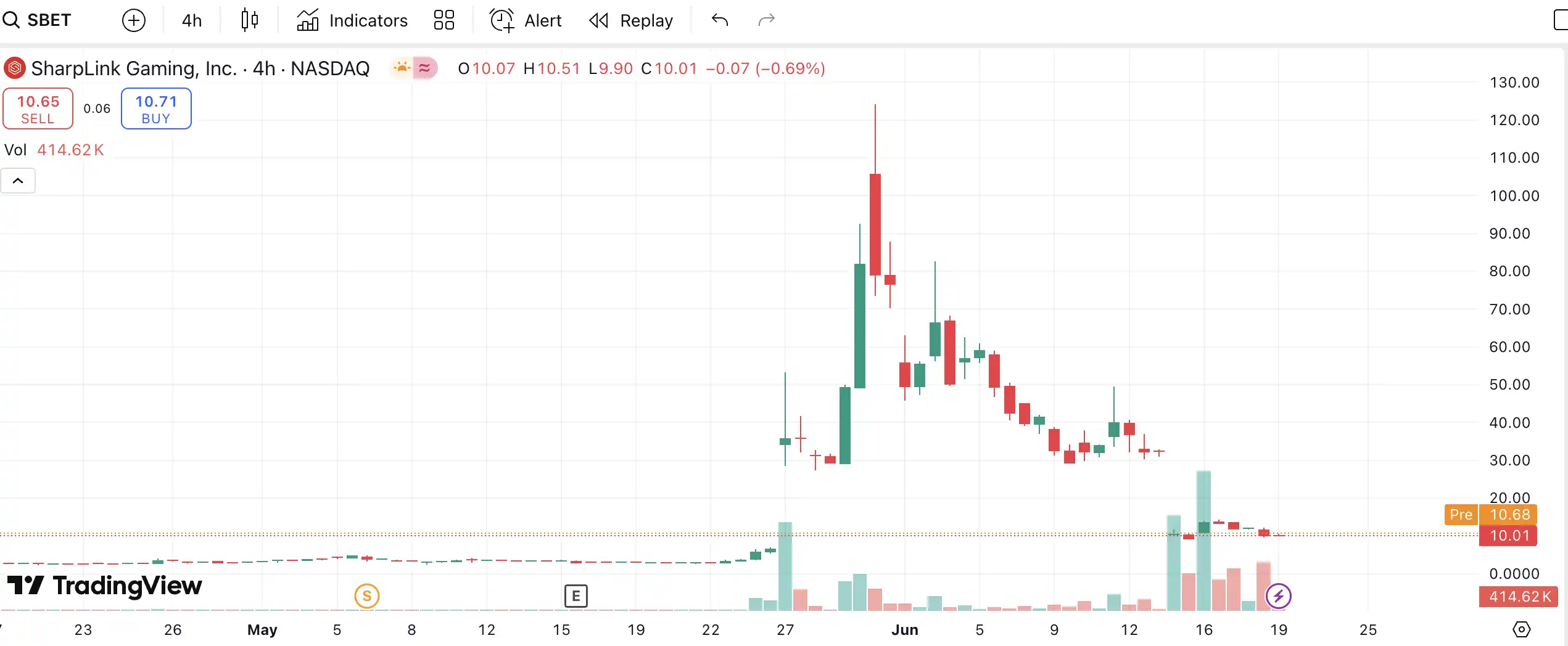
On May 27, SharpLink Gaming issued 69,100,313 common shares or equivalent securities to investors at a price of $6.15 per share, expecting total proceeds of approximately $425 million, with the funds raised intended to purchase Ethereum as the company's primary vault reserve asset. The lead investor in this private placement was Consensys Software Inc., with participating investors including ParaFi Capital, Electric Capital, Pantera Capital, Galaxy Digital, etc.
After the announcement of the news, SBET's stock price surged over 650% in a single day, with a cumulative three-day increase of 17.56 times, reaching a peak of $120. Subsequently, the company submitted an S-3 registration statement to the SEC to facilitate future securities sales. Although the company clarified that the news was actually misunderstood and did not mean immediate share dilution, the stock price still fell significantly, wiping out most of the recent gains.
SBET may have rapidly experienced its "MicroStrategy" surge in the short term, but it quickly plummeted back to the starting point, indicating that establishing a cryptocurrency reserve may no longer be a guaranteed driver of stock price growth.
DeFi Development Corp (Stock Code: DFDV)
Listing Time: July 2023 | Exchange: NASDAQ | Stock Code: DFDV | Market Cap: Approximately $460 million
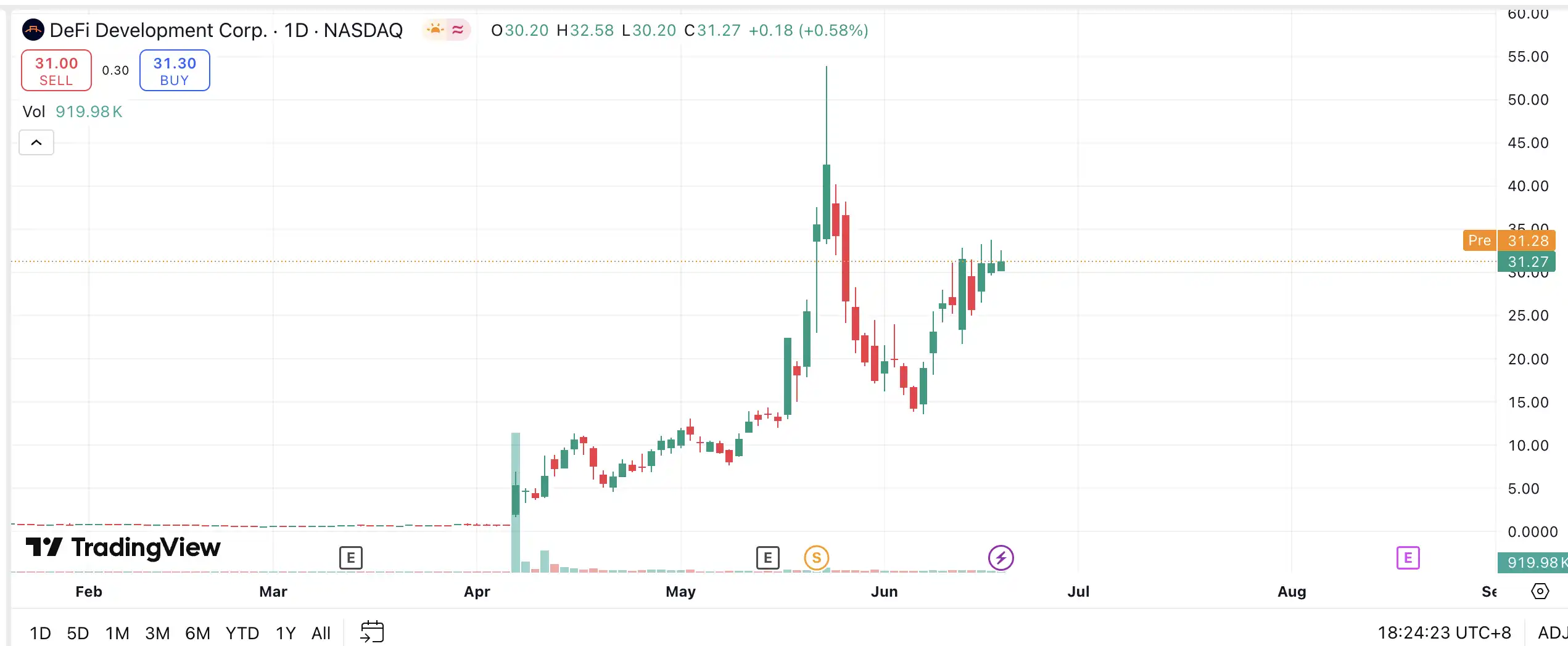
DeFi Development Corp was originally a real estate financing company, using an AI-driven online platform to connect lenders and commercial real estate buyers. In April 2025, a team led by former Kraken exchange executives purchased 728,632 common shares of DeFi Development Corp, and Joseph Onorati, former Chief Strategy Officer of Kraken, was appointed as Chairman and CEO.
Subsequently, the company transformed into a Solana vault company, and on April 8, it purchased 2,858 SOL for the first time, achieving a tenfold increase in April. By the end of May, the company's SOL holdings increased to 609,190, with a value exceeding $97 million. The stock price achieved a fivefold increase in May.
Trident Digital Tech Holdings (Stock Code: TDTH)
Listing Time: September 2024 | Exchange: NASDAQ | Stock Code: TDTH | Market Cap: Approximately $19 million
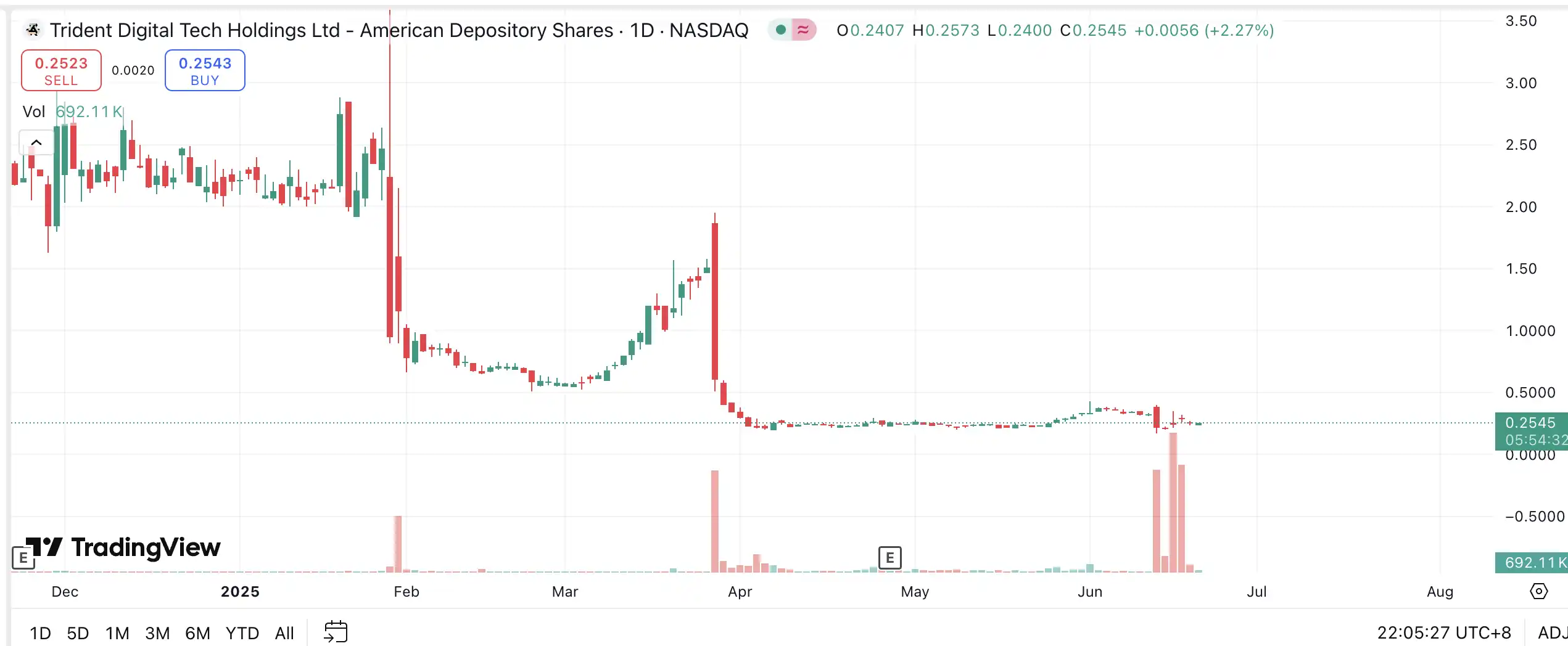
In June 2025, TDTH, a digital transformation leader based in Singapore, announced plans to raise $500 million to create the world's first large-scale corporate XRP reserve, and plans to integrate XRP into its digital transformation services for real-time payments and DeFi applications. In the long term, it will involve holding, accumulating, and deeply participating in the Ripple ecosystem to improve its decentralized financial strategy. After the announcement of the news, the stock price dropped over 50% from $0.45 to $0.20.
Additionally, three other large companies also announced plans to include XRP as an asset in their fiscal reserves for their payment infrastructure. The pharmaceutical company Wellgistics Health (stock code: WGRX) invested $50 million in XRP; the energy group VivoPower International (stock code: VVPR) plans to purchase $100 million in XRP; and the hospitality industry leader Webus International (stock code: WETO) will raise $300 million to establish an XRP reserve. After the announcement of the news, the stock prices of these companies all declined to some extent, reflecting that XRP and other altcoins have yet to gain recognition from mainstream financial institutions and remain risky investments.
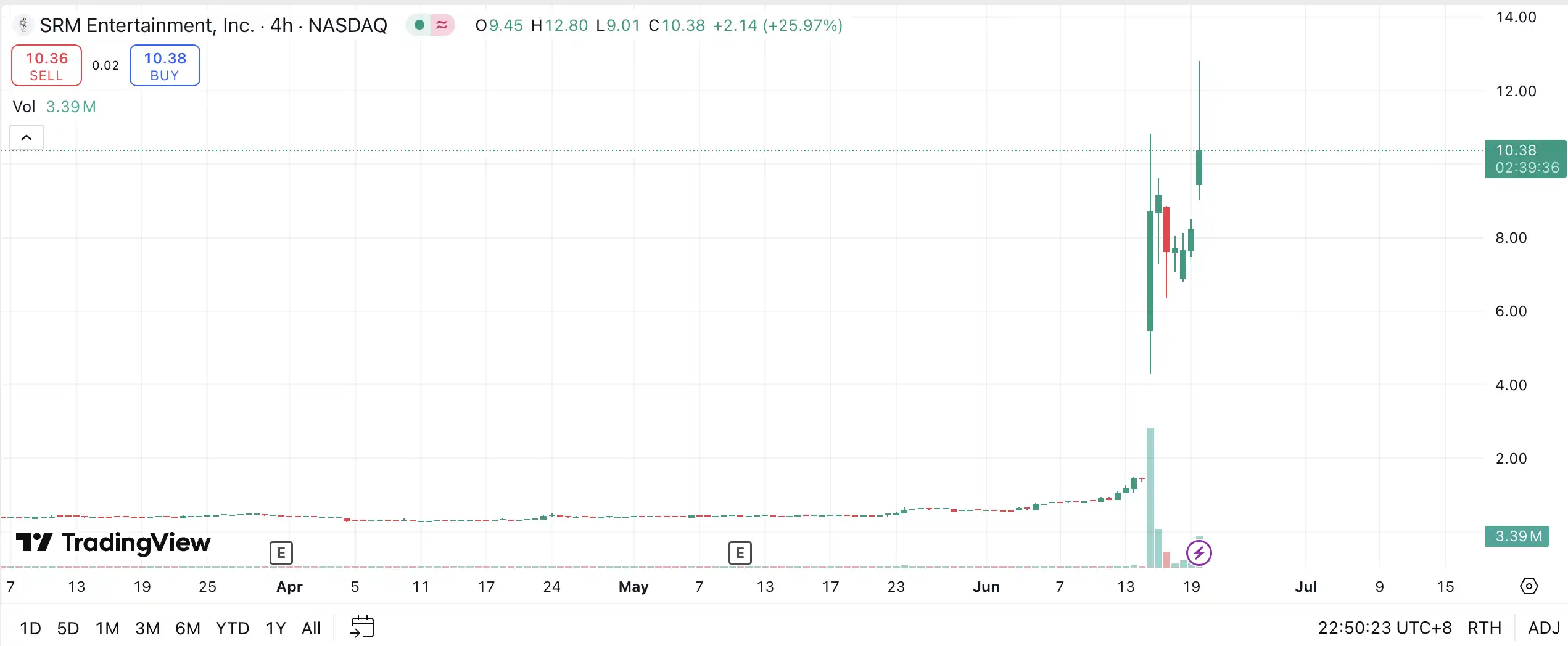
SRM Entertainment, Inc. (Stock Code: SRM)
Listing Time: August 2023 | Exchange: NASDAQ | Stock Code: SRM | Market Cap: Approximately $190 million
On June 16, 2025, the toy and memorabilia design and development company SRM announced a $100 million equity investment to launch a TRON token (TRX) reserve strategy. At the same time, the founder of the TRON blockchain, Justin SUN, was appointed as a consultant for the company, and the company will merge with Tron through a reverse merger to list on the Nasdaq.
After the announcement of the news, SRM's stock price surged over tenfold, hitting a new all-time high, with the market cap breaking through $100 million.
The surges of Circle and MicroStrategy have shown the massive growth potential of the stablecoin sector and the "MicroStrategy" model. More and more traditional financial institutions, tech giants, and small and medium-sized enterprises will participate in the stablecoin sector, building new financial strategies around cryptocurrency reserves. However, whether this model can withstand cycles and volatility still depends on the long-term testing of the market and the risk control capabilities of the companies.
Disclaimer: Contains third-party opinions, does not constitute financial advice


AI Practical Guide
This column focuses on the real progress of Agents: technological evolution, application implementat

Crypto Weekly
Tracking on-chain movements of the smart money and institutions

Frontier Insights
Spotlight on Frontier, trending projects, and breaking events

Blowup Alert
As the 2026 crypto bear market deepens, exit scams and project blowups are becoming increasingly fre

Regulatory Watch
American Crypto Act – timely interpretations of policies worldwide

Popular Airdrop Tutorial
Selected potential airdrop opportunities to gain big with small investments

FusnChain
FusnChain