
ChainThink
Stay ahead, master crypto insights
WLFI is about to be listed, how to conduct a reasonable valuation of it?
WLFI is about to be listed, how to conduct a reasonable valuation of it?

2025-08-15 14:23
World Liberty Financial (WLFI) official X once stated that the goal is to open token trading by the end of August.
As an unprecedented "political narrative + financial engineering" combination experiment, WLFI has been the focus of American crypto capital and market imagination since the second half of 2024. Now, at the node where the team's tokens are fully locked, the public sale is being unlocked in batches, and TGE is imminent, it is necessary to re-examine the project's current valuation logic, the on-chain performance of its stablecoin USD1, and the capital actions and strategies of WLFI in the external ecosystem.
From a comprehensive analysis of these signals, it seems that the next phase of WLFI may not just be a "tradeable governance token," but rather a "cryptographic political structure" that targets TRUMP, imitates the MSTR model, and is tied to the multi-chain path of USD1.
How to Value in a Multi-Party Game?
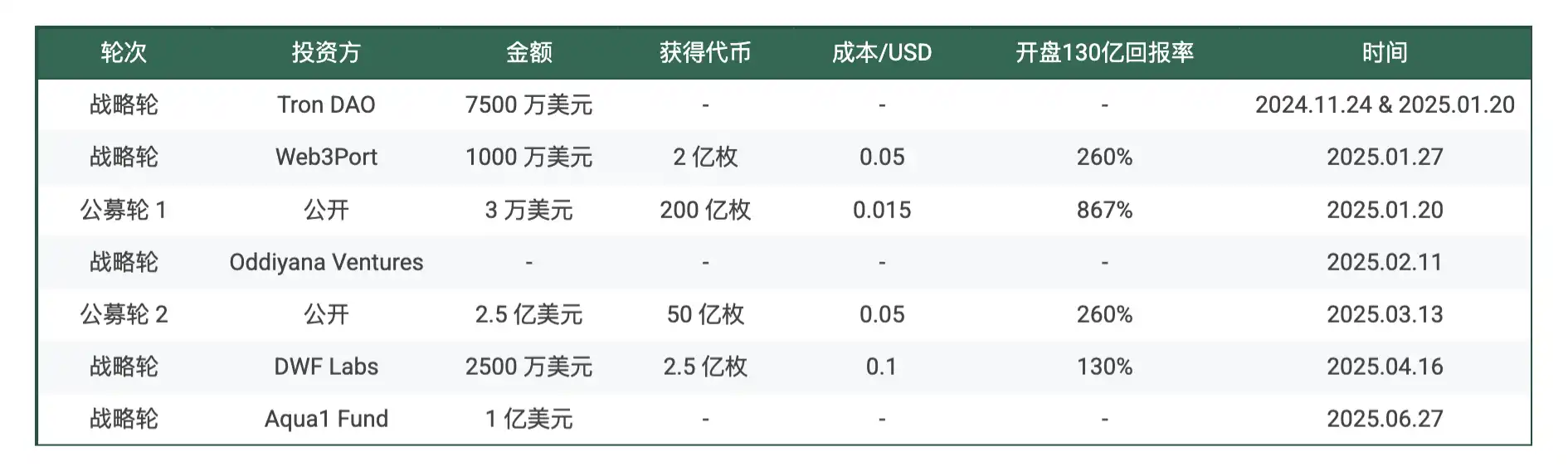
In October 2024, WLFI launched its first public sale with a price of $0.015, raising a total of $300 million; on January 20, 2025, the day of Trump's inauguration, the second round was launched with a price increased to $0.05, raising another $250 million. These two rounds attracted over 150,000 users across multiple markets such as North America, Asia, and Europe, becoming one of the most popular initial fundraising efforts at the end of 2024 and the beginning of 2025.
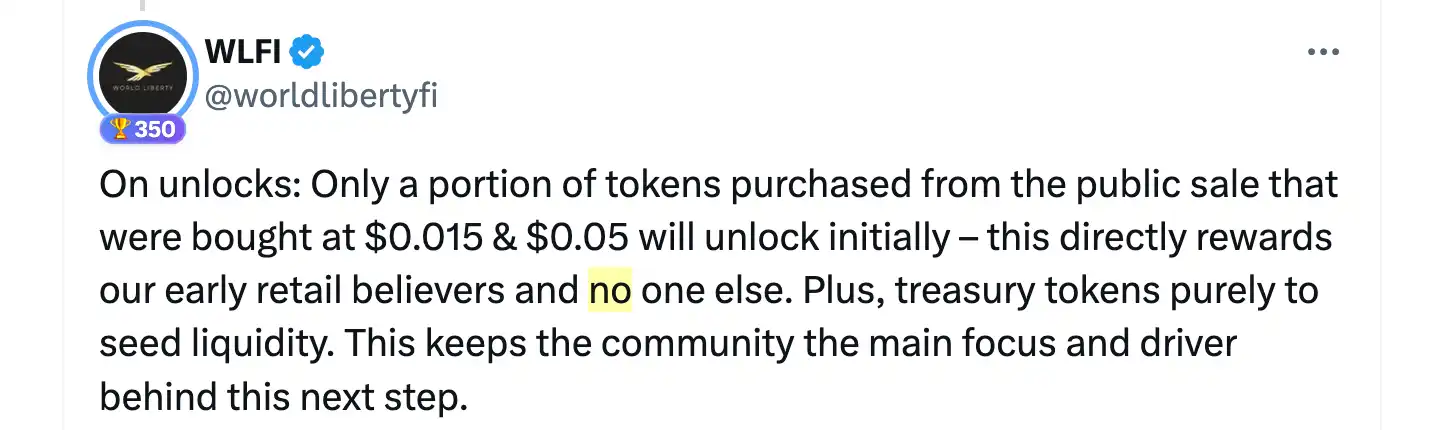
The project team adopted a strategy of "locking liquidity and betting on the future" during the fundraising phase, meaning that the tokens were non-tradable and only for governance participation at the time of fundraising. Although this mechanism initially faced market skepticism, from the subsequent market performance, it effectively filtered out speculative positions, forming a more sticky community structure. It wasn't until July 17th this year, when the community governance proposal was officially passed, that the official announced that TGE might start around the end of August. (This time is an estimate, not a specific time, the original text states that it could be completed within 6-8 weeks from the date of the announcement.)
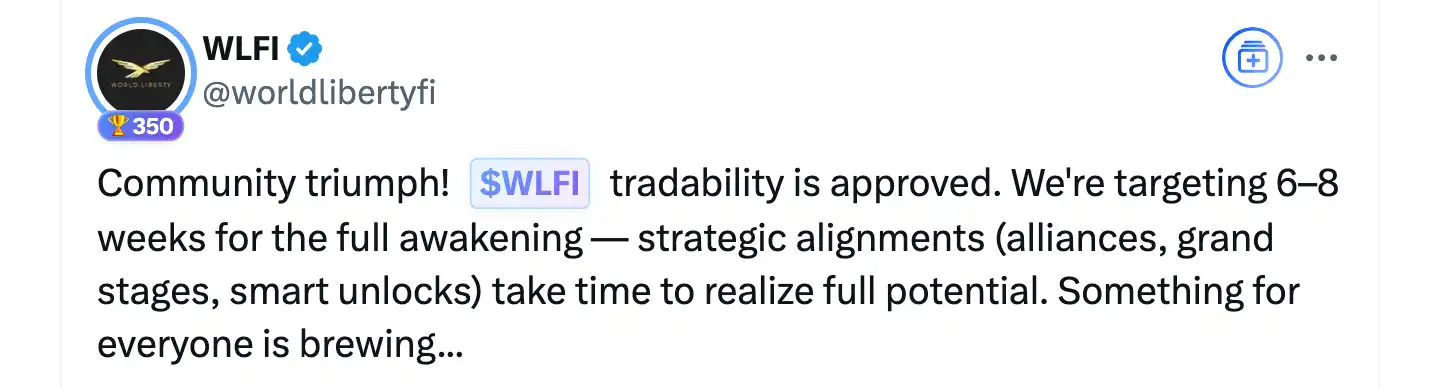
According to official statements and on-chain data, only a portion of the early public sale shares will be partially unlocked, while the core team, advisors, and strategic investors are all locked, and the unlocking schedule will be decided by community voting.
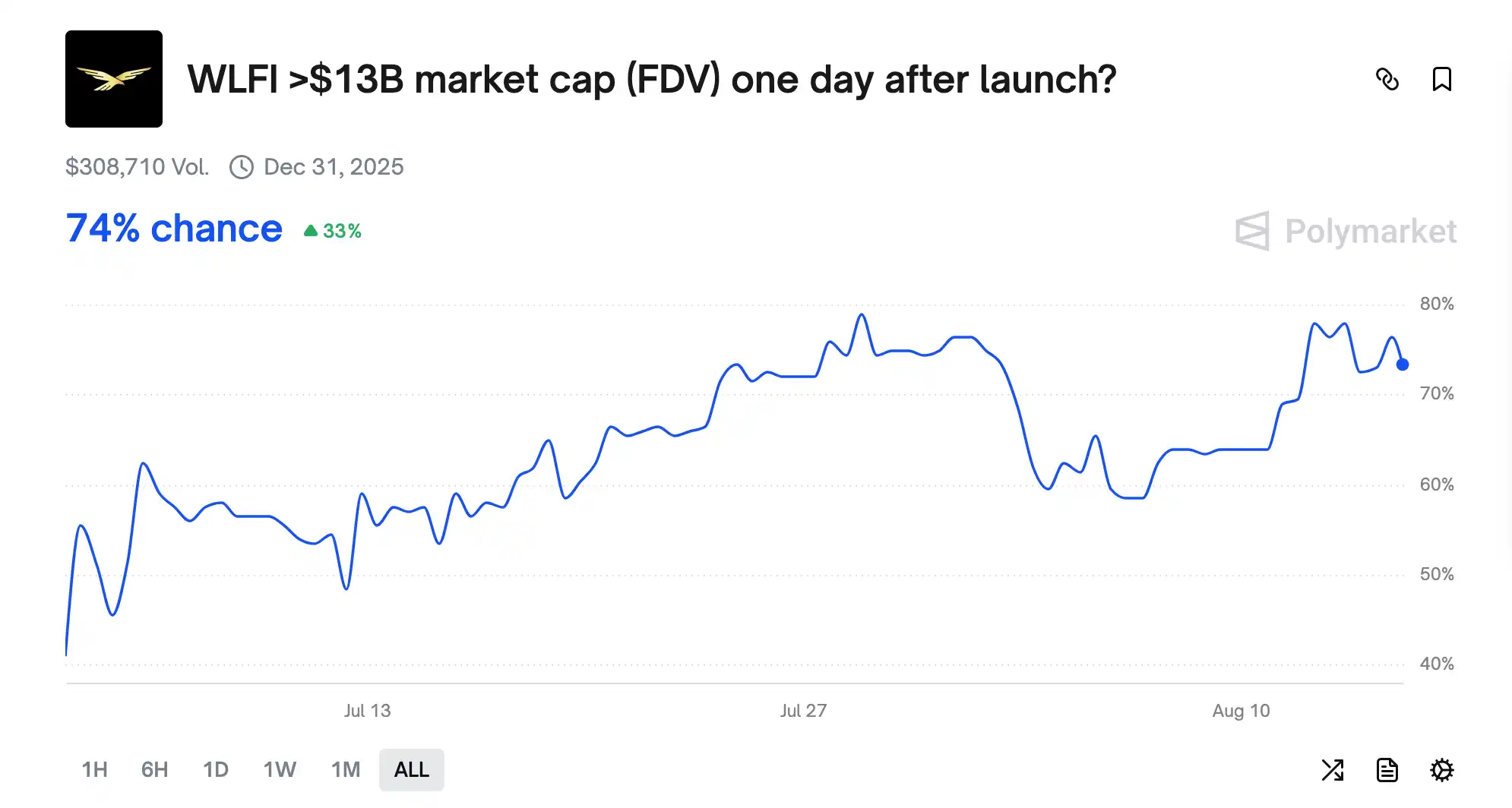
Based on this, reviewing the off-chain trading data since July reveals that the trading price of WLFI fluctuates between $0.8 and $1 (source: LBank Pre-Market data), and the probability of predicting that FDV after TGE exceeds $13 billion on the prediction market Polymarket is as high as 74% (data from August 14). If this FDV level is compared, the return for the first-round investors could exceed 867%.
According to publicly available information, DWF Labs, Web 3 Port, Aqua 1 Fund, and others have made large purchases in the strategic round. Among them, Sun Yuchen purchased 300 million WLFI through Tron DAO at a low price last November, with a cost even lower than the public round's $0.015, becoming one of the largest independent holders currently. The entry of these capitals has not only enhanced the institutional credibility of WLFI but also set up a "game foundation" for the market performance after the token unlock.
After the strategic allocation of ALT 5 Sigma, this previously "unlisted" governance token obtained its first off-chain valuation anchor at $0.20. According to the transaction structure, ALT 5 will issue 200 million new shares, half of which will be directly used for token swaps with the WLFI project team. Calculated at a $1.5 billion valuation, the book value per WLFI is clearly $0.20.
More importantly, this round of transactions is tied to more political and capital signals. ALT 5 is not only a capital injection party but also becomes an important part of the WLFI governance structure. Eric Trump, a member of the Trump family, WLFI CEO Zach Witkoff, COO Zak Folkman, and others have joined the board of ALT 5. The latter also plans to include WLFI in its crypto treasury assets to build a new capital model of "decentralized company reserves."
It can be said that ALT 5's move not only provides a valuation anchor for WLFI but also establishes it as a "political capital anchor" in the Web 3 world.
USD1: From On-Chain Depeg Testing to Points Program
USD1, which is highly integrated with WLFI, is also evolving rapidly.
USD1 is the core lever of WLFI in the stablecoin market. Its structure is 1:1 pegged to the US dollar, with reserves consisting of U.S. short-term Treasury bills and cash, and the custodian is BitGo Trust Company. This model is similar to USDC, but in terms of market expansion strategy, it is more focused on centralized platform integration and off-chain resource injection. Since its official launch in March this year, USD1 has quickly opened up the market by leveraging fiat reserve backing, BitGo custody, security audit certification, and the resources behind the Trump family, and its circulating market cap exceeded $2.1 billion in just two months, becoming the fastest-growing "latecomer" in the current stablecoin landscape.
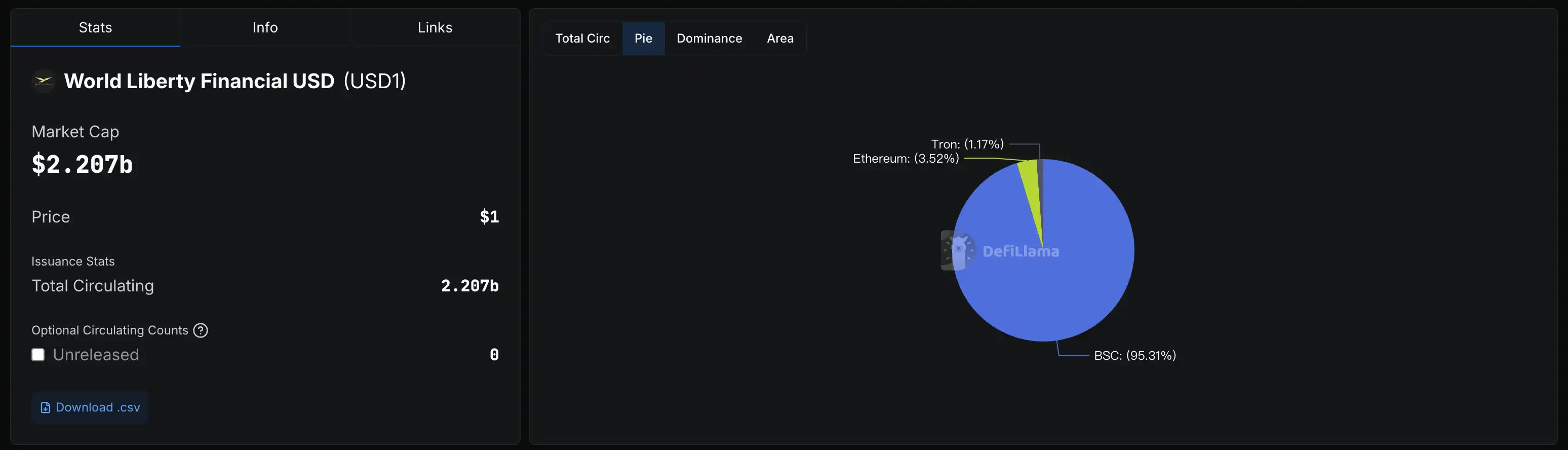
Looking at the on-chain distribution, USD1 mainly focuses on BNB Chain, with about 90% of the token circulation occurring on this chain. At the same time, it has completed compatibility deployment for Ethereum and Polygon through Chainlink CCIP, and has already landed on the Tron chain. Currently, USD1 has successfully been listed on exchange trading pairs such as Binance, HTX, and MEXC, and through protocols such as ListaDAO, StakeStone, and Falcon Finance, it has realized functions such as staking, lending, and exchange.
However, the frequent usage has also exposed the potential fragility of liquidity. On July 29, after the IKA Launchpad event on Gate platform, due to a concentrated redemption of $200 million, USD1 experienced a short-term depeg, with the price dropping to 0.9934 USDT. This pressure caused by concentrated redemptions was considered a passive stress test for USD1 facing real market conditions.
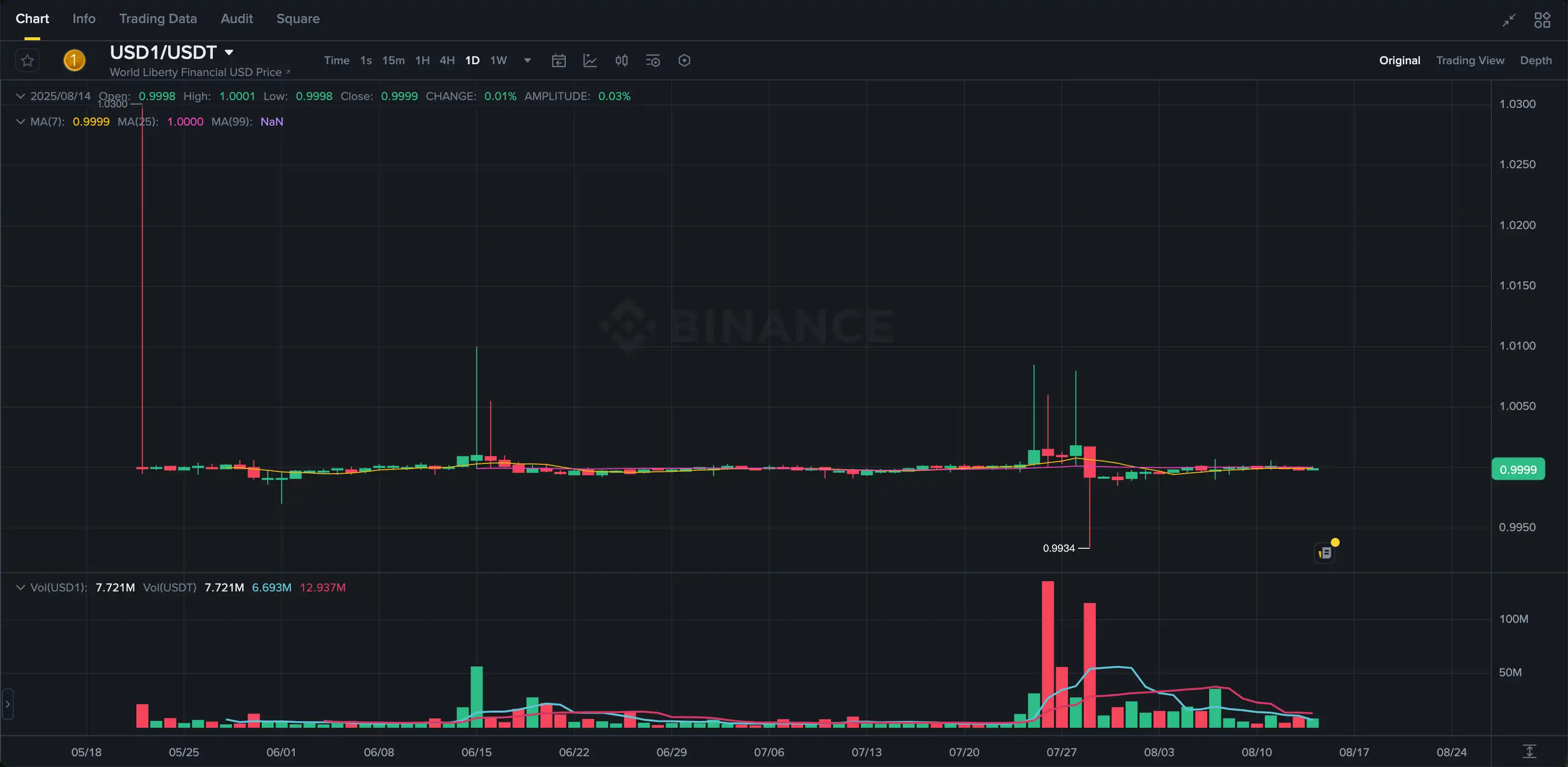
Luckily, the price stabilized to 0.9984 afterward without losing control. On August 7, the project team also released the USD1 Points Program (points program), clearly stating that it would provide users with points incentives through trading, holding, and staking, and it was synchronized with multiple mainstream exchanges such as OKX. Subsequently, it plans to integrate with the WLFI App and on-chain native DeFi projects, further solidifying the user stickiness of the stablecoin and the on-chain application layer.
However, from the perspective of the on-chain ecosystem, the situation is not optimistic. Currently, the trading volume of USD1 is limited within the Binance ecosystem. Previously, meme coins such as BUILDon, usd1doge, and wlfidoge experienced gains ranging from several times to dozens of times, but then disappeared without any lasting strength or the emergence of a "leading effect." Whether it can continue to maintain on-chain prosperity may still need to wait for the detailed rules of the points program.
But this cannot affect a fact: USD1 is no longer just an "affiliated stablecoin of WLFI," but has gradually become the on-chain pricing unit and fund intermediary of the Trump narrative.
Ecological Expansion: Multi-Round External Investments and Asset Purchases Under the Treasury Strategy
Compared to "storytelling," WLFI understands "buying footnotes with money." WLFI has consistently emphasized the "cryptocurrency treasury model" and has taken a multidimensional expansion strategy in practice.
In the first half of 2025, WLFI successively invested in or announced investments in the following projects:
· A strategic investment of $10 million in Falcon Finance, with USD1 becoming its official collateral asset;
· A commitment to invest $6 million in Vaulta (formerly EOS), promoting the implementation of its Web3 banking module in the United States;
· Purchased $6 million worth of Vaulta A and EOS through Pancake and exSat, among other DEXs;
· Actively purchased mainstream cryptocurrencies such as LINK, TRX, AAVE, SEI, AVAX, MNT, ENA, ONDO, MOVE, with total spending exceeding $40 million.
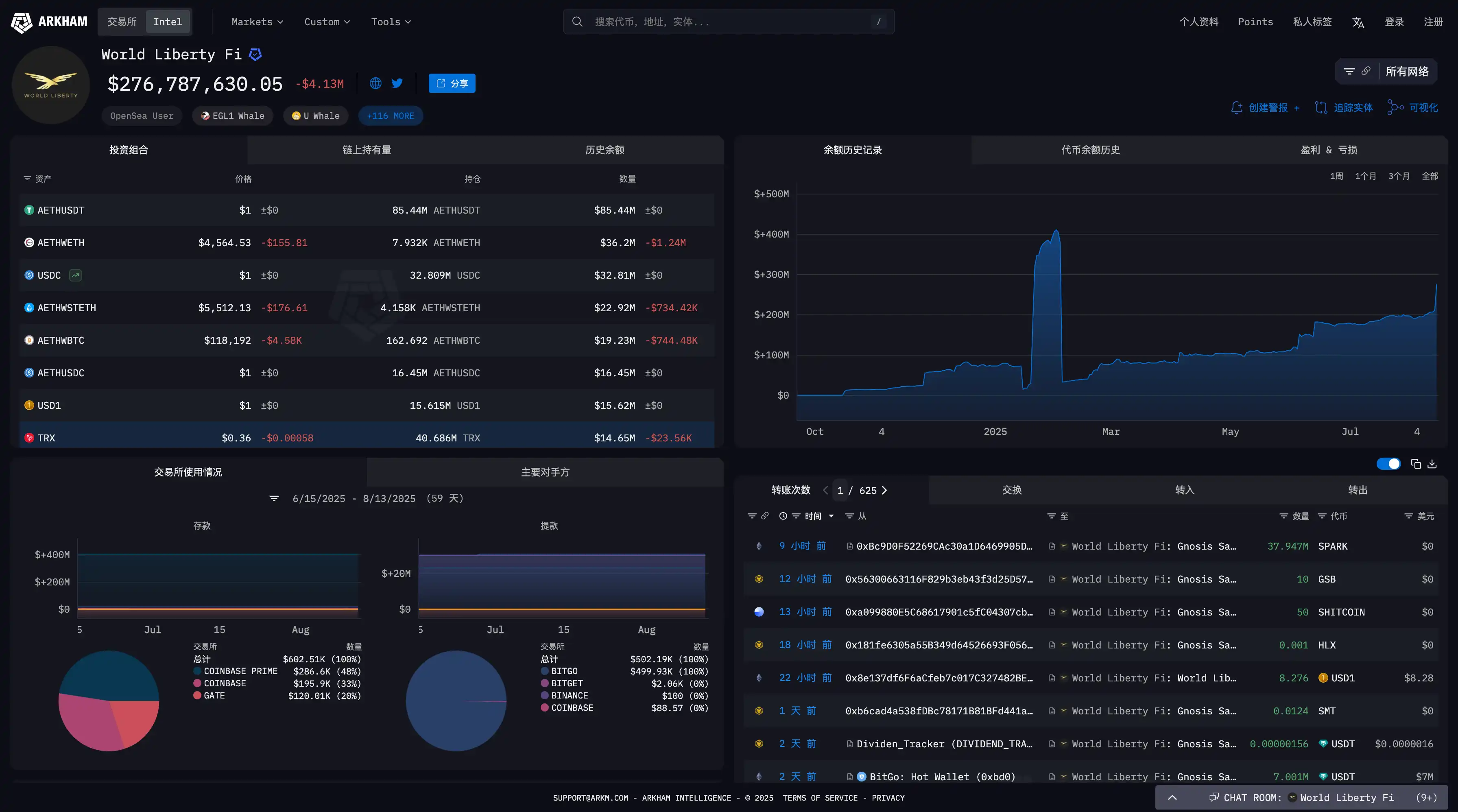
Some of these assets (such as TRX, LINK, AAVE) have been included in WLFI's strategic treasury asset reserves, used to support stablecoin issuance and financial tool construction.
More importantly, WLFI's capital reverse input into ALT 5. The project team obtained director seats in ALT 5 through token swap models and pushed its cryptocurrency asset management business to be restructured around WLFI. This approach serves both as a valuation anchor tool and a community governance signal.
According to co-founder Zak Folkman, three U.S. listed companies have expressed willingness to consider including WLFI in their asset reserves. He pointed out: "We are trying to replicate Michael Saylor's path, but we are taking a stablecoin-led channel."
More noteworthy is that these investments mostly revolve around the actual circulation and payment scenarios of USD1, directly consolidating its position as a stablecoin intermediary.
The Cryptographic Experiment of Political Capital
From the untradable governance setting to the high expectations of TGE, from the rapid growth of the stablecoin USD1 to the wide-ranging capital layout of the ecosystem, from Sun Yuchen, DWF Labs, Aqua Fund in the investor structure to the speculative game on Polymarket where users bet that FDV exceeds $13 billion...
WLFI is trying to convert political brand power into cryptographic financial traffic and build a complete closed-loop from treasury mechanisms, stablecoin issuance, scenario construction, to community governance.
In the short term, the market will still be in contention around TGE, unlocking ratios, and exchange listings. However, in the long run, whether this "cryptographic experiment that came from Trump" can continue to gain market trust and resist extreme volatility depends on whether it can achieve a high degree of coupling between political narratives and financial engineering.
The ecological system built by WLFI is clearly not a single DeFi project, but a "scenario-based expression" of an embedded political capital mechanism in the Web 3 world. Behind it are not only the personal brand traffic of the Trump family, but also the macroeconomic background of the change in the attitude of the new U.S. government towards the crypto industry (such as the GENIUS Act). Therefore, WLFI is not building a purely on-chain model like "anonymous community self-governance," but rather building a cross-chain and cross-boundary governance experimental field.
If Polygon is a Web 3 prototype of the collaboration between Indian politics and business technology, then WLFI is an integrated exercise of "American crypto nationalism."
However, risks should also be noted: extremely uneven token circulation (large holders have highly concentrated holdings); the project team has a dense action in strategic investments, with significant asset risk exposure; the stablecoin USD1 is still in the early stage of on-chain development, and has not yet passed the stability test of a large market cap; the political label can bring attention, but may also amplify regulatory pressure.
Whether WLFI can truly break through pure political traffic and establish financial inertia depends on two core paths: one is whether USD1 can truly form an on-chain mainstream payment and settlement network; the other is whether the market circulation mechanism after TGE is stable and sustainable.
Conclusion: WLFI, Not Just a Token
World Liberty Financial is currently at a confluence of policy shifts, narrative transitions, and market recovery. It carries the expectation of "transforming American political influence into on-chain order," and faces the question of how "decentralized self-governance" is taken over by real capital.
Can WLFI become the next TRUMP? Can it emulate MSTR as a model for corporate treasury cryptoization? Can it break the "political crypto coin = emotional market cap" curse and eventually produce a long-term financial compounding ability?
Regardless of belief or not, the era of WLFI is being activated.
Original Title: "WLFI Approaching Open Trading, Read This Article to Understand the Ecological Status and Valuation Composition"
Original Author: Ethan, Odaily Star Daily
Disclaimer: Contains third-party opinions, does not constitute financial advice


AI Practical Guide
This column focuses on the real progress of Agents: technological evolution, application implementat

Crypto Weekly
Tracking on-chain movements of the smart money and institutions

Frontier Insights
Spotlight on Frontier, trending projects, and breaking events

Blowup Alert
As the 2026 crypto bear market deepens, exit scams and project blowups are becoming increasingly fre

Regulatory Watch
American Crypto Act – timely interpretations of policies worldwide

Popular Airdrop Tutorial
Selected potential airdrop opportunities to gain big with small investments

FusnChain
FusnChain