
ChainThink
Stay ahead, master crypto insights
7 Days Raised Over $10 Million, Can MIRAI Trigger the AI Idol Economy?
7 Days Raised Over $10 Million, Can MIRAI Trigger the AI Idol Economy?

2025-05-12 11:25
Original Title: "MIRAI Coin Raised Over $10 Million in 7 Days! When AI is Wrapped in a Blockchain Skeleton, Do We Still Need Real Celebrity Stars?"
Original Author: Lawrence, Mars Finance
In May 2025, a capital experiment spanning virtual idols, artificial intelligence, and blockchain quietly began in Tokyo. The MIRAI project, jointly launched by Japanese leading virtual human company Aww Inc. and Solana ecosystem AI platform Holoworld, raised over $12.9 million in just one week, breaking the record for fundraising in Japanese Web3 projects, leveraging the appeal of the top IP "imma". This project, which attempts to deeply integrate anime culture with decentralized finance, is it a new paradigm of metaverse storytelling or another footnote in the bubble frenzy?
One, Project Background: From Virtual Idols on Shibuya Streets to a Blockchain "New Species"
1. Aww Inc.: The Architect of the Virtual Human Empire
As one of the earliest companies to enter the virtual human market in Japan, Aww Inc. has built a matrix of over 20 virtual IPs, including Ria and Plusticboy, since launching its first virtual idol imma in 2018. Its core business model is "Virtual as a Service" (VaaS), achieving commercial monetization through brand endorsements, fashion brand collaborations, and film placements.

The phenomenon-level impact of imma is remarkable: she appeared alongside real models in SK-II's global skincare ads; her holographic projection served as the "digital store manager" at BMW's Harajuku Tokyo store opening; even in the train car advertisements of Japan's JR Yamanote Line, daily commuters could see her dynamic images. This "borderless virtual and real" immersive marketing made Aww Inc. a strategic partner of traditional giants such as Mitsubishi UFJ and Shiseido.
2. Holoworld: The AI Infrastructure Powerhouse in the Solana Ecosystem
Holoworld's positioning is "virtual human on-chain infrastructure," with its core product AVA AI engine capable of mapping real human actions in real-time to virtual avatars through 3D scanning and deep learning.
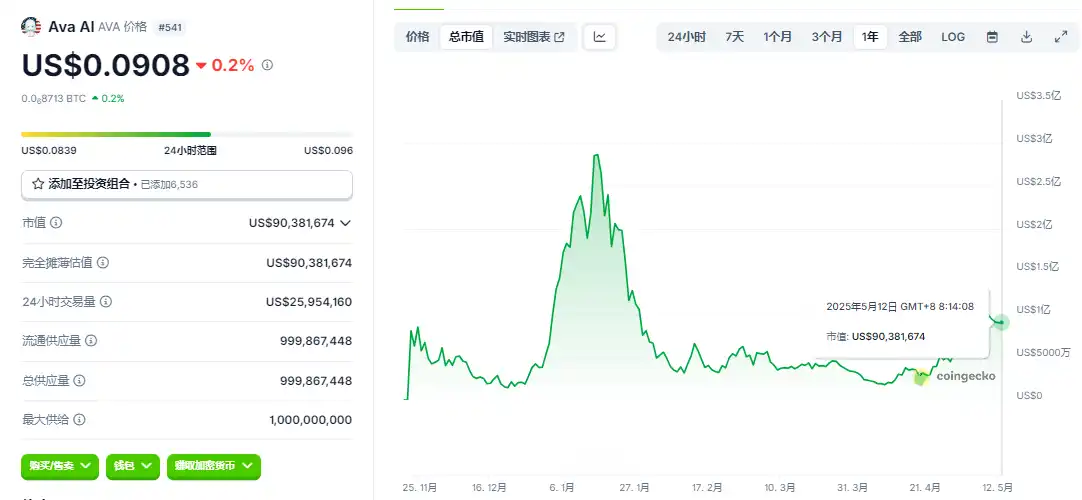
Previously issued governance token $AVA (peak market cap of $3 billion, current market cap of $900 million) has been integrated into over 50 metaverse platforms and provided on-chain identity verification services for Korean girl group aespa and Western virtual influencers Lil Miquela. This collaboration with Aww Inc. essentially represents a vertical integration of "IP resources + technical infrastructure": Aww contributes imma's IP assets and fan traffic, while Holoworld provides AI generation tools and on-chain interaction protocols, jointly building a virtual human economic ecosystem.
Two, Token Economics: Design Logic Behind the $12.9 Million Oversubscription
On May 10, less than two days after the launch of the on-chain virtual human MIRAI fundraising, the official announced that the Mirai token pre-sale had ended ahead of schedule, raising funds far exceeding the initial target. The team plans to refund the excess funds. On-chain data shows that the pre-sale address has received 76,423.42 SOL, approximately $12.95 million.
1. Token Allocation: Centralized Governance vs. Liquidity Game
According to the whitepaper, the total supply of MIRAI tokens is 1 billion, with an allocation structure showing a clear "resource-oriented" characteristic:
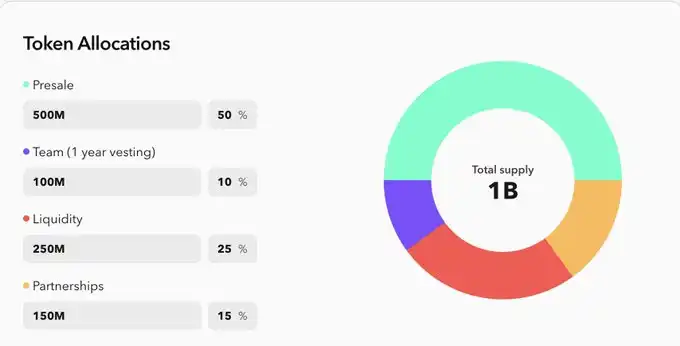
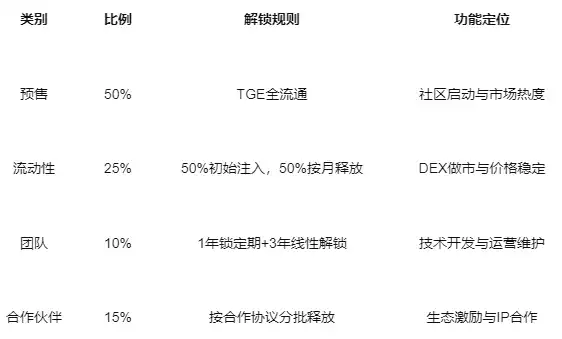
This design contains two major controversies:
· Centralized Risk: The team and partners together hold 25% of the tokens, and the pre-sale share is highly concentrated (the top 100 addresses account for over 60%), making community governance potentially a "rubber stamp";
· Liquidity Trap: 25% of the liquidity pool uses a phased release, which may lead to significant price fluctuations in the early stages. Historical data shows that similar model projects (such as SkyAI) have had weekly volatility exceeding 300% upon listing.
2. Oversubscription and Refund Mechanism: A Double-Edged Sword of Market Sentiment
The originally set fundraising target of 50,000 SOL was completed ahead of time with 76,831 SOL (approximately $12.9 million), achieving an oversubscription ratio of 153.6%. The project team promised to refund the excess funds proportionally, but on-chain data shows that the top 10 addresses contributed 42% of the funds, indicating a significant "whale control" feature. Although the refund mechanism can boost confidence in the short term (as seen in the sharp rebound after the SLERF event), it may also trigger a "prisoner's dilemma": some investors may choose to sell in the secondary market to avoid refund losses, causing a spiral decline in price.
Three, Price Prediction: Trend Forecast Under Multi-Dimensional Factor Games
1. Short-Term (1-3 Months): Market Maker Operations and Liquidity Game
Wintermute's deep involvement (on-chain tags show its test address participated in the pre-sale, with the largest single transaction of Wintermute-related, transferring nearly 15wu 881sol to the pre-sale address) injected a strong dose of confidence into the project. Referring to the performance of $AVA:
· First Day Performance: When $AVA was listed in Q4 2024, the opening price was $0.12, rising to $0.87 within 24 hours (a 625% increase), then falling back to $0.35;
· Market Making Strategy: Wintermute completed initial control through "pulse-driven rise + staged selling", with a first-week turnover rate of up to 580%.
If MIRAI replicates this path, it may exhibit the following phases:
· Opening Surge: Leveraging imma's social media popularity (over 860,000 Twitter followers), the price may quickly break through $0.5, equivalent to a market cap of $50 million;
· Profit Taking: Approximately 30% of the pre-sale investors are "new token studios", who may batch withdraw after 2-3 times returns;
· Liquidity Siphoning: If the initial 25% liquidity pool is concentrated in Raydium, it may trigger MEV bots' attacks, exacerbating volatility.
2. Medium-Term (3-6 Months): Ecological Implementation and Narrative Verification
The project roadmap indicates that the Mirai Terminal beta version will be launched in Q3, supporting three functions:
· Virtual Human Minting: Users can generate their own avatars through AVA AI and mint them as NFTs;
· Tip Economy: Fans can purchase virtual gifts with MIRAI tokens, and IPs like imma can receive revenue shares;
· Brand Collaboration Pool: Partners (such as Uniqlo and Loft) can initiate limited digital goods crowdfunding.
At this stage, two key indicators need to be monitored:
· MAU (Monthly Active Users): If it fails to break through the 100,000 threshold, the token may fall into a "price without market";
· IP Revenue Share Ratio: Whether transactions related to imma account for more than 70% of the ecosystem, reflecting the defect of ecological diversity.
3. Long-Term (Over One Year): "Death Cross" in the Virtual Human Sector
The lifecycle law of virtual idols shows that the peak of popularity for top IPs usually lasts 18-24 months (e.g., Hatsune Miku, Luo Tianyi). imma has been in the industry for seven years since its debut in 2018, and despite extending its lifecycle through "cross-dimensional marketing", the risk of Z-generation users' fatigue is increasing. If the team fails to incubate new IPs or expand application scenarios (such as VR concerts or AIGC content platforms), the token may become a "MEME asset", relying on community hype to maintain valuation.
Conclusion: Can Tokens Break the "Dimension Wall" Between Virtual and Reality?
MIRAI's ambition is not merely to issue a token, but to try to build a tripartite economic system of "virtual humans - fans - brands." Its success or failure depends on whether it can convert imma's traffic momentum into on-chain activity and break through the "toolization" bottleneck to create a true digital identity paradigm.
However, when the capital frenzy fades, we need to answer an essential question: Does blockchain really add new value to virtual idols, or is it just a layer of decentralization "Emperor's New Clothes"? Perhaps only time can give the answer, but before that, investors must fasten their seatbelts—this journey across the dimension wall is destined to be bumpy.
Disclaimer: Contains third-party opinions, does not constitute financial advice


AI Practical Guide
This column focuses on the real progress of Agents: technological evolution, application implementat

Crypto Weekly
Tracking on-chain movements of the smart money and institutions

Frontier Insights
Spotlight on Frontier, trending projects, and breaking events

Blowup Alert
As the 2026 crypto bear market deepens, exit scams and project blowups are becoming increasingly fre

Regulatory Watch
American Crypto Act – timely interpretations of policies worldwide

Popular Airdrop Tutorial
Selected potential airdrop opportunities to gain big with small investments

FusnChain
FusnChain