
ChainThink
Stay ahead, master crypto insights
Is SOL one of the most suitable tokens for long-term investment? Decoding the multiple engines behind the explosive value of the Solana ecosystem
Is SOL one of the most suitable tokens for long-term investment? Decoding the multiple engines behind the explosive value of the Solana ecosystem
2025-05-14 14:20
Original Title: Why SOL Remains One of Crypto's Best Long-Term Opportunities
Original Author: FLOW
Original Translator: Tim, PANews
Since the beginning of February, the crypto market has been in a downward trend, mainly influenced by macroeconomic uncertainty and weak sentiment. However, we have recently observed a new wave of upward momentum in the market. Although still in its early stages, various signs indicate that we may be standing at a turning point in the development of cryptocurrencies. This trend inspired me to write about the current state of the Solana ecosystem.
For me, Solana remains one of the most powerful first-layer blockchains in the market. It is the fastest-growing ecosystem in the crypto space, one of the few public chains that truly has a natural growth advantage, and has even surpassed Ethereum in many on-chain metrics. Let's get started without further ado.
The following topics will be discussed:
· Network Status
· On-Chain Activity
· Ecosystem
· SOL Price Analysis
Solana Network Status
When starting the analysis, we will temporarily set aside price factors and focus on fundamentals. It should be noted that Solana, as a blockchain network, seems to be in one of its strongest development phases ever.
Solana Network Stability
In its early stages, Solana faced numerous criticisms due to network outages and instability. However, this seems to be in the past. Since February 2024, the network has not experienced any outages.
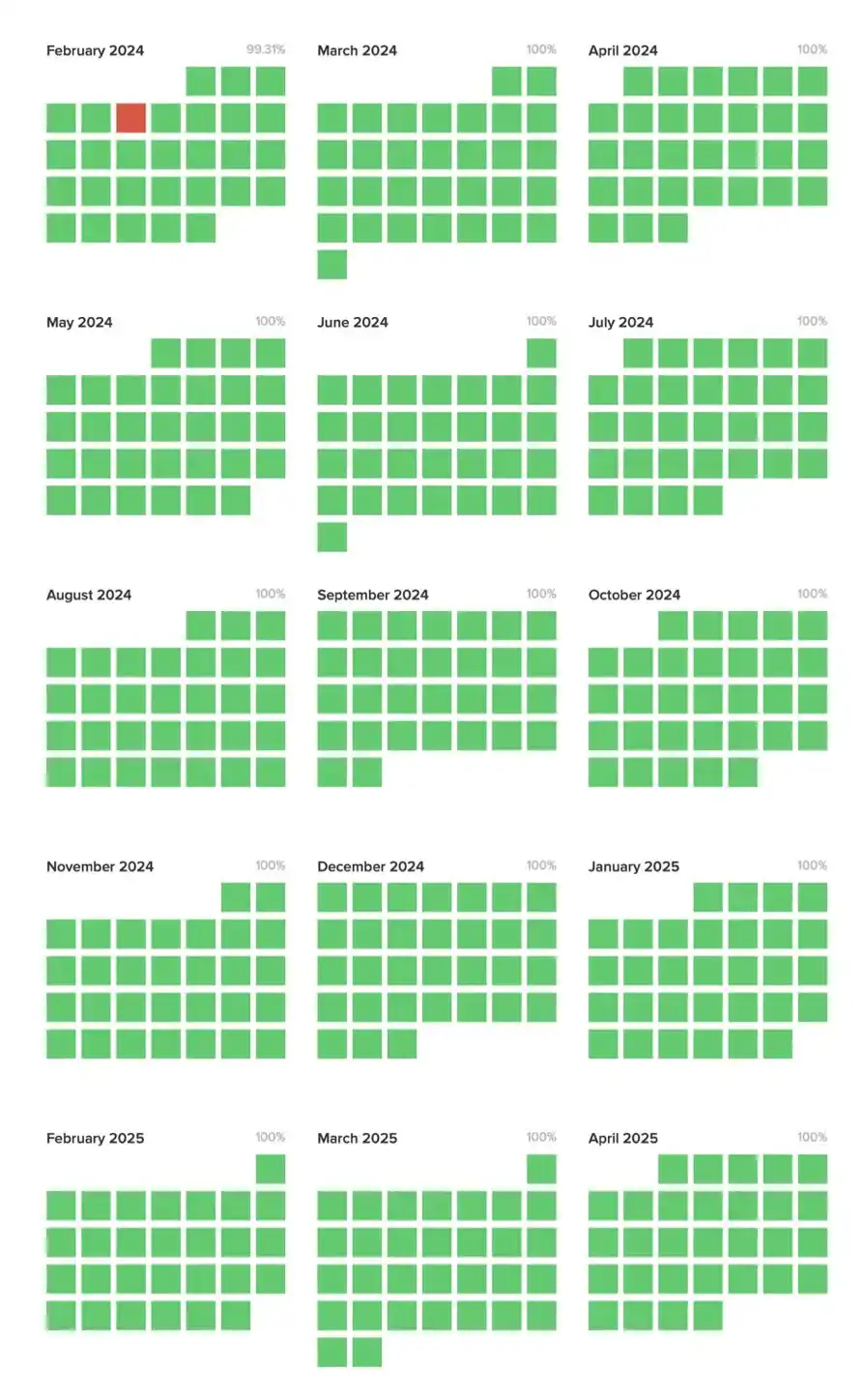
The Lindy effect is a powerful force in the crypto space, serving as an important indicator of trust and reliability. I believe this is one of the key reasons why Ethereum has gained the favor of large institutions: since its mainnet launch in 2015, the network has maintained a record of zero full network outages. Although Solana still lags in this aspect, its data performance is still encouraging. As uptime improves, trust and reliability also increase, which is crucial.
Decentralization Level
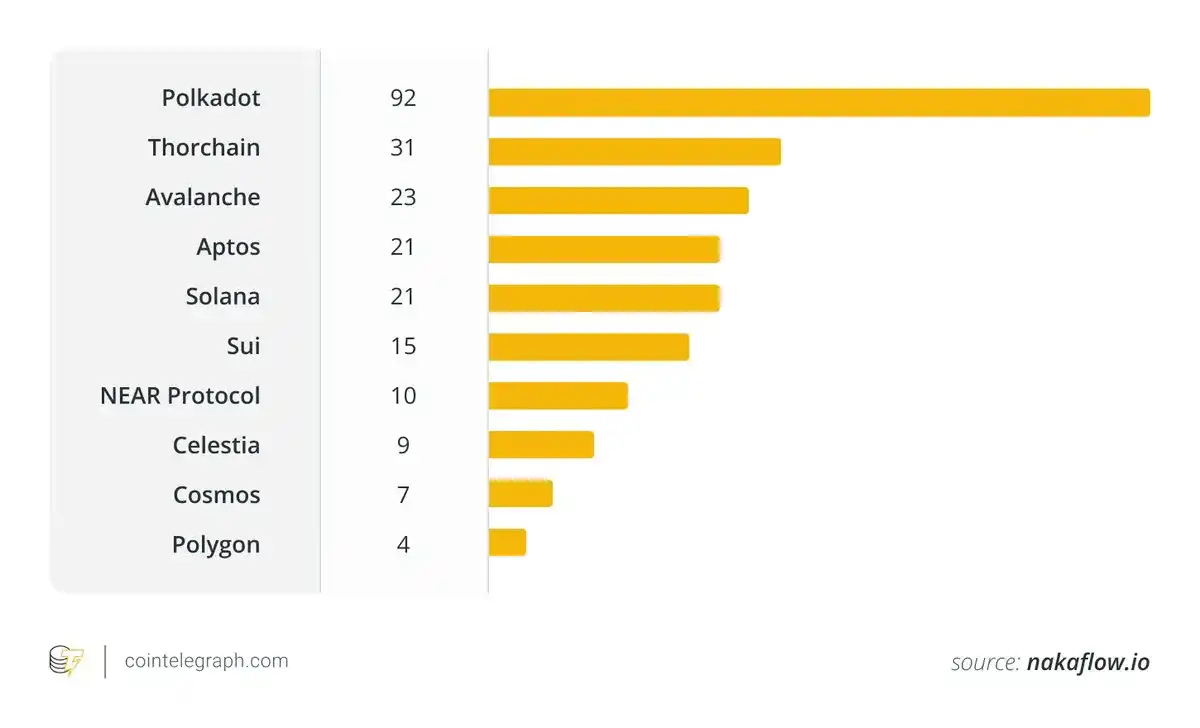
Blockchain is guided by decentralization, distributing power and decision-making among nodes, making the network resilient. A simple indicator of decentralization level is the Nakamoto coefficient, with higher values indicating a more decentralized system. According to the latest data from CoinTelegraph, Solana shows a strong Nakamoto coefficient of 21.
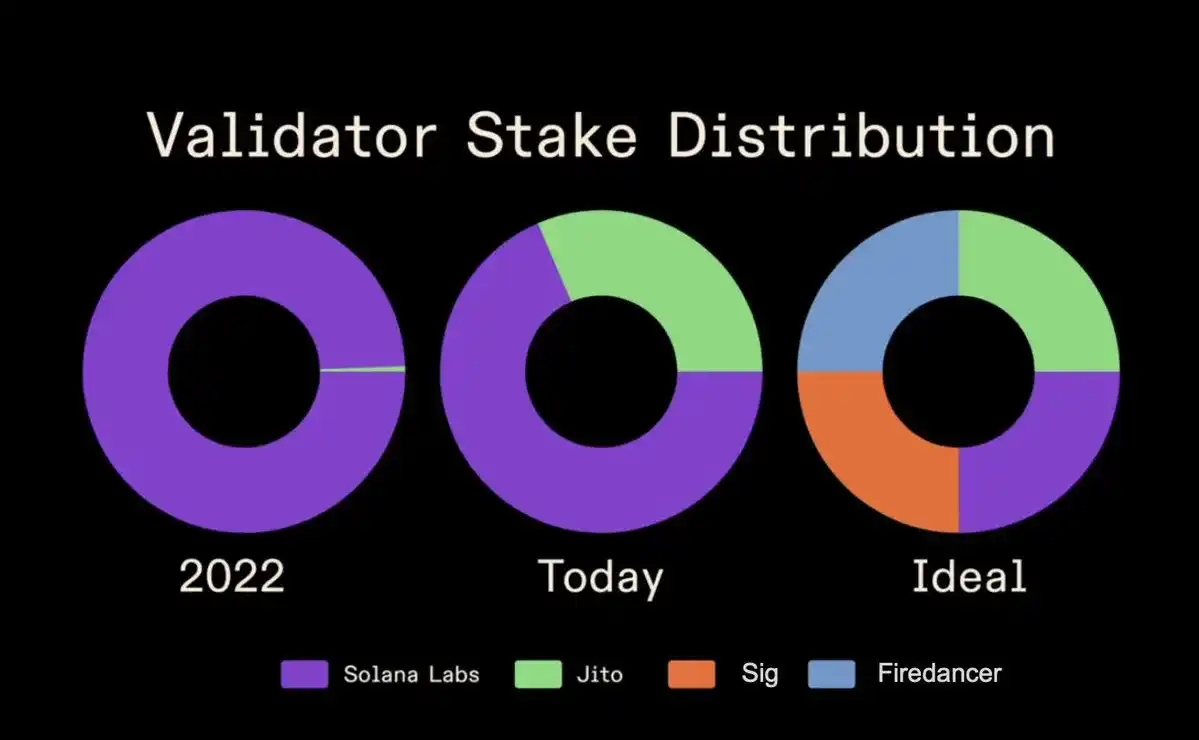
Another key indicator of decentralization is client diversity. Having multiple validator clients can reduce the risk of single points of failure, which is crucial for the mature development of blockchain. Currently, only Ethereum has achieved a thriving ecosystem with multiple independent validator clients coexisting. At this stage, Solana has only one validator client provided by Solana Labs (although Jito Labs' version is essentially a fork, not an independent implementation). However, two independent clients are currently under development: Firedancer developed by Jump Crypto, and Sig developed by Syndica. Once these clients go live, they will significantly enhance Solana's decentralization by reducing dependency on a single codebase and introducing true client diversity.
SOL Staked Market Cap
Solana has recently surpassed Ethereum to become the blockchain with the highest staked market cap. On the surface, this indicates that Solana is currently leading in economic security. This metric will become particularly significant after the mainnet implements the slashing mechanism.
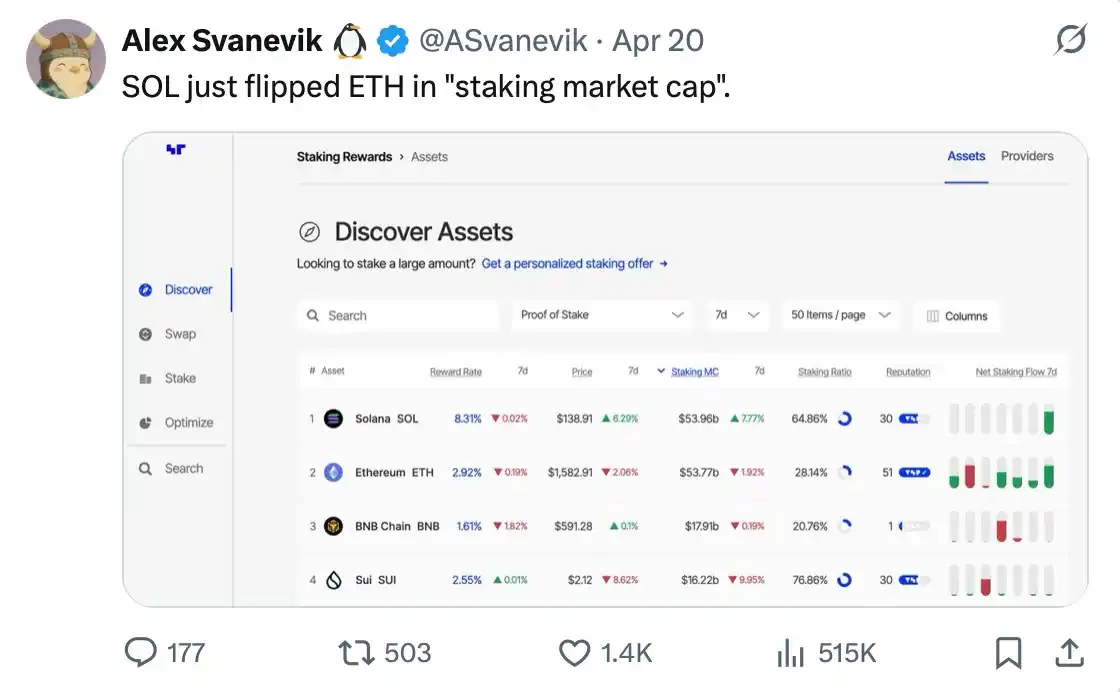
(PS: I know that the topic of "economic security" is controversial and involves many simplifications, but for the sake of this article, I will treat the staked market cap as an effective indicator.)
Developer Activity
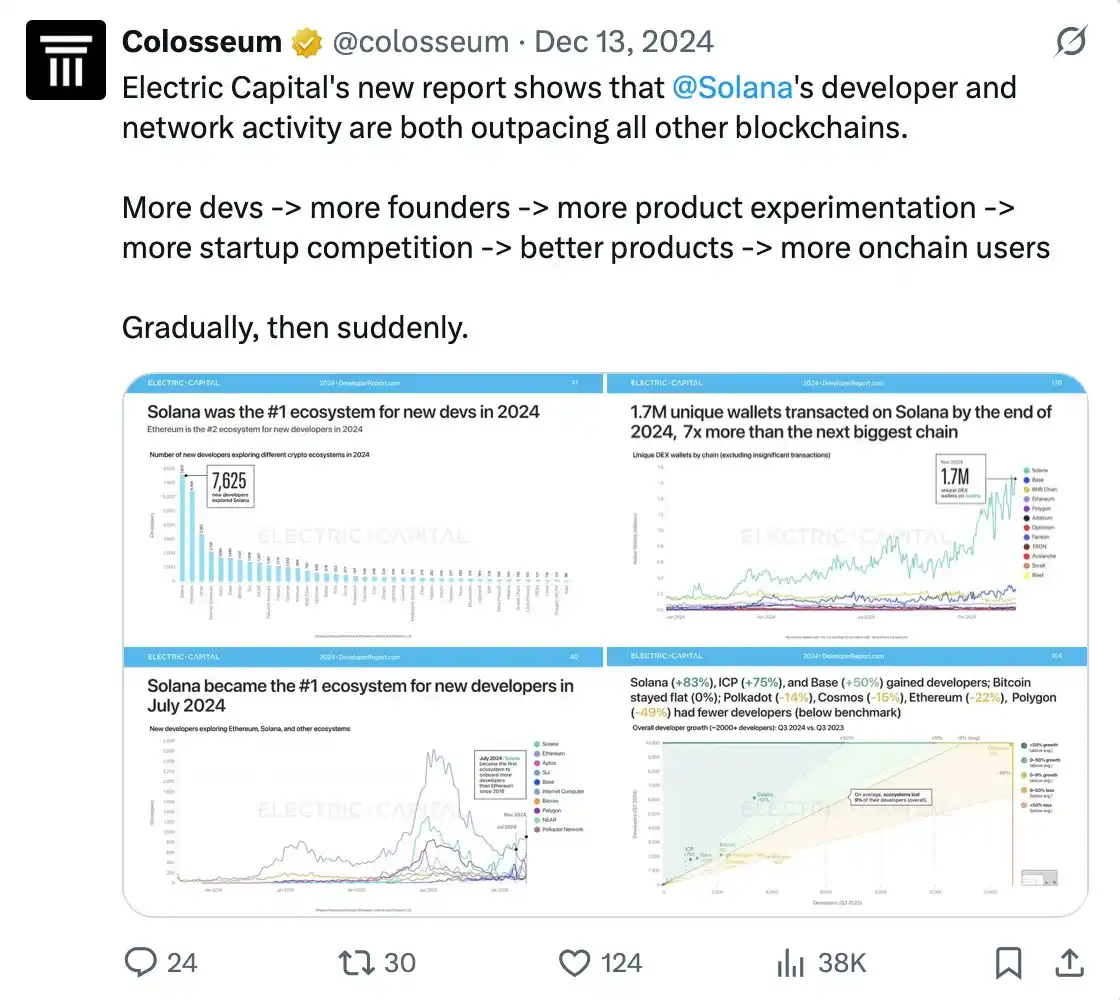
Developer activity is another important indicator to observe. Ultimately, it is the level of developer activity that shapes the future of the blockchain. According to the latest report from Electric Capital, Solana has become the preferred ecosystem for new developers in 2024.
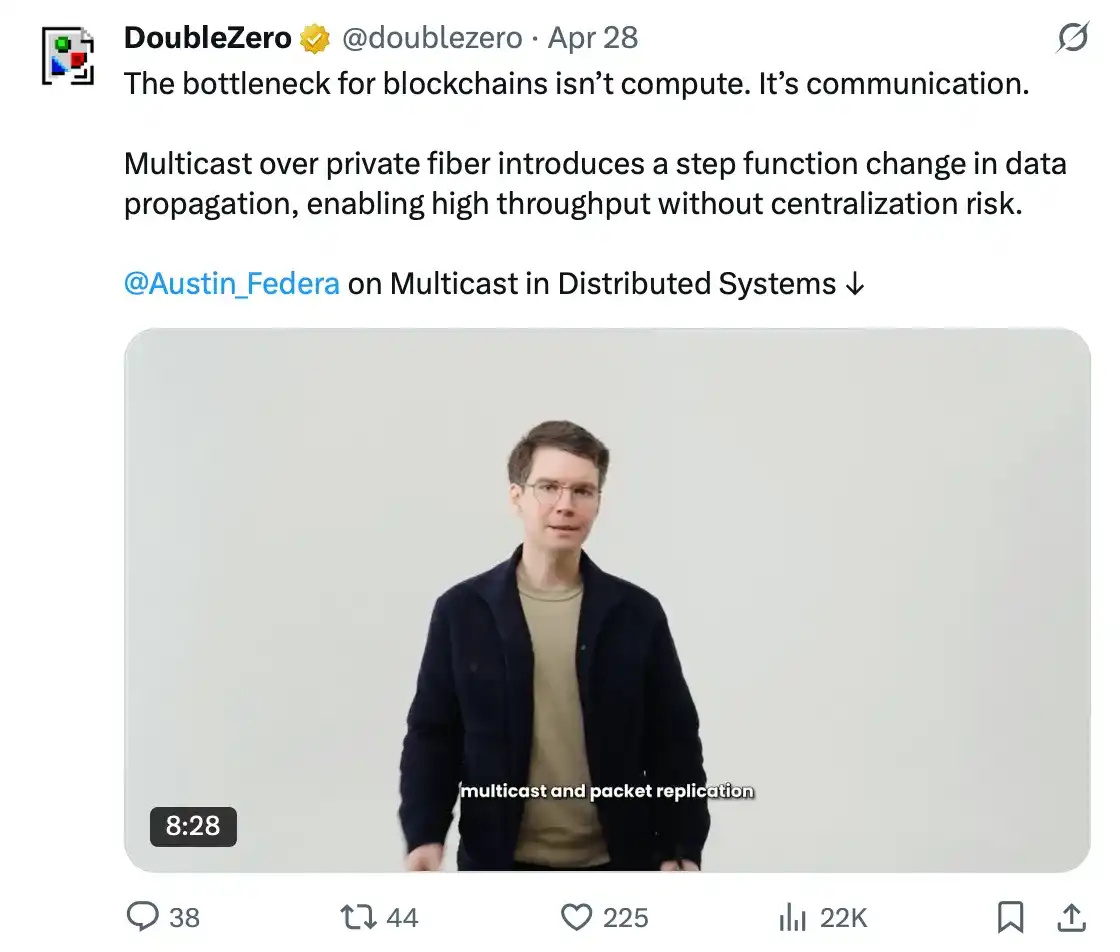
Finally, it is equally important that new initiatives aimed at improving Solana's communication layer performance (such as DoubleZero) are constantly emerging. This is another vertical area that needs close attention in the future.
On-Chain Activity
Since the beginning of 2024, on-chain activity has been in a significant long-term upward trend, with many new projects continuously emerging and the DeFi ecosystem showing robust development. This can be verified through different indicators.
TVL
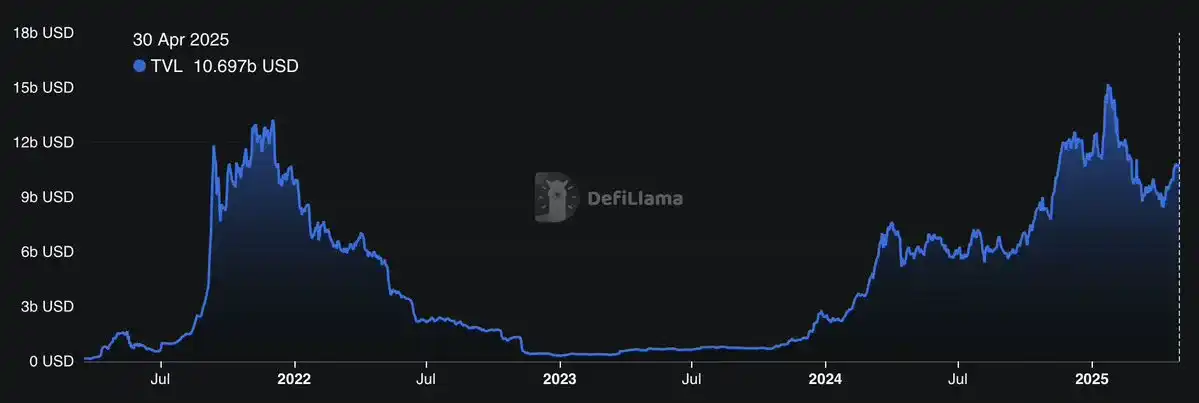
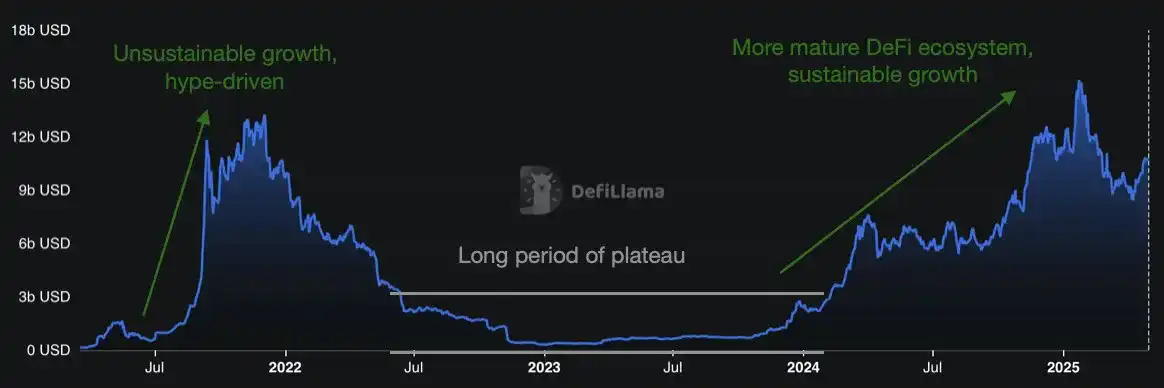
TVL has risen from less than $1 billion at the end of 2023 to a historical high of over $15 billion by early 2025. Although TVL has slightly declined afterward, it remains stable around $10 billion and demonstrates strong market resilience.
Stablecoin Market Cap
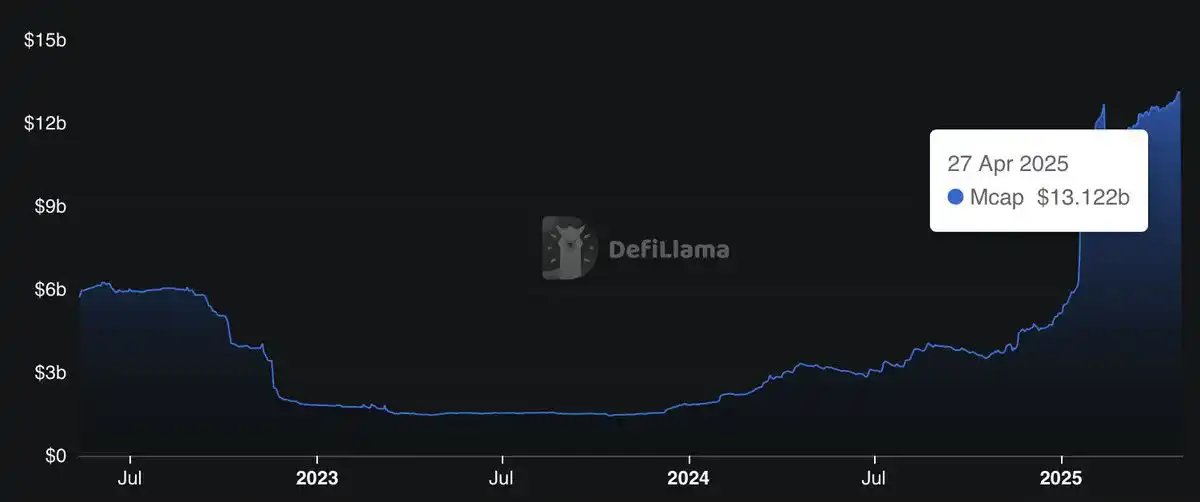
Solana has also seen a strong increase in stablecoin inflows over the past year. As of the time of writing this article, the stablecoin market cap on Solana has reached a historical high of $13.2 billion. This clearly indicates the continuous growth in network adoption and trust.
Transaction Fees
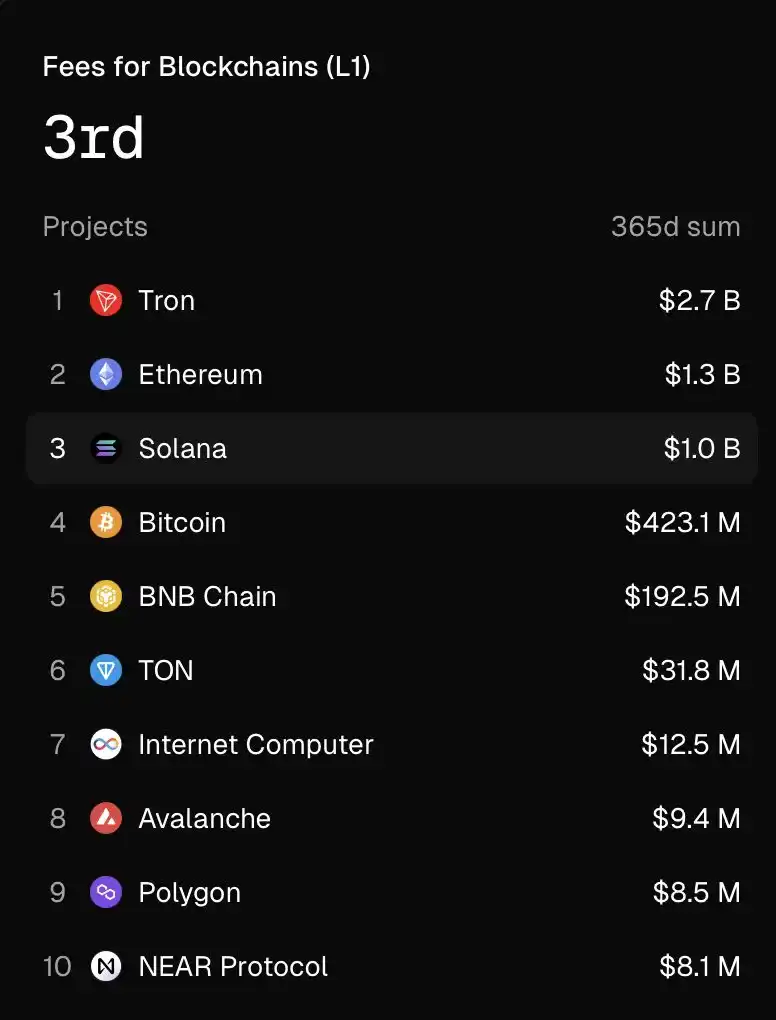
Looking at the total fees from last year, Solana ranks third among L1 blockchains in terms of transaction fees, and the gap with Ethereum is very small, which again confirms the high on-chain activity and strong market demand of the network.
Ecosystem
The purpose of a blockchain is to provide a foundation for the construction and prosperity of applications. Critics might say that Solana's success is solely attributed to the frenzy of Pump.fun and Memecoins, but I believe this view overlooks a more important reason: Solana is the fastest-growing ecosystem in the entire crypto space, and its development momentum is increasingly coming from real-world applications.
In fact, I even think we can assert that, in the long run, the meme coin frenzy on the Solana blockchain is actually more beneficial than harmful. This phenomenon acts as a carrot lure, allowing Phantom wallet to successfully install millions of devices worldwide. This approach effectively solves the "cold start problem" that all emerging networks face, i.e., how to break through the initial user base bottleneck.
With the existing user base already successfully joined, Solana has sufficient advantages to support more applications with real value and continue driving its growth process.
DeFi Is Becoming More Mature
The DeFi ecosystem on Solana is becoming more mature. As mentioned earlier, Solana is currently the second-largest Layer 1 blockchain by TVL and one of the few that broke through historical TVL peaks in 2025 and continued the growth momentum of the previous cycle. This performance reflects both high user retention and genuine market attractiveness.
The first wave of DeFi on Solana in 2021 was mainly experimental and driven by market hype. However, the current growth is more sustainable, with a stronger foundation and clearer market fit.
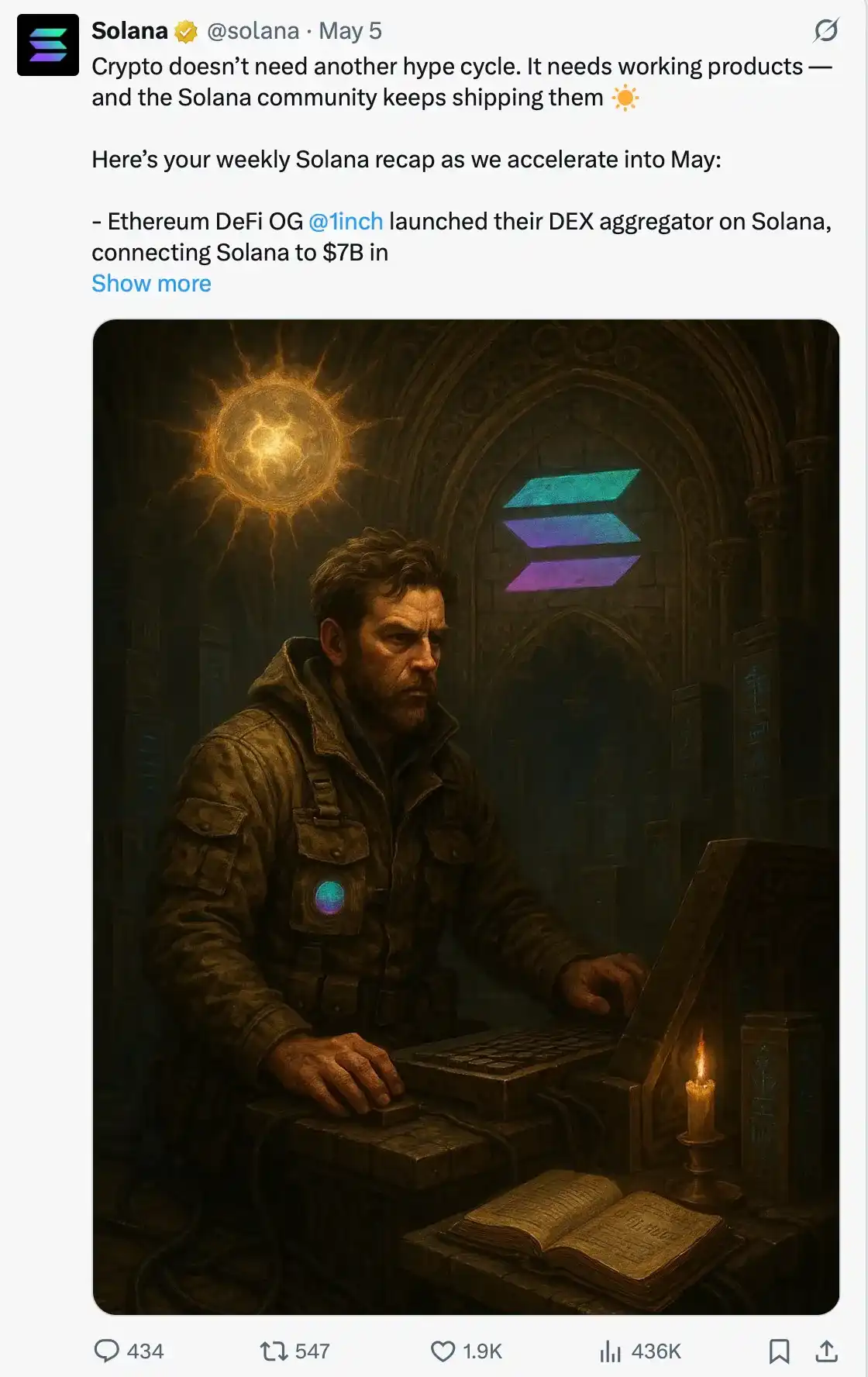
I think it is worth mentioning protocols such as Jito, Kamino, Marinade, Radium or Jupiter. To show the speed of Solana's development, the official team released some dynamics on X in May:
Additionally, we are witnessing the emergence of a new wave of DeFi primitives, including:
· Real yield platforms, such as RateX, Exponent Finance, Sandglass or Pye Finance
· Liquidity re-staking via Kyros
· New stablecoin-based protocols in collaboration with Perena, Global Dollar or KAST Card
· Yield aggregators such as Lulo and Carrot
· Oracles based on Switchboard
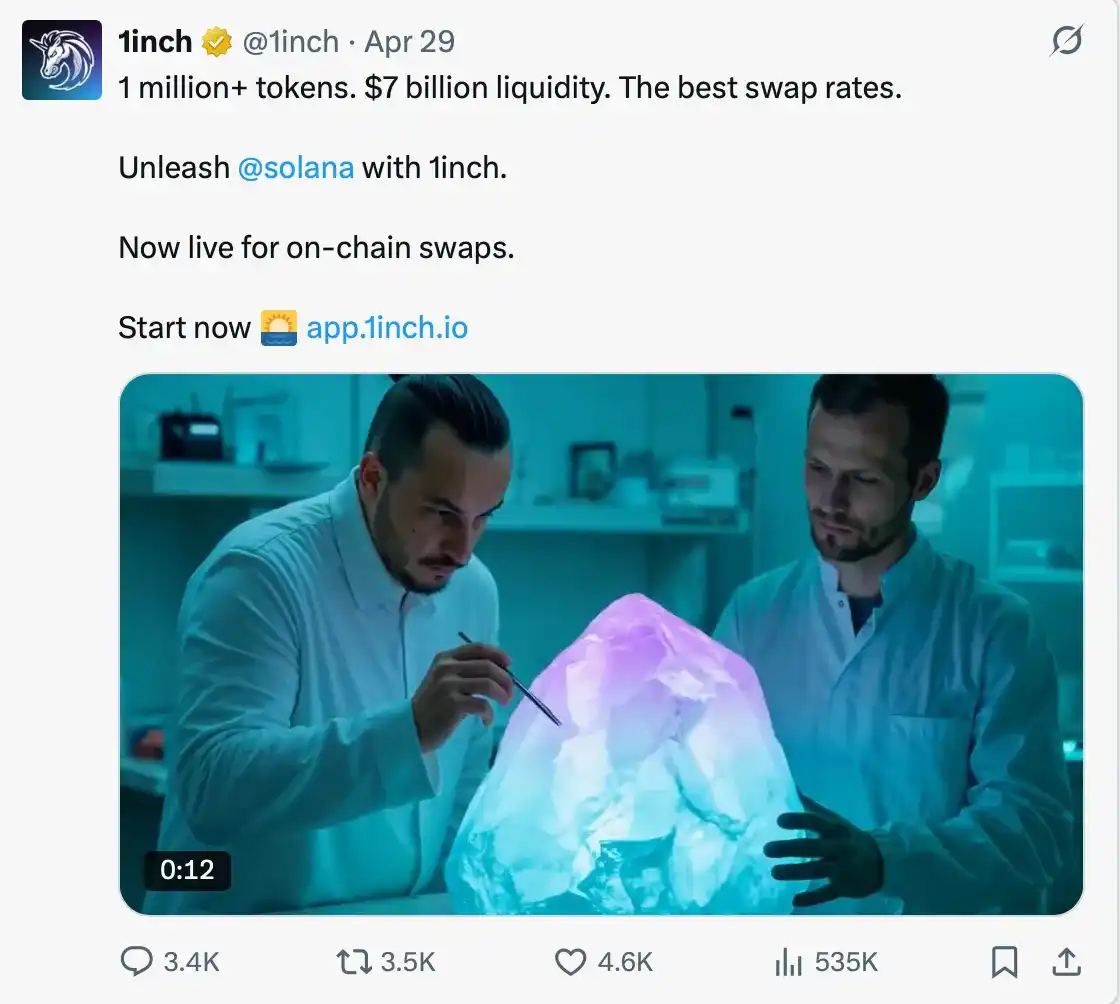
There are many similar examples. Solana continues to attract existing protocols, and a recent example is 1inch, which just launched its mainnet.
The Rise of DePIN
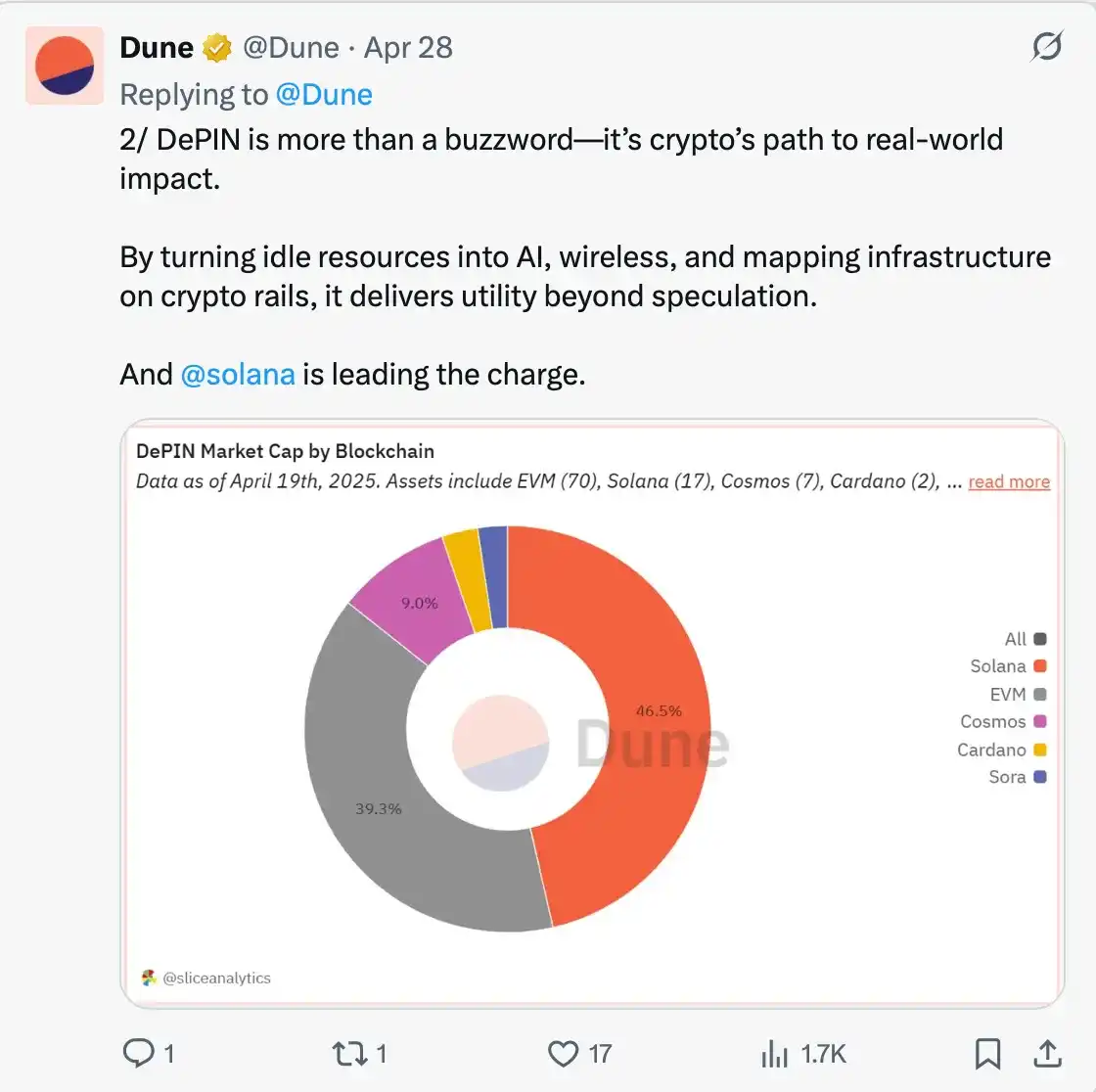
Aside from DeFi, we have also witnessed the rise of DePIN. According to Dune data, 46.5% of DePIN's total market cap is concentrated on the Solana blockchain, nurturing top projects such as Helium, Hivemapper and Render.
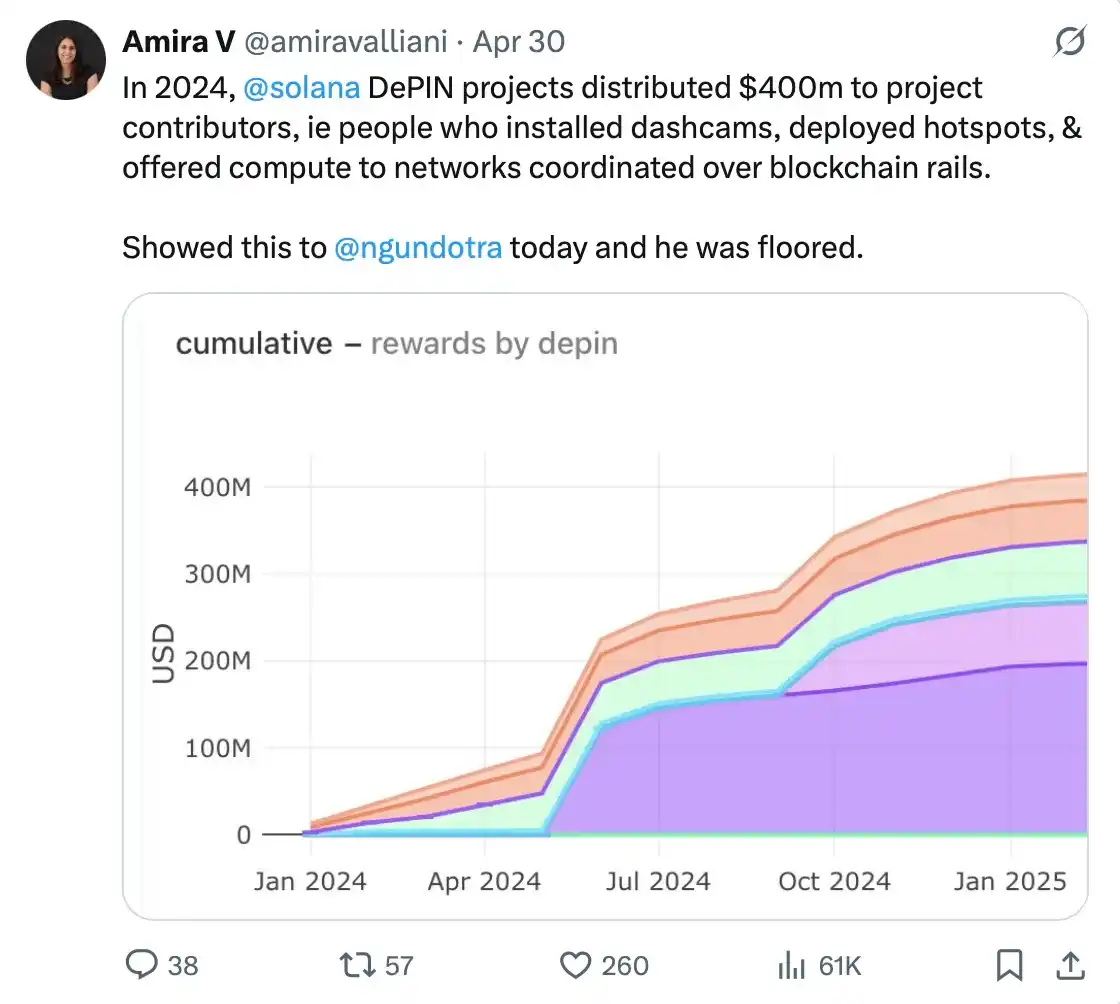
They have distributed over $400 million to participants in these projects, a significant amount.
Consumer Applications Breakthrough
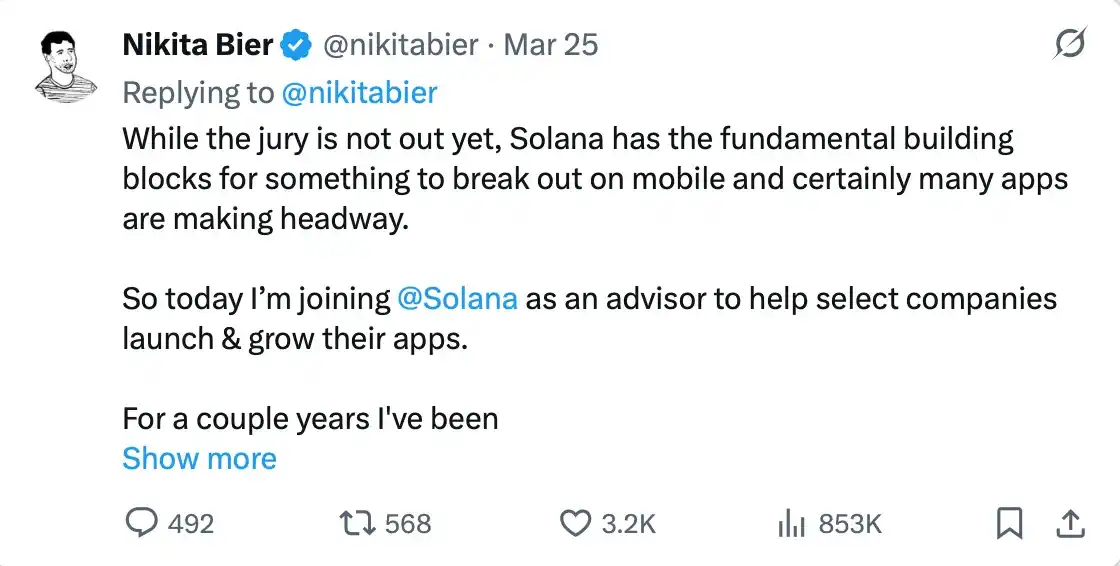
Although still in the early stages of the crypto space, there is a strong push to enter the consumer application domain. This is a challenging sector that requires a lot of time and repeated experimentation to break through, but seeing talents like Nikita Bier joining Solana as advisors makes me optimistic.
Currently, crypto developers find no better platform than Solana. This blockchain network is attracting top talent and providing the most supportive initiatives: active ecosystem funds, intensive hackathons, and a vibrant developer culture where startups are genuinely thriving. Data also confirms this flourishing situation: according to Qw Qiao's analysis, Solana is about to surpass other platforms for the first time, becoming the blockchain ecosystem with the most founders in Alliance.
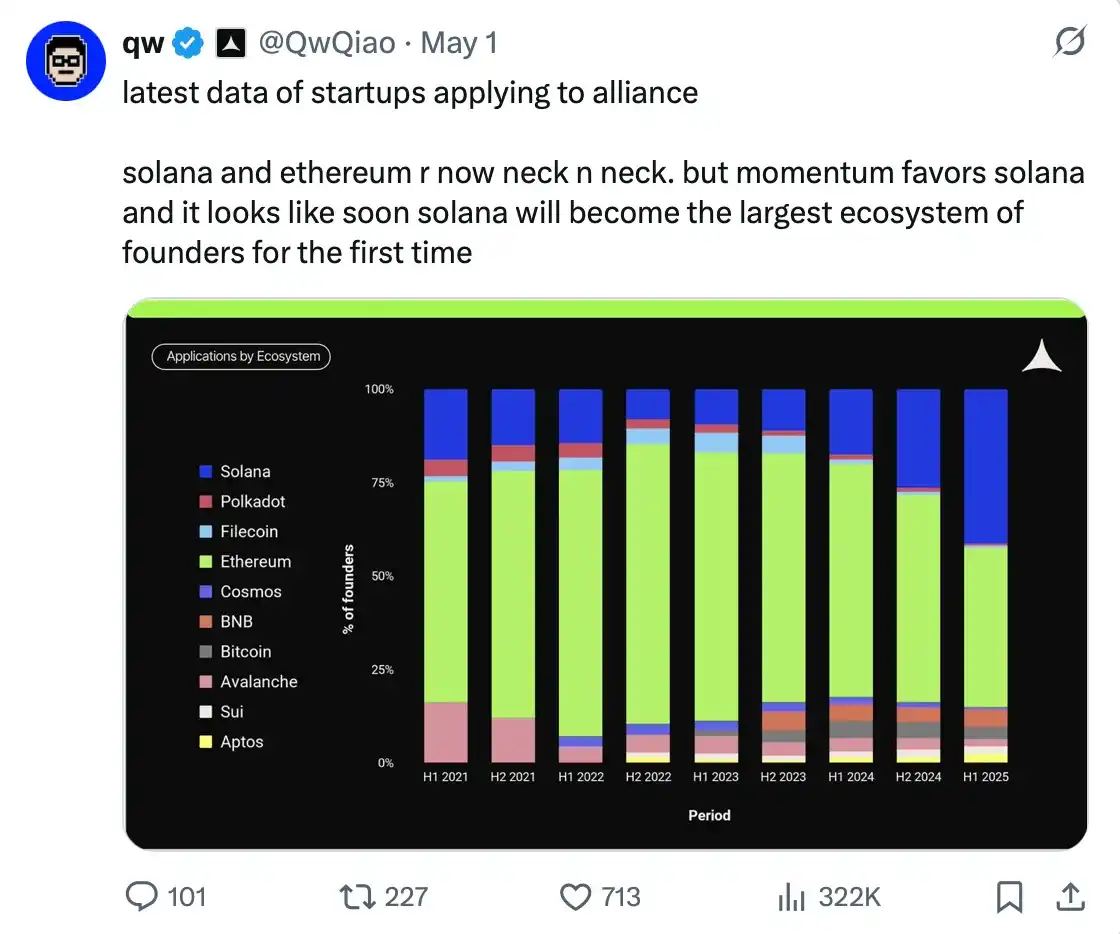
This makes me believe that among many first-layer blockchains, Solana is the most likely to be the birthplace of the first breakthrough in crypto consumer applications. If this scenario comes true, it will be a major positive for the network. The subsequent developments are worth closely watching.
Strong Community
So far, we have discussed many indicators and tangible elements used to evaluate the network. But what I want to say is that Solana's greatest advantage is intangible: its community.
People often say that communities that have gone through dark times (such as the FTX crash) will eventually emerge stronger and more resilient, and I believe this is part of the story. Another key factor is the Superteam community, which has shown excellent performance in cultivating talent and maintaining momentum, always injecting vitality into the ecosystem.
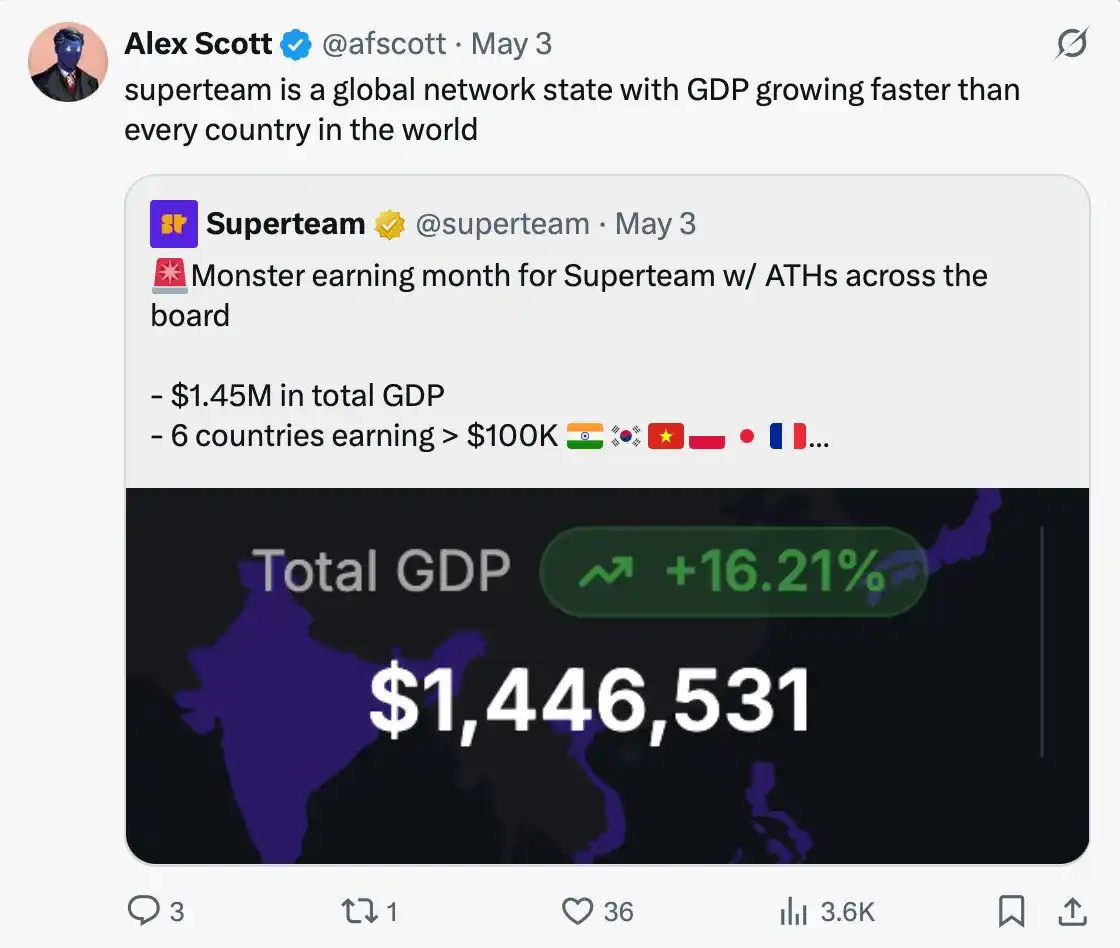
In my opinion, this is one of the secrets to Solana's success, and it is irreplicable. No other blockchain project in the crypto space has this cultural heritage.
Institutional Investors Are Entering
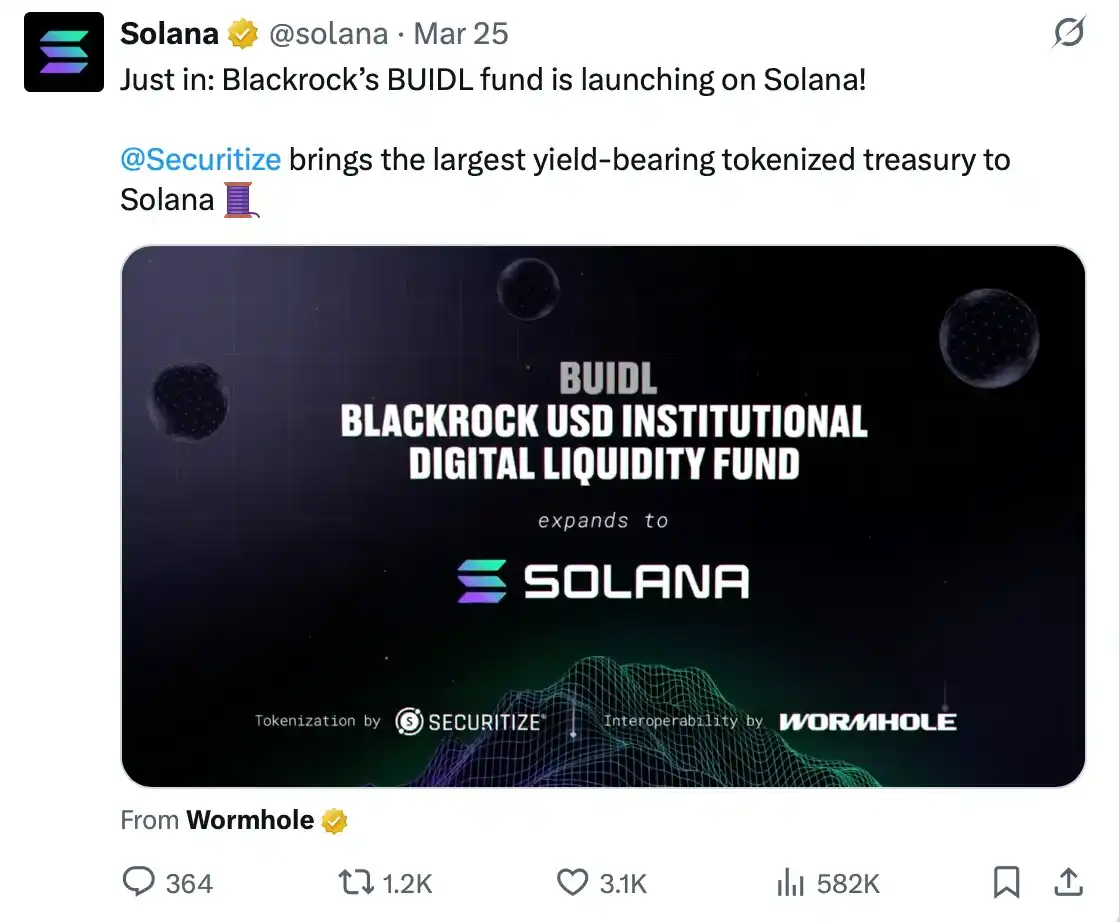
Interest from institutional investors in blockchain networks is also accelerating. A recent example is BlackRock's BUIDL Fund, which expanded its business to Solana after Ethereum. There are many similar cases, but I believe this is enough to illustrate the point: traditional finance is gaining increasing confidence in on-chain infrastructure.
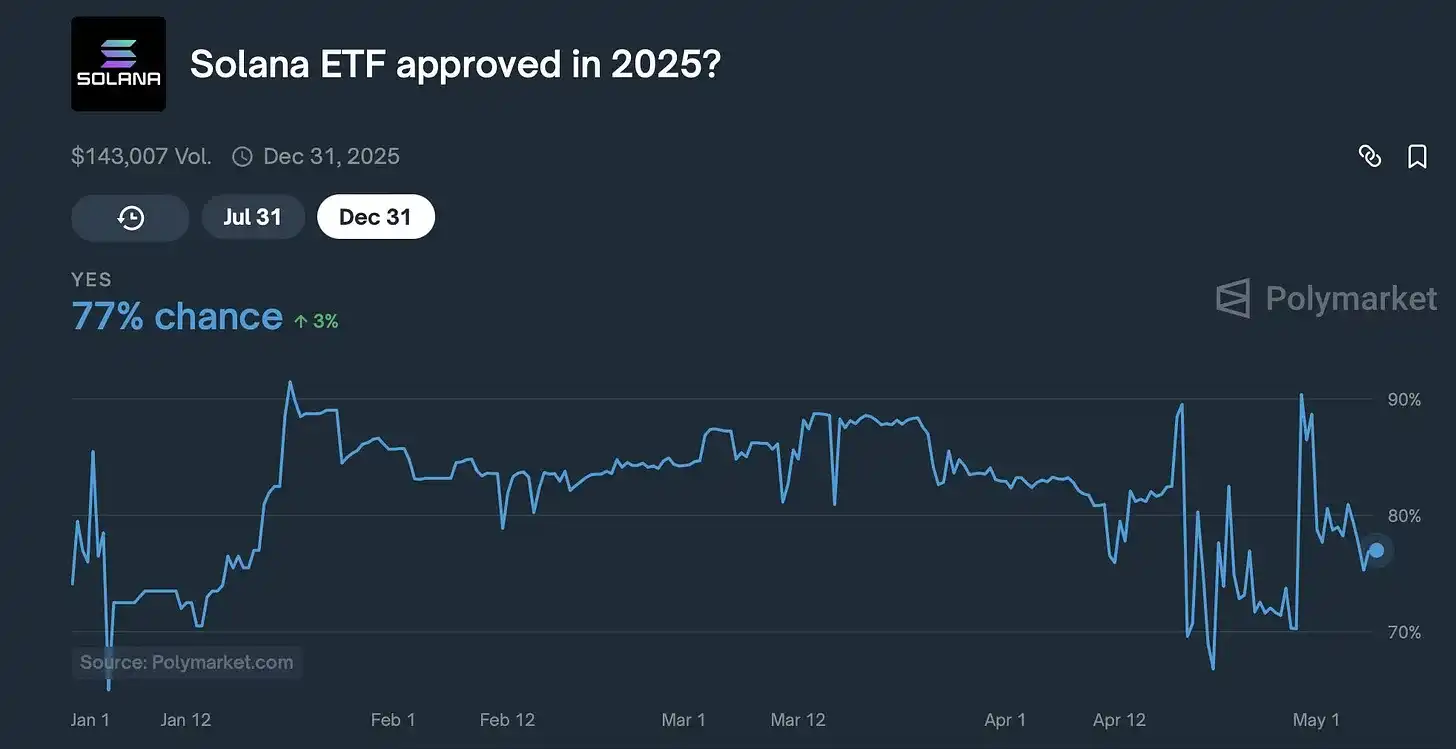
Additionally, Solana is likely to be the next cryptocurrency asset to receive approval for a spot ETF in the United States. According to current predictions on the Polymarket platform, the probability of approval in 2025 is 77%. The approval of an ETF would further legitimize SOL as an investable asset and solidify Solana's position as a network with high trust and integrity. This regulatory recognition could open up new participation channels for both institutional and retail investors, attracting more incremental capital into the Solana ecosystem.
SOL Price Analysis
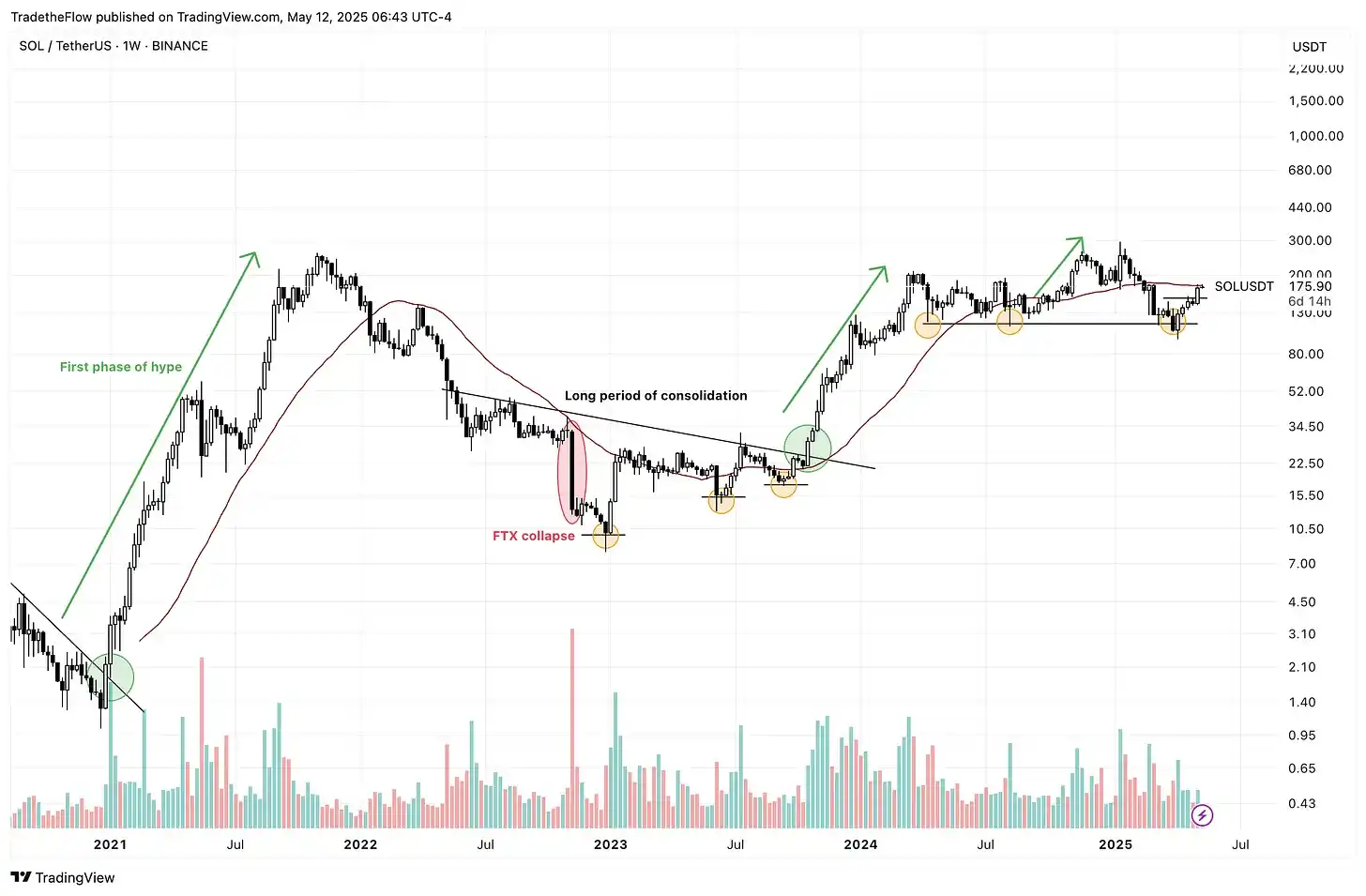
Looking at the price movement, SOL experienced its first hype wave between 2020 and 2021. However, similar to most emerging protocols, its infrastructure was not yet mature, and the ecosystem was not yet fully developed. As the crypto market entered a bear phase in 2022, this enthusiasm quickly faded. The shock of the FTX exchange scandal further exacerbated the situation, and many people believed that Solana had become a "dead project."
Differently from most protocols that struggled to recover, Solana made a stronger comeback. After about one and a half years of consolidation, SOL finally broke through the price range, initiating the first surge of a new bull market. In fact, it became one of the few Layer 1 protocols to achieve new highs since 2021, and this time it is backed by a real and strong ecosystem.
Currently, after a nearly 67% drop from the historical high in January, SOL has rebounded strongly to around $170. Although there may be some short-term overbought signals, the medium- to long-term prospects look highly promising.
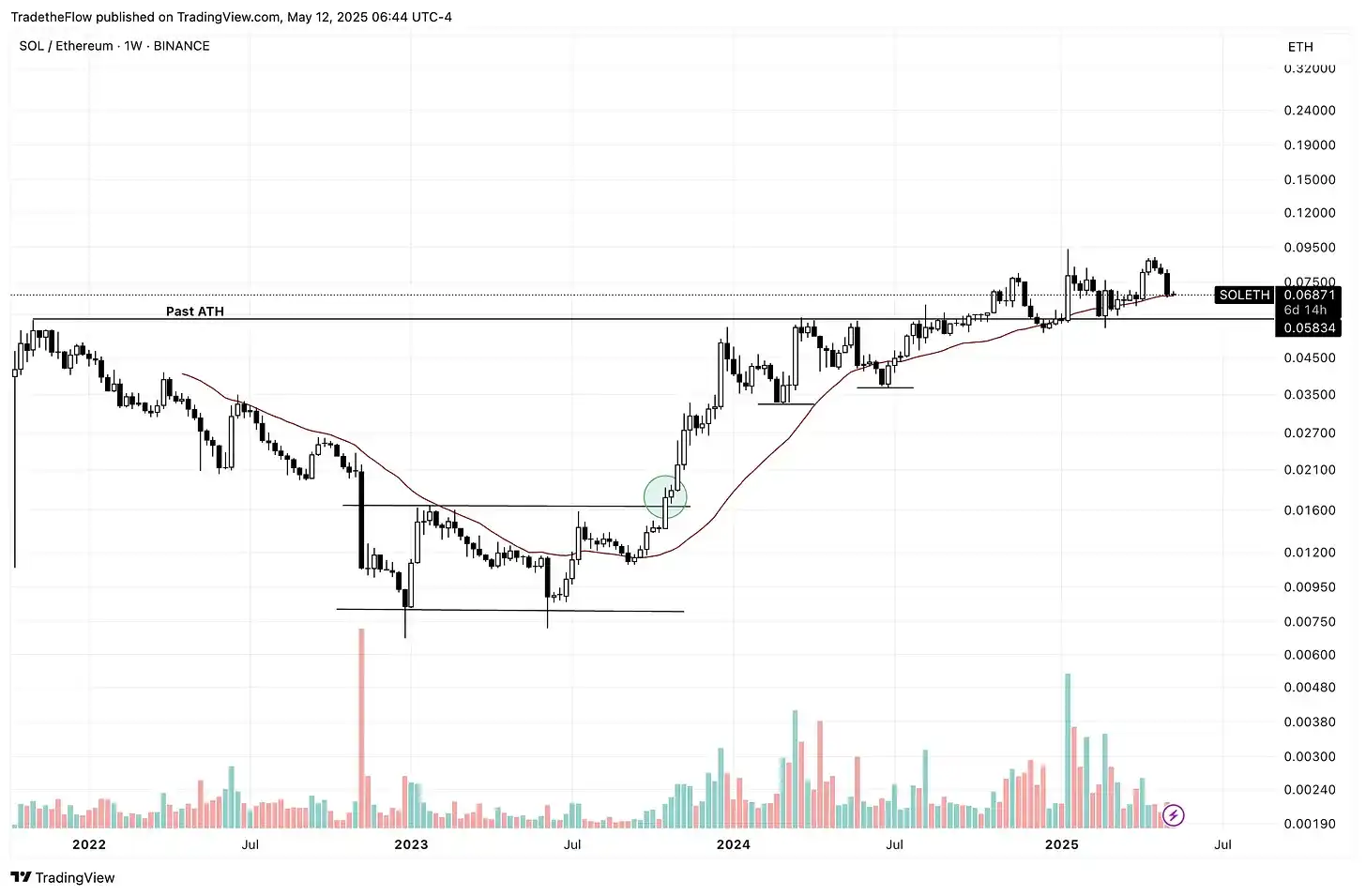
In the mainstream L1s, SOL also shows significant relative strength. The current SOL/ETH exchange rate has formed a clear upward trend and is approaching historical highs.
What Next?
Of course, we cannot predict where the price will go now. Instead, we can build a framework to better assess investment opportunities from the perspective of risk and return. One simple heuristic I like to use is comparing the fundamental changes of an asset from a certain point in time A to another point in time B with its price changes.
Currently, what I see is that you can now buy SOL at the same price as during the market's frenzy in 2021. At that time, Solana was still just a dream, with no product-market fit and a DeFi ecosystem that was just getting started. Now, the network has a bright future, having become the fastest-growing blockchain in the crypto space, with real users, actual applications, and growing institutional interest. Additionally, I believe that the market structure is evolving, and in this evolution, the underlying networks will remain the area where most market value continues to accumulate.

From this perspective, here is my thinking:
As more applications and projects continue to develop on the crypto network, and with the regulatory environment remaining favorable and adoption continuing to rise, the value of crypto networks will continue to grow. Eventually, all global investors will want to take a piece of the pie.
Other than Bitcoin, I believe that first-layer blockchains will still be the core carriers of value accumulation (they are the operating systems of the crypto world). Based on all the reasons we mentioned earlier, I believe that Solana is in a very advantageous position among first-layer blockchains. Therefore, I believe that for long-term crypto investors, SOL is still one of the best investment opportunities.
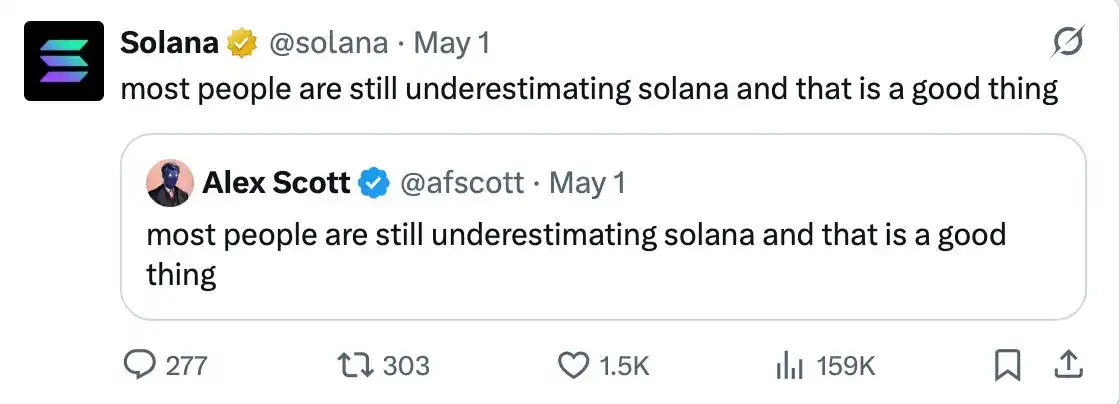
Finally, I leave you with this statement: Most people are still underestimating Solana, which is actually a good thing.
Disclaimer: Contains third-party opinions, does not constitute financial advice


AI Practical Guide
This column focuses on the real progress of Agents: technological evolution, application implementat

Crypto Weekly
Tracking on-chain movements of the smart money and institutions

Frontier Insights
Spotlight on Frontier, trending projects, and breaking events

Blowup Alert
As the 2026 crypto bear market deepens, exit scams and project blowups are becoming increasingly fre

Regulatory Watch
American Crypto Act – timely interpretations of policies worldwide

Popular Airdrop Tutorial
Selected potential airdrop opportunities to gain big with small investments

FusnChain
FusnChain